

‘Over 1.25 Million Tons of Sand Extracted from Freetown Peninsula and Lungi Corridor Every Year’
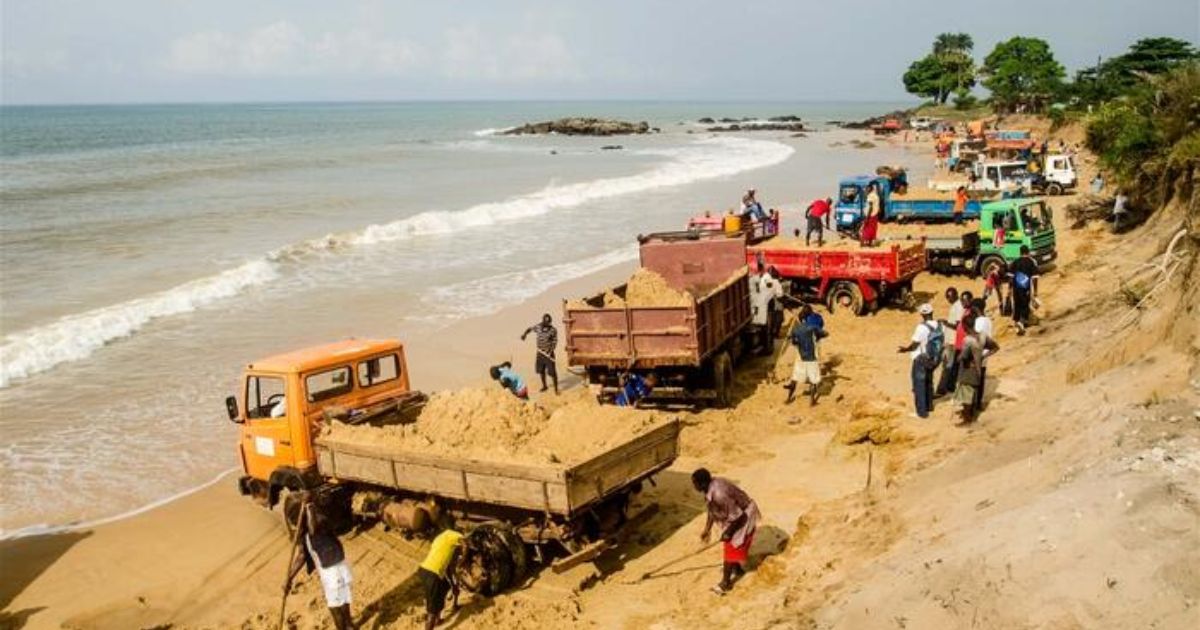
Over 1.25M tons of sand extracted yearly, 53m shoreline loss 200-2024, threatening ecosystem & infrastructure collapse, World Bank findings revealed
The World Bank has warned that uncontrolled sand mining activity along the Freetown Peninsula and the Lungi–Mahera corridor could destroy key beaches and lead to the collapse of the coastal tourism sector within a decade.
The organisation issued the warning during Go Circular Week, organised by the Ministry of Environment and Climate Change with support from the World Bank Group, in Freetown and Lungi.

According to the Global Sector Lead for Tourism at the World Bank, Louise Twining-Ward, the scale of sand extraction is already damaging water quality and accelerating coastal erosion.

“If nothing is done about sand mining, it could be the end of tourism on the Freetown Peninsula and Mahera corridor,” she said. “We will not only be talking about Hamilton, Lakka or Bureh Beach being gone, but also Lumley and Aberdeen.”
She emphasised that the visible changes in seawater and coastal conditions show the damage is no longer theoretical.
According to findings presented by the Director of Research at the Urban Research Centre, Braima M. Koroma, about 60% of hotels along the Lakka–Hamilton corridor have reported structural damage linked to erosion.
He said the report, titled “Assessment of the Scale and Impact of Sand Mining on Selected Tourism and Coastal Communities in Sierra Leone”, features distinct sand extraction communities for the study, including John Obey, Lakka, Hamilton and Mahera Beach.
The study aimed to raise awareness about the damage caused while calling for alternative measures to support livelihoods.
Koroma stated that the country’s shoreline has retreated by an average of 53 metres since 2000, stressing that sand mining is also harming ecosystems, with over 14% of marine protected areas and more than 12% of mangroves in the Western Area affected.
He revealed that an estimated 1.25 million cubic metres of sand are being extracted each year, worsening environmental and economic pressures.
Presenting the findings in Lungi, World Bank consultant Allieu Jalloh said the largely informal activity supports many coastal communities but exposes workers to risks and undermines other income sources such as fishing and tourism.
He said weak regulation and overlapping institutional roles are key drivers of the problem, adding that local councils also depend on revenue from sand mining.
Jalloh warned that the continued extraction of sand is already leading to the loss of beachfronts, with hotels at risk of collapse, and could further damage agriculture and other sectors if left unchecked.
Pa Alimamy Kargbo, a section chief in Yongoro, described severe coastal erosion, saying land that once supported homes has now been lost to the sea. He said areas that were once hundreds of feet from the shoreline are now submerged.
He added that landowners are increasingly selling properties as they anticipate further encroachment by the ocean.
Head of Climate Financing at the Ministry of Finance, Sellu McCarthy, stressed that truck drivers are paying money to communities and local councils, while the government is also disbursing community development funds.
“Government spends money to the council, so if sand extractors are also paying the local council, then the government will be overstretched,” he said.
He recommended that the National Revenue Authority (NRA) should be involved in communities when these payments are being made, noting that this would allow the government to be indirectly represented.
Authorities are now calling for a new national policy, stronger enforcement, and the creation of a Sand Mining Steering Committee to regulate extraction and protect coastal areas.