


 Post a comment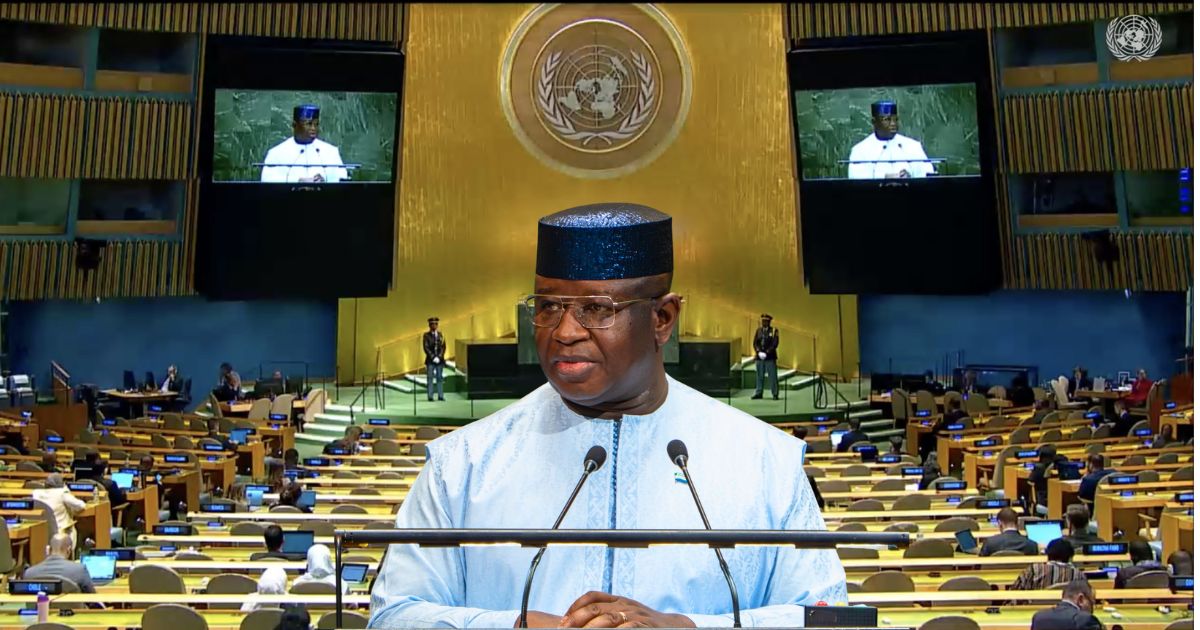
The human rights record of Sierra Leone will be examined by the United Nations Human Rights Council’s Universal Periodic Review (UPR) Working Group for the fourth time on Tuesday, 12 May 2026, from 09:00 to 12:30 (GMT+2) at the Palais des Nations in Geneva.
Sierra Leone is one of 14 States scheduled for review during the Working Group’s 52nd session, which runs from 4 to 15 May 2026. The country’s previous UPR reviews took place in May 2011, January 2016, and May 2021.
The UPR is a peer review mechanism through which all 193 UN Member States’ human rights records are assessed. The Working Group comprises the 47 Member States of the Human Rights Council, though any UN Member or Observer State may participate in a country review.

The review is based on three core documents: Sierra Leone’s national report on human rights developments; reports from independent human rights experts, treaty bodies, and other UN entities; and submissions from stakeholders including national human rights institutions, regional organizations, and civil society groups.
The Sierra Leonean delegation will be led by Mr. Alpha Sesay, the Attorney-General and Minister of Justice . The three country representatives serving as rapporteurs—known as the “troika”—for Sierra Leone’s review are Ghana, the Republic of Korea, and Spain.
In preparation for the review, the Ministry of Foreign Affairs and International Cooperation, in collaboration with the Office of the Attorney General and Minister of Justice, convened a two-day national validation workshop in January 2026 to finalise the government’s national report.
Civil society organisations have also been actively engaged. The Human Rights Commission of Sierra Leone, with support from the United Nations Development Programme, held consultations across the country in late 2025—including in Makeni, Port Loko, Kenema, Bo, and the Western Area—to gather evidence-based data on UPR implementation progress.
A joint submission by two ECOSOC-accredited NGOs—Edmund Rice International and VIVAT International, in partnership with the Christian Brothers Development Office in Sierra Leone—has highlighted several priority areas requiring attention. These include the right to quality education, maternal mortality and healthcare access, the right to an adequate standard of living, gender equality, sexual and gender-based violence, and equality before the law.
According to the submission, while Sierra Leone has made notable progress in expanding access to education and reducing maternal mortality—which fell from over 1,100 deaths per 100,000 live births in 2013 to an estimated 354 in 2023—significant challenges remain. The country’s maternal mortality rate remains five times higher than the Sustainable Development Goal target, and adolescent pregnancy remains widespread.
Health-related recommendations have accounted for nearly 40 per cent of all recommendations across Sierra Leone’s first three UPR cycles, with recurring themes including maternal mortality, adolescent health, family planning, and emergency obstetric care.
The session will be webcast live via UN Web TV. Members of the public may view the proceedings at webtv.un.org.
The UPR Working Group is scheduled to adopt the recommendations made to Sierra Leone on Friday, 15 May 2026, between 14:30 and 18:00 (GMT+2). Following adoption, Sierra Leone may express its positions on the recommendations posed to it during the review.
Since the establishment of the UPR mechanism in April 2008, all 193 UN Member States have been reviewed three times. During the fourth cycle, States are expected to outline steps taken to implement recommendations from previous reviews and highlight recent human rights developments in their countries.


