

Government of Sierra Leone Unveils Map And Blueprint for New Lungi “Gateway City”
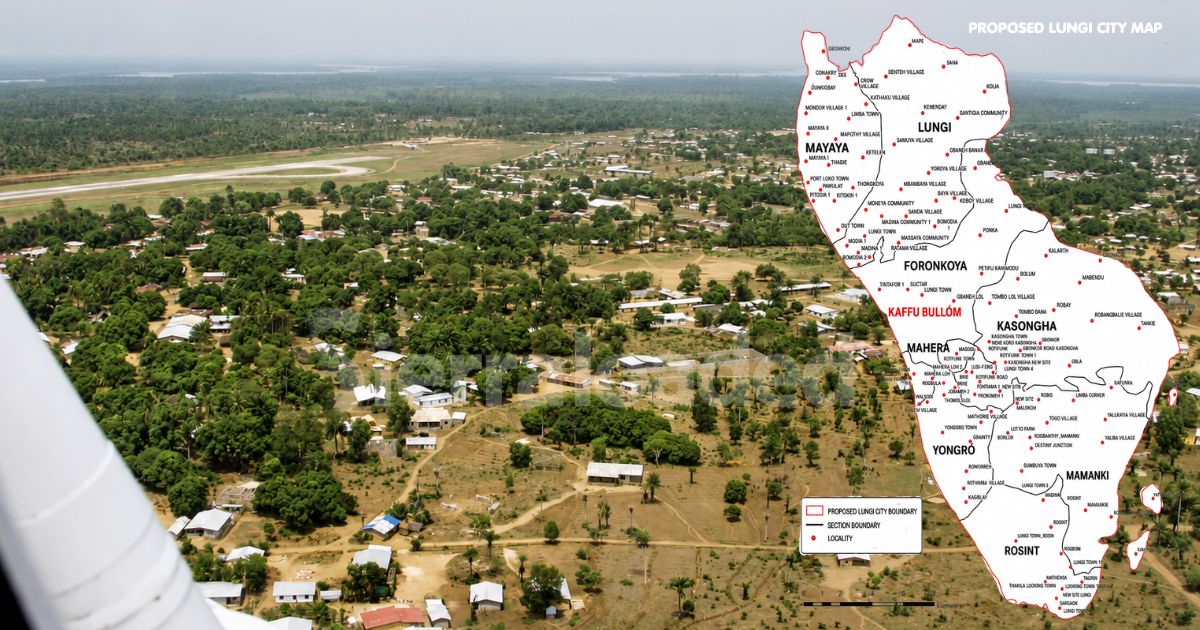
The government of Sierra Leone has unveiled a massive plan to transform Lungi into a modern, economic hub, driven by a nationwide redistricting project aimed at reforming local governance and public service delivery.
Speaking at the Lungi Civic Day held on Tuesday, May 19, 2026, at St. Augustine School in Tintafor, the Minister of Local Government and Community Affairs, Hon. Tamba Lamina, outlined President Julius Maada Bio’s long-term national development agenda.
A major highlight of the townhall was the Minister’s walkthrough of the newly unveiled Proposed Lungi City Map. As he presented the layout to local authorities, residents and students, he demonstrated how the new borders will expand across Kaffu Bullom and surrounding communities under a structured master plan designed by the Ministry of Planning and Housing.

“The proposed Lungi City will cover a vast area. We are currently working with the Ministry of Planning and Housing on the mapping process. This will be a new city that we will manage together,” he said.
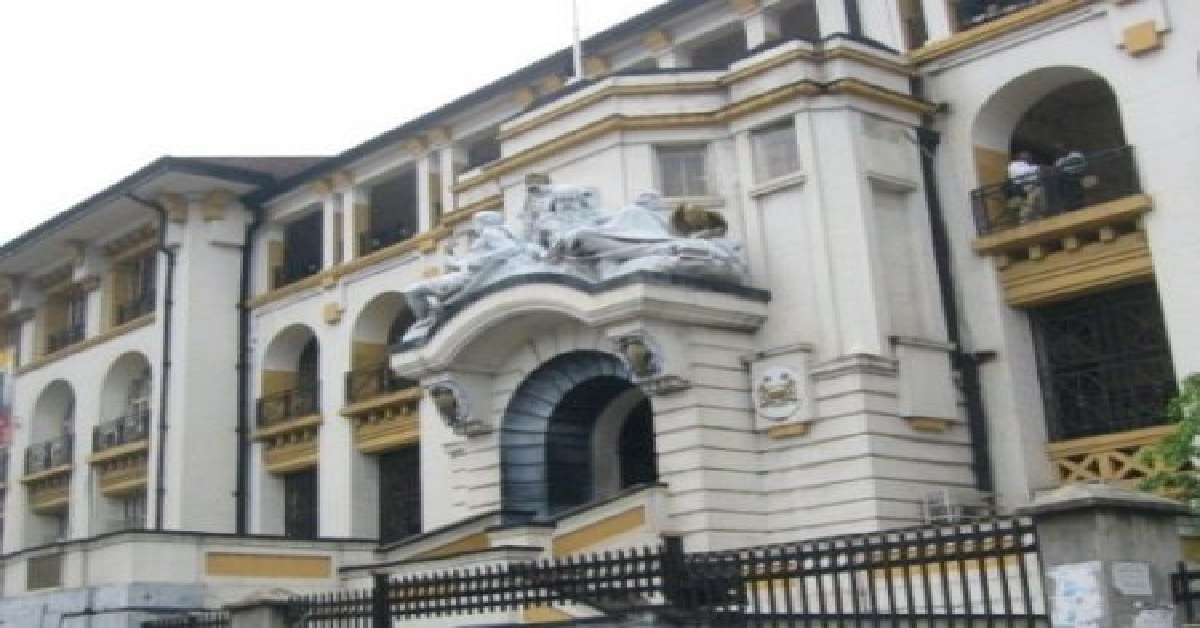


According to the Minister, the mapped blueprint looks decades into the future, moving past unplanned urban growth to deliberately zone areas for schools, shopping malls, playgrounds and football fields.
The vision positions Lungi as a premier “Gateway City”—a designated Special Economic Zone hosting a new university, a National Conference Centre and the highly anticipated Lungi Bridge connecting the northern peninsula straight to Freetown.
”The topic I want to address is the establishment of what we refer to as the gateway city. This will be a city of diplomacy, economic prosperity, commerce and travel,” he stated. “This is not about politics; this is about how we look at our country to ensure holistic development.”
Beyond Lungi, the Minister explained that the wider national redistricting initiative is a necessary update to the post-war decentralization reforms of 2004. To tackle shifting demographics and intense population pressures, with Freetown’s population growing from about 400,000 residents decades ago to nearly 1.5 million today, the administration is launching a second phase of governance reforms.
The current proposal includes creating two new districts—Bandajuma and Kpanguma—and introducing additional local councils to better manage the Western Urban and Western Rural districts.
”We decided to embark on a second phase of reorganization to improve service delivery, enhance information governance and ensure that the actual voices of the people are heard at both local and central levels,” he noted.
The technical and consultative phases of the redistricting project are already complete. Minister Lamina confirmed that the finalized report will soon be presented to the President and the Attorney General to be laid before Parliament as a statutory instrument. Once approved and finalized by a presidential proclamation, the Ministry of Finance will officially allocate the budgets to bring the new districts and the modern Lungi City to life.