

Fourah Bay College at 200: Legacy, Identity, and National Renewal
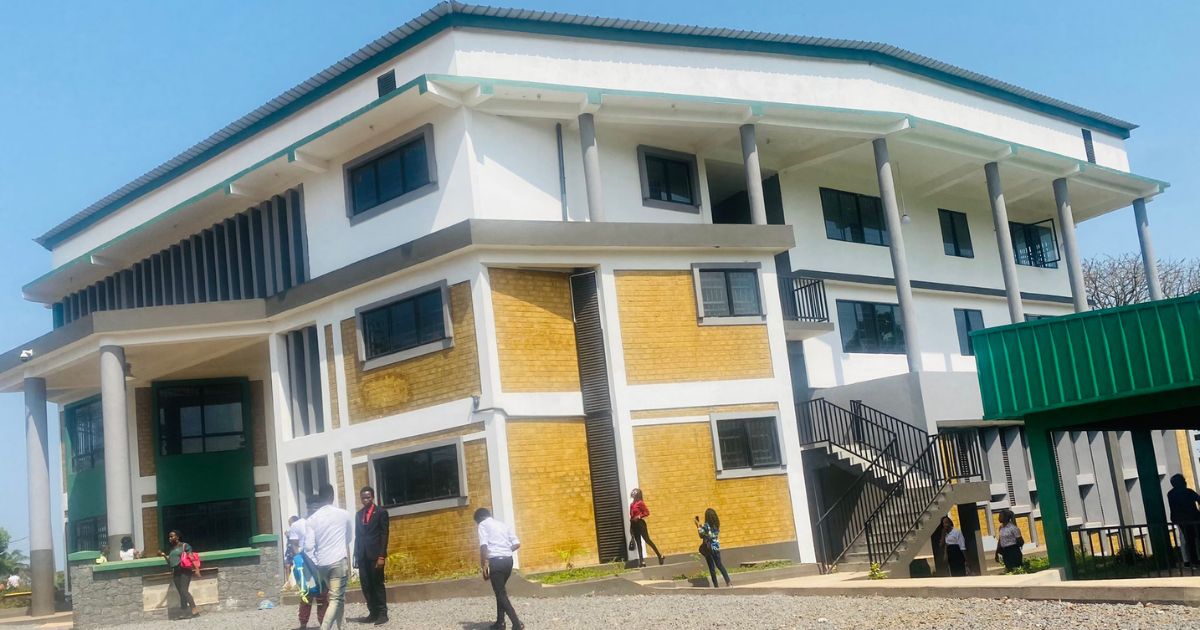
Two hundred years ago, Fourah Bay College (FBC) was founded in Freetown as an early institution of higher learning, when opportunities for Africans were deliberately scarce. What began as a fragile seedling grew into a defining tree in West Africa’s intellectual landscape: rooted in Sierra Leone, branching across the region, and dispersing seeds—graduates, standards, ideas—across Africa and the world.
This is why the bicentennial is significant. It’s not because FBC is immune to criticism, but because institutions that shape civilization should be evaluated over centuries, not by fleeting moods. They are living entities that survive, weaken, and can recover—if society commits to supporting them.
Sceptics often ask, with reason, what exactly there is to celebrate. They view FBC through the lens of what it would have been, could have been, and should have become after such an extraordinary head start. For an institution long described as the “Athens of West Africa” and sometimes the “Adam” of tertiary education in the region, trailing younger universities in output and reputation is painful. The frustrations are real: funding instability, infrastructure gaps, staff retention pressures, and the daily difficulty of doing modern scholarship without modern tools.

But disappointment is not the same as judgment. The question is not whether FBC has fallen short of its promise. It has, in important ways. The question is whether Sierra Leone will respond by treating a national institution as disposable—or by choosing renewal, the harder work nations undertake when they intend to endure.

Founded in 1827 by the Church Missionary Society as an Anglican missionary school, FBC grew into a regional centre for training and thought. It helped educate early African clergy, lawyers, educators, administrators, historians, and political thinkers during a period when higher education for Africans was deliberately constrained. For decades, students travelled to Sierra Leone because FBC offered more than a degree. It offered the possibility of African intellectual dignity: proof that scholarship produced on African soil could meet global standards.
This is not nostalgia; it is a historical fact with consequences. West Africa’s modern professional class—its teachers, jurists, civil servants, clergy, and public thinkers—did not emerge in a vacuum. It emerged through pipelines. FBC was among the most consequential of them. Many institutions that later championed higher education in Ghana and Nigeria trace their intellectual or institutional roots to Fourah Bay College. Its legacy lives on in prominent alums and in thousands of quiet professionals whose work built schools, strengthened courts, staffed ministries, and anchored civil society.
If the past gives the tree its stature, its survival through storms demonstrates its resilience.
FBC has endured colonialism, the World Wars, economic collapse, one-party rule, structural adjustment, military coups, civil war, Ebola, and long periods of neglect. It has survived violence that would have ended many universities, including the January 6, 1999, attack on Freetown, when rebels held one of its former principals, Eldred Durosimi Jones, at gunpoint. Yet the institution has persisted. Students still graduate. Lecturers still teach. Research still happens—often against the odds. In a world where public institutions fracture easily, endurance is not a footnote. It is the national capital.
That endurance also reveals a truth Sierra Leoneans sometimes avoid: universities mirror the societies that sustain—or starve—them. FBC does not exist outside the national economy or infrastructure. Underfunded governments produce underfunded universities. Weak systems undermine laboratories, libraries, connectivity, housing, salaries, and the capacity to attract and retain talent. The crisis in higher education is not unique to FBC; it reflects broader pressures facing public universities across Africa.
So, what are we celebrating?
We are celebrating contribution and continuity. We are celebrating an institution that helped place Sierra Leone at the intellectual core of West Africa—and can help it aspire to that again. We are celebrating the idea that nationhood is not only a flag, an anthem, and an election cycle that sometimes mimics an ethnic census, but a long project built through institutions that uphold standards, memory, and ambition across generations.
The greater danger is not in commemorating FBC. The danger is losing faith entirely in national institutions because they are imperfect. Countries do not collapse only through war or coups. They also collapse through slow surrender: when cynicism becomes fashionable, neglect becomes normal, and institutions that require long care—universities, above all—begin to wither, doomed and abandoned.
Criticizing national institutions like FBC is essential, but it must be done thoughtfully. Accountability and high standards are important. However, criticism that overlooks recognition can turn into destructive contempt. The truth is that FBC still embodies intellectual courage: lecturers continue teaching despite low pay and tough conditions; researchers persist with limited resources; students pursue their education despite economic challenges; and graduates serve in both the public and private sectors. Declaring the institution “dead” dismisses the very people who sustain it.
And the tree is still dispersing seeds.
Even now, FBC’s seeds are taking root in classrooms, courtrooms, clinics, newsrooms, and public offices. Some take root close by, serving Sierra Leone’s towns and districts. Others scatter into the diaspora, carrying Sierra Leonean expertise into regional bodies, global universities, hospitals, firms, and development agencies. Wherever they land, they bear the imprint of the tree: the belief that excellence is possible, even in difficult soil.
But belief alone is not a strategy. A meaningful bicentennial must serve as a platform for national renewal—practical, funded, and sustained. Alums can move beyond nostalgia and follow the example of people like Ing Tunde Cole by supporting scholarships, adopting departments, sponsoring small research grants, donating books and laboratory equipment, mentoring students, and opening internship pathways that translate learning into livelihoods.
The government can protect academic independence while stabilizing funding, improving staff welfare, and investing in the basic infrastructure modern scholarship requires: reliable electricity, internet access, libraries, laboratories, and safe student housing.
The private sector can partner with departments to shape job-ready curricula, fund innovation hubs, offer placements, and invest in research that strengthens agriculture, health, energy, technology, mining governance, and public administration. Meanwhile, international partners can deepen exchanges and collaborative research that strengthen—not replace—local leadership and national priorities. A nation does not inherit greatness; it earns it.
None of this requires pretending that FBC has fulfilled its full promise. It requires something more honest: recognizing that nations do not rebuild by burning their foundations. They rebuild by strengthening them.
At 200, Fourah Bay College is not asking for sentiment; it is demanding a covenant. A nation that honours its future must fund its mind—protect academic independence, invest in infrastructure, insist on standards, and keep faith with the teachers and students who carry the work. For two centuries, this tree has given Sierra Leone seeds that took root across Africa and the globe. The only worthy tribute now is renewal: to water the roots, prune what is failing, and grow a next century of excellence that our children can inherit with pride.