


 Post a comment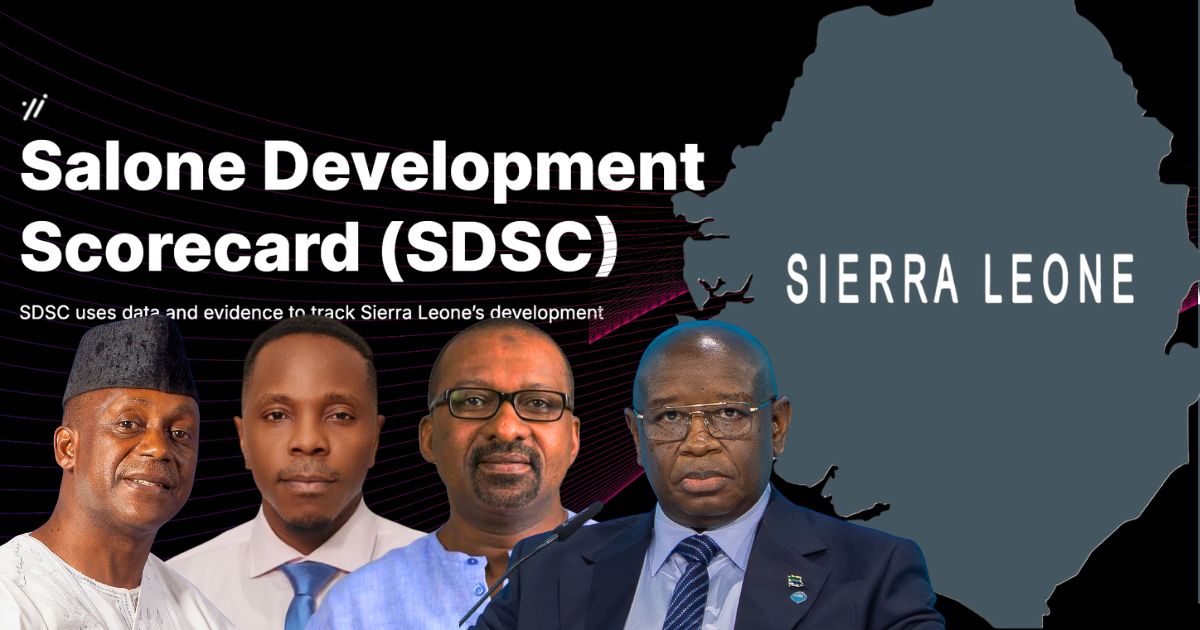
The Institute for Governance Reform (IGR) has launched the Salone Development Scorecard (SDSC) which will track, in real time, progress on 100 priority targets outlined in Sierra Leone’s National Development Plan (2024–2030).
The development plan focuses on key national priorities including food security, human capital development, youth employment, public sector reform, and infrastructure and technology aimed at driving economic transformation.
According to IGR representatives Andrew Lavali and Prof. Fredline M’Cormack-Hale the Scorecard is designed as a citizen-focused accountability platform that provides regular and evidence-based updates on the status of government delivery across these priority areas.

The organisation stated that for each target, it conducts independent research and gathers verified data to assess progress and ensure credible public reporting.
They noted that Sierra Leoneans may hold different political views and live in diverse regions across the country, but they share common aspirations. These include access to affordable food, decent employment opportunities, clean water, improved roads, quality healthcare, and better education services.
Both speakers further emphasised that the SDSC is intended to bridge the gap between government commitments and citizens’ lived experiences by making development performance more transparent and accessible to the public.
“All Sierra Leoneans are encouraged to use this platform to monitor government performance, ask questions about progress, and share feedback to help improve service delivery,” they stated.
They further explained that the Scorecard is expected to strengthen civic participation by enabling citizens, civil society groups, and stakeholders to actively engage with development data and hold institutions accountable for results.
They said that the initiative aims to promote a culture of transparency, evidence-based decision-making, and improved governance outcomes as Sierra Leone continues to implement its national development agenda.
Delivering the keynote address, renowned historian and public intellectual, Prof. Joe A.D. Alie, described the Scorecard as a timely and essential instrument for strengthening transparency, accountability, and citizen engagement in national development.
Prof. Alie noted that the Scorecard goes beyond data collection, serving instead as a civic tool designed to measure how effectively national development commitments are being implemented.
He stressed that development cannot be achieved in isolation, but requires strong institutions, informed citizens, and consistent accountability systems that ensure public resources are used effectively.
According to him, without accountability, even the best policies risk failing at the implementation stage, adding that what matters is not only what is planned, but what is delivered to the people.
The historian acknowledged that Sierra Leone has made progress in several areas of governance and development over the years. However, he also pointed to persistent challenges, including institutional weaknesses, economic pressures, and implementation gaps that continue to slow down national progress.
He further emphasized that such challenges should be viewed as opportunities to deepen democratic governance and improve public sector performance.
Prof. Alie called for stronger collaboration among stakeholders, urging government institutions, civil society organizations, development partners, and citizens to actively engage with the Scorecard as a tool for national improvement.
He explained that the initiative should serve as both a mirror and a guide—reflecting the country’s achievements while also highlighting areas that require urgent attention.
“What we need is not only planning, but implementation; not only promises, but measurable outcomes that improve people’s lives,” he stated.
He added that the success of Sierra Leone’s development agenda depends on accountability, transparency, and a shared sense of responsibility among all actors in the governance space.


