

Sierra Leonean Surgeon Dr. Sheku Dennis Massaquoi Earns Global Recognition for Healthcare Innovation
 Osman Tolo Sesay
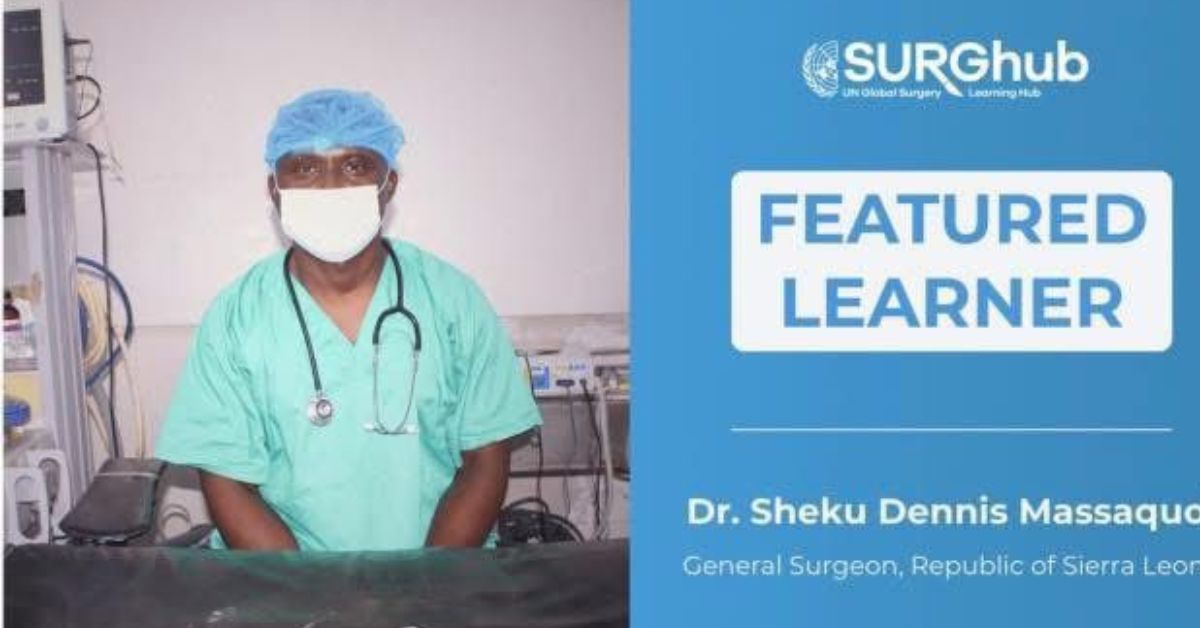
 Dr. Sheku Dennis Massaquoi, a Sierra Leonean general surgeon and Lieutenant Colonel in the Defence Medical Services of the Republic of Sierra Leone Armed Forces, has received international recognition for his work in surgical care, healthcare innovation, and medical education in resource-constrained settings.
Dr. Massaquoi was recently featured by the Global Surgery Foundation through its Impact Stories series and by SURGhub, a global surgical education platform that supports healthcare professionals in improving patient outcomes through continuous learning.
Based at the 34 Military Hospital in Freetown, Dr. Massaquoi manages a demanding surgical workload while contributing to national healthcare reforms and system-strengthening initiatives. Since 2013, he has combined clinical practice with leadership responsibilities, including supporting healthcare accreditation processes and helping establish Sierra Leone’s first social health insurance scheme.

He completed a 22-month College of Surgeons of East, Central and Southern Africa (COSECSA) membership course in General Surgery and currently serves as a technical lead for anaesthesia and surgical capability assessments, contributing to efforts aimed at improving healthcare standards nationwide.
Reflecting on his entry into medicine, Dr. Massaquoi credited his late uncle, Dr. Alhaji Fayama Tarawallie, for inspiring his healthcare career. He said subsequent experiences, including a medical survival course and a cardiothoracic surgery attachment in Egypt, reinforced his commitment to surgery and service.
Dr. Massaquoi highlighted the shortage of specialist surgeons in Sierra Leone, noting that fewer than ten general surgeons currently serve a population exceeding eight million people. He said the satisfaction derived from transforming patients’ lives through surgical interventions continues to motivate his work.
An advocate for lifelong learning, he said his daily routine includes prayer followed by a study session on SURGhub before clinical duties. He emphasized the role of continuous education and virtual learning in enhancing skills and improving patient outcomes.
One example he cited involved a 55-year-old woman with advanced metastatic breast cancer who was unsuitable for general anaesthesia. Using knowledge acquired through virtual surgical training, Dr. Massaquoi performed a palliative procedure using advanced regional anaesthesia techniques, which he said improved the patient’s quality of life and restored her dignity.
His reputation extends beyond routine procedures. In 2020, Dr. Massaquoi led a medical team at the 34 Military Hospital that performed a life-saving operation on a COVID-19-positive patient, an intervention widely regarded as one of the pioneering surgical procedures during the pandemic in Sierra Leone and the wider region.
Looking ahead, Dr. Massaquoi continues to advocate for innovative healthcare solutions to address workforce shortages and improve access to medical education. He supports virtual learning platforms and the concept of “colleges without walls,” which would enable healthcare professionals to access surgical training regardless of location.
“My hope is a resilient surgical system driven by innovation, technology and accessible surgical education for all healthcare providers,” he stated. He also encouraged young medical professionals to master the fundamentals of surgery while remaining compassionate, creative, and committed to continuous learning.
The Global Surgery Foundation noted that Dr. Massaquoi’s story demonstrates how innovation, digital learning, leadership, and professional development can help bridge gaps in surgical practice and healthcare delivery, particularly in resource-limited settings.