
NPRA Explains Why Fuel Prices Remain Higher Despite Global Oil Market Changes

 Sahid Bangura
 The National Petroleum Regulatory Authority (NPRA) has stated that international petroleum product prices remain significantly higher than pre-war levels, despite recent declines in global crude oil prices.
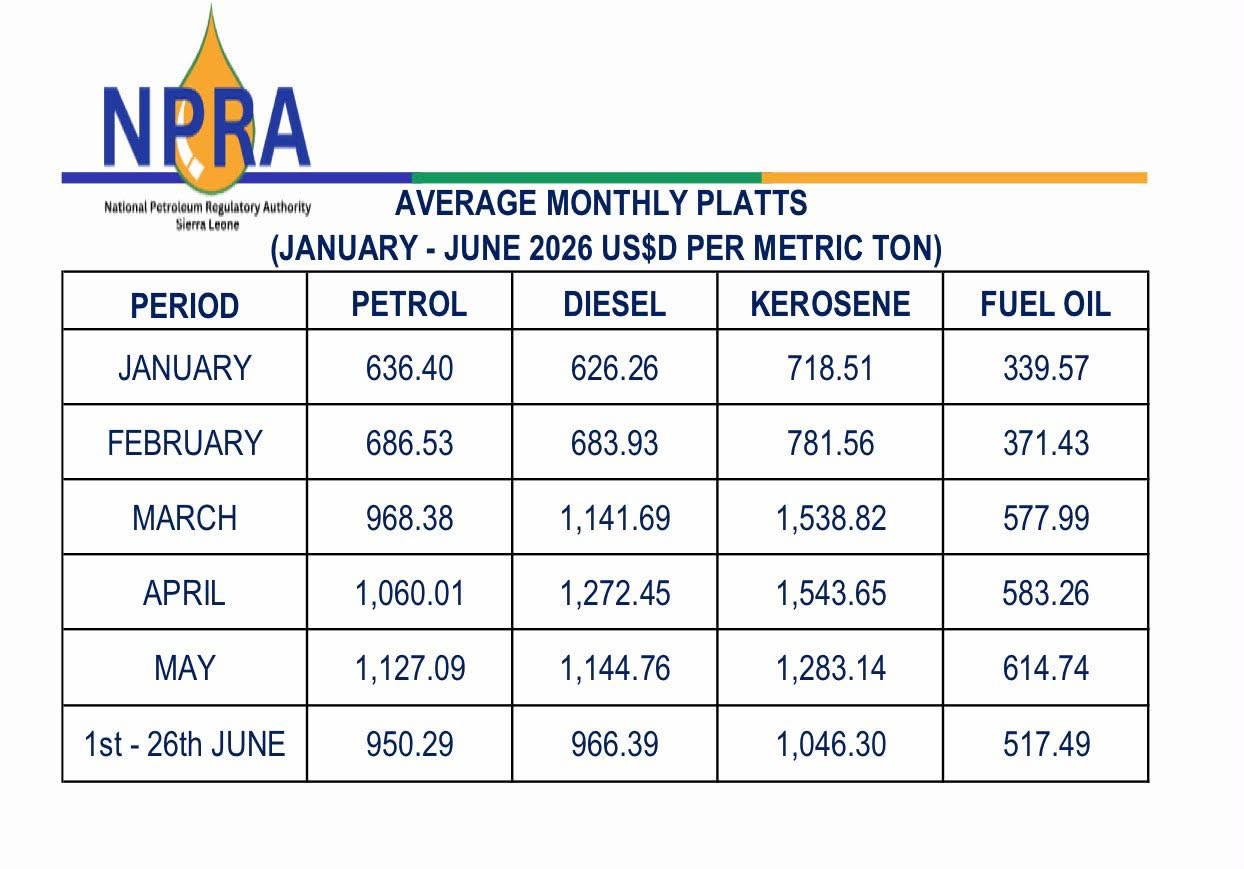
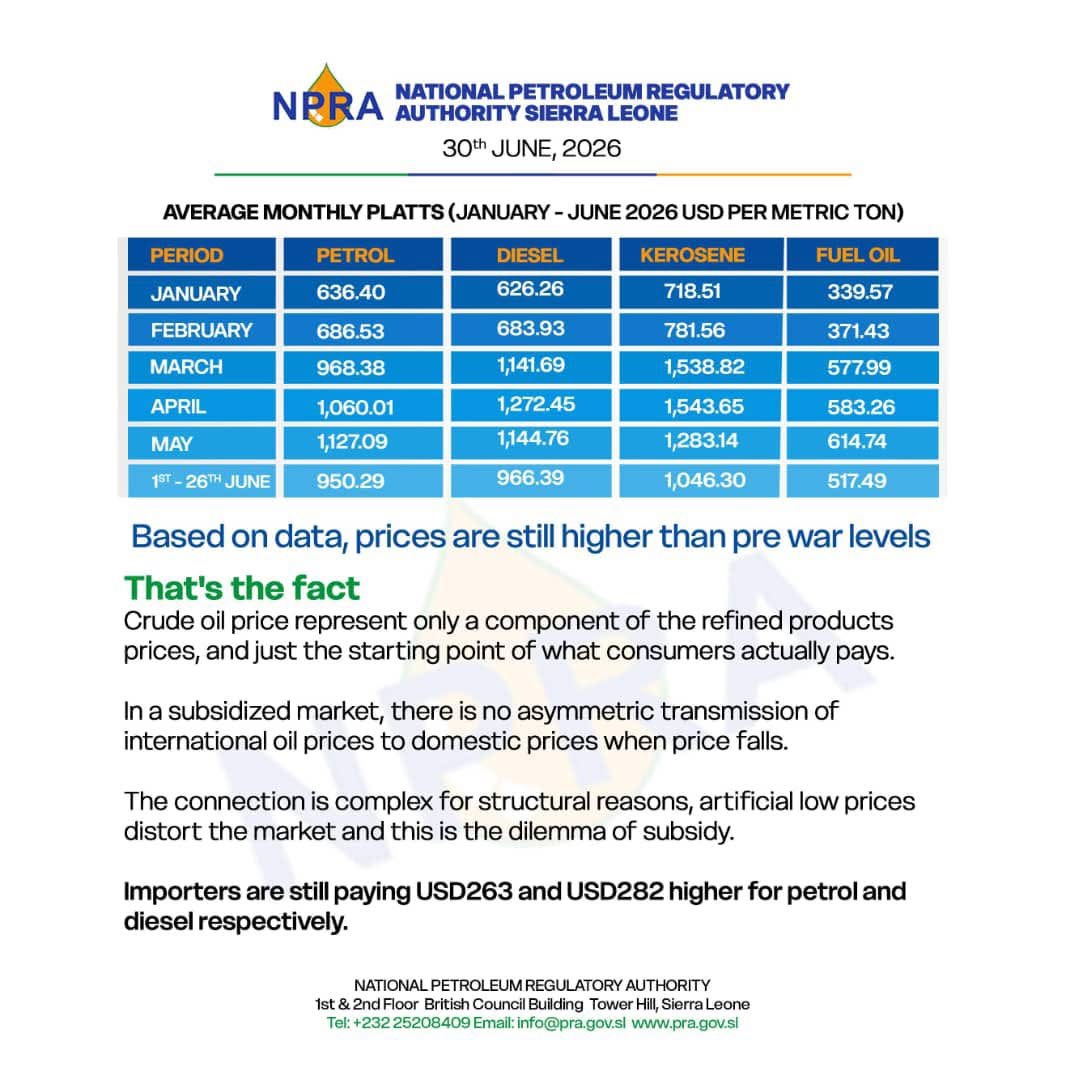
In a statement issued on 30 June, the Authority released average monthly Platts prices for petroleum products from January to June 2026, noting that import costs continue to exceed levels recorded before the outbreak of the Russia-Ukraine war.
According to the data, the average Platts price for petrol rose from US$636.40 per metric ton in January to US$1,127.09 in May, before declining to US$950.29 between 1 and 26 June. Diesel followed a similar trend, increasing from US$626.26 in January to US$1,144.76 in May before easing to US$966.39 during the same June period.

The NPRA emphasised that, although international prices have moderated in recent weeks, they remain substantially above pre-war benchmarks, meaning the cost of importing refined petroleum products continues to be relatively high.



The Authority explained that crude oil prices represent only one component of the final cost of refined petroleum products. It noted that the price consumers ultimately pay is influenced by several other factors within the international supply chain and domestic pricing structure.
The regulator further stated that in a subsidised market, declines in international oil prices are not automatically or proportionally reflected in domestic fuel prices. It explained that subsidies and other market interventions affect how global price movements are transmitted to local markets.
According to the NPRA, the relationship between international crude oil prices and domestic pump prices is complex, adding that artificially low prices can distort market conditions and create fiscal and economic challenges associated with fuel subsidies.
The Authority disclosed that importers are still paying approximately US$263 more per metric ton for petrol and US$282 more per metric ton for diesel than they did before the war, reinforcing its position that international petroleum prices remain elevated despite recent reductions.
The NPRA said the data demonstrates that global petroleum market conditions continue to influence Sierra Leone’s fuel import costs, underscoring the challenges of balancing consumer affordability with market realities.
This is a calculated lie; the authority must be ashamed of themselves for publishing such untenable reasons. is it that these guys want to tell us that all other Governments around the world are showing false pretense by easing the economic burden on their citizens in reducing the price per liter and gallon of petroleum products?