

Sierra Leone, Nigeria Sign Five-Year Road Safety Partnership Agreement
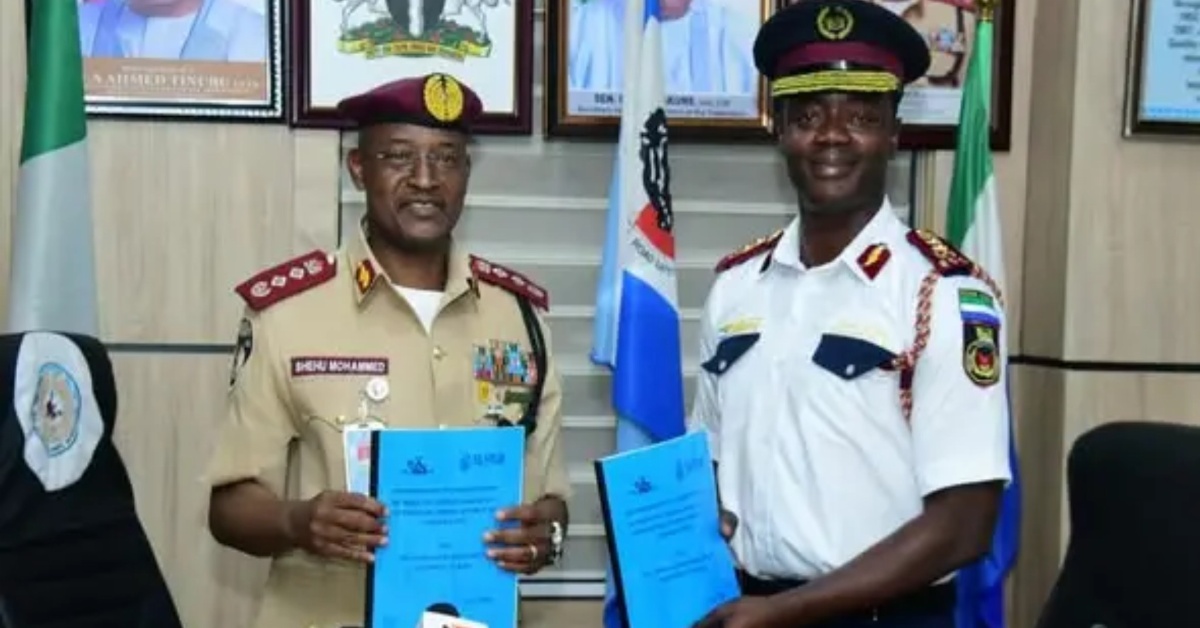
Sierra Leone and Nigeria have strengthened cooperation in road safety management following the signing of a five-year Memorandum of Understanding (MoU) between the Sierra Leone Road Safety Authority (SLRSA) and Nigeria’s Federal Road Safety Corps (FRSC).
The agreement is aimed at improving road safety systems, institutional capacity, enforcement mechanisms, and knowledge sharing between the two West African countries. It provides a framework for collaboration in areas including training, research, technology, data management, public education, driver education, vehicle administration, and technical support.
The MoU followed a study visit by Sierra Leonean road safety officials to Nigeria, where they examined the FRSC’s operational strategies, enforcement systems, and use of technology in addressing road transport challenges.

Speaking at the signing ceremony, SLRSA Executive Director James Bagie Bio described the partnership as a major milestone, assuring stakeholders that it would be implemented through structured engagement, monitoring, and evaluation.

“This MoU will not gather dust on the shelf,” Bio said, stressing that the agreement would be translated into practical programmes to improve road safety outcomes in Sierra Leone.
The partnership is expected to allow Sierra Leone to benefit from Nigeria’s experience in road safety enforcement, crash data management, public awareness campaigns, and technology-driven transport solutions, while also providing opportunities for both countries to share expertise and develop solutions suited to their respective environments.
Deputy High Commissioner of Sierra Leone to Nigeria and Deputy Head of Mission to ECOWAS, Major General (Rtd.) Dauda Alpha, welcomed the agreement, describing it as an important step toward regional cooperation and stronger transport safety systems across Africa.
The partnership comes amid growing concerns over road crashes in Sierra Leone and the wider West African region, with increased movement of people, goods, and vehicles creating greater demand for improved road safety measures. The SLRSA has reported thousands of crashes in recent periods, with commercial motorbikes contributing significantly to incidents.
Officials and road safety experts have emphasised the need for stronger enforcement, improved driver education, public awareness, better data systems, responsible driving practices, and improved vehicle and road management to reduce injuries and fatalities.
While the five-year MoU outlines broad areas of cooperation, details on specific programmes, funding arrangements, and implementation timelines are yet to be fully disclosed. However, both countries have expressed commitment to using the partnership to strengthen road safety institutions and protect motorists, passengers, and pedestrians.