


 Post a comment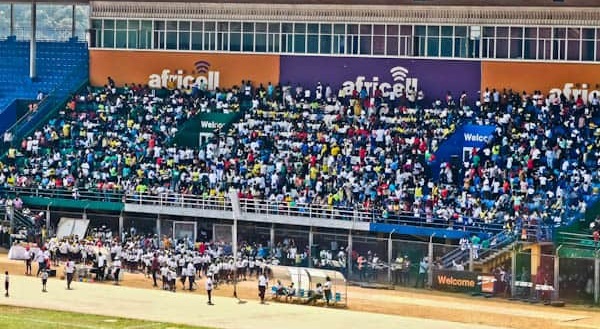
The Confederation of African Football (CAF) has officially invited its 54 Member Associations to submit bids to host the Africa Cup of Nations (AFCON) for the 2028, 2032, and 2036 editions.
With the 2027 tournament already awarded to a joint East African bid by Kenya, Tanzania, and Uganda, attention is now turning to who will secure the rights for 2028. While countries with vast sporting infrastructure evaluate their capacity to bid, sports analysts are assessing whether Sierra Leone could step up to host Africa’s biggest sporting event—either on its own or through a joint bid with a neighboring nation like Liberia.
A closer look at CAF’s strict bidding framework and the current state of regional sporting infrastructure reveals a steep, if not impossible, climb for the Mano River Union nations.

The AFCON is a massive global event, boasting over 3.2 billion television viewers globally. To accommodate a 24-team tournament of this scale, CAF requires host nations to provide advanced training facilities, accessible international airports, and modern hospitality infrastructure.
Most critically, the stadium requirements are uncompromising. CAF mandates that any host bid must provide a minimum of six top-tier stadiums with strict capacity minimums:
- Two stadiums must hold at least 40,000 fans.
- Two stadiums must hold at least 20,000 fans.
- Two stadiums must hold at least 15,000 fans.
Additional requirements include:
- Modern natural grass pitches with proper drainage and irrigation
- Floodlights meeting 2,500 to 3,000 lux broadcast standards
- VVIP and VIP areas with private lounges
- A minimum of 12 skyboxes at each main stadium
- Press conference rooms, media centers, and media tribunes
- Venue Operations Centres with clear views of stadium bowls
- Broadcast infrastructure, medical facilities, and IT infrastructure
- Between 24 and 28 training facilities
The host government must also demonstrate financial commitment, including payment of hosting rights fees, and provide adequate accommodation, transport networks, and security.
For Sierra Leone to bid solo, meeting these infrastructure demands is currently out of reach. The country does not possess multiple stadiums and is presently struggling to complete the renovation of its single major arena, the Siaka Stevens Stadium in Freetown.
Closed since February 2022 for a $40 million rehabilitation project, the main bowl remains an active construction site facing extensive delays. Because the facility currently fails to meet CAF and FIFA standards, it is banned from hosting international fixtures, frequently forcing the Leone Stars to play “home” games in neighboring Liberia or Morocco.
Sierra Leone does have one major recent success story – the privately funded Southern Arena in Bo. Opened in 2023, the stadium is CAF-approved for international club matches and certain qualifiers. However, it has a seating capacity of only 6,000 spectators, falling far short of CAF’s absolute minimum capacity requirement (15,000 seats) for even the smallest AFCON group-stage venue.
The Sierra Leone Football Association (SLFA) has made strides in grassroots infrastructure. Supported by FIFA development funds, the country has rolled out several artificial turf projects to boost the local premier league and youth football.
Recent installations, such as the FIFA Quality-certified artificial pitch in Kenema, have provided durable, all-weather surfaces for domestic clubs. However, while these pitches are crucial for local football development, they are community-level facilities lacking the massive grandstands, media centers, and hospitality boxes required to host an AFCON tournament.
Given that Kenya, Tanzania, and Uganda successfully won a joint bid for the 2027 AFCON, a logical question is whether Sierra Leone could launch a co-hosting bid with neighboring Liberia.
Unfortunately, combining forces does not solve the infrastructure deficit. Liberia’s premier venue is the Samuel Kanyon Doe (SKD) Sports Complex in Monrovia. The SKD has an estimated seating capacity of up to 35,000 and has recently received upgrades, including new LED floodlights and bucket seats, to maintain its CAF approval for international matches.
Even if Sierra Leone’s 45,000-capacity Siaka Stevens Stadium is fully modernized, a joint ticket would only yield two qualifying stadiums. The two nations would still need to construct four brand-new stadiums—each with capacities ranging from 15,000 to over 40,000—to meet CAF’s six-stadium threshold.
Even regional heavyweights are cautious about the financial demands of hosting. Nigeria, which previously co-hosted the tournament, has acknowledged that launching a bid for 2028 would require massive financial investments and major overhauls to several of its stadiums.
While private developments like the Southern Arena and FIFA-funded turf projects show positive momentum for Sierra Leonean football, the country remains far from AFCON-ready. Whether bidding alone or alongside Liberia, the region simply lacks the six massive, modernized arenas required to host the tournament. Until heavy government or private investment births multiple high-capacity stadiums, an AFCON bid will remain out of reach.


