Post a comment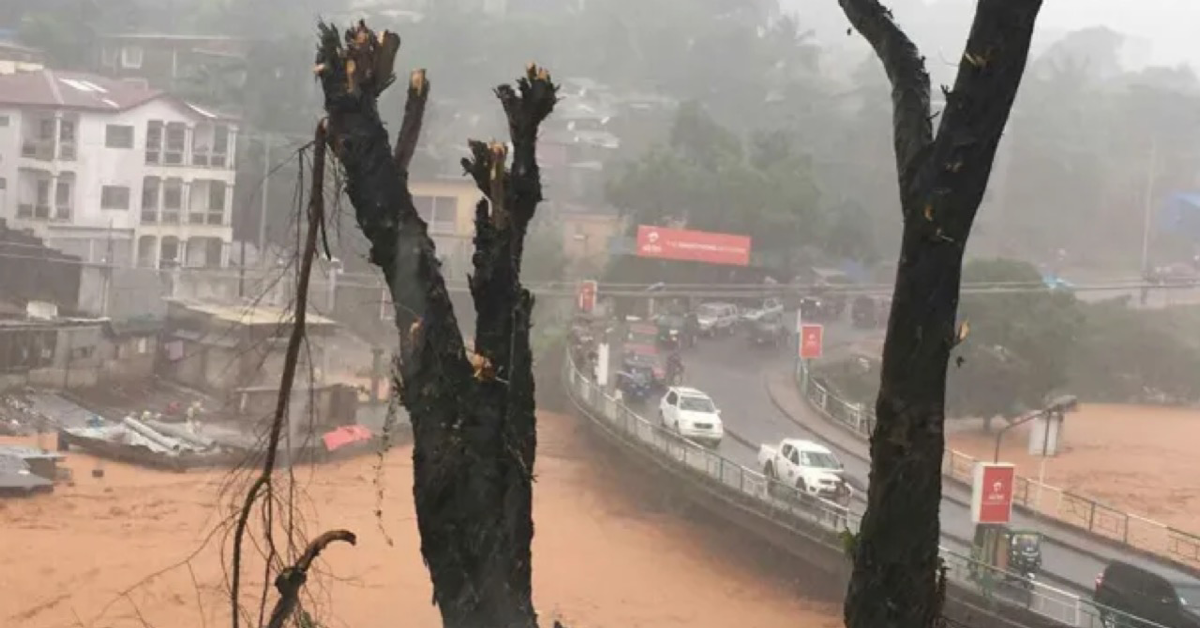
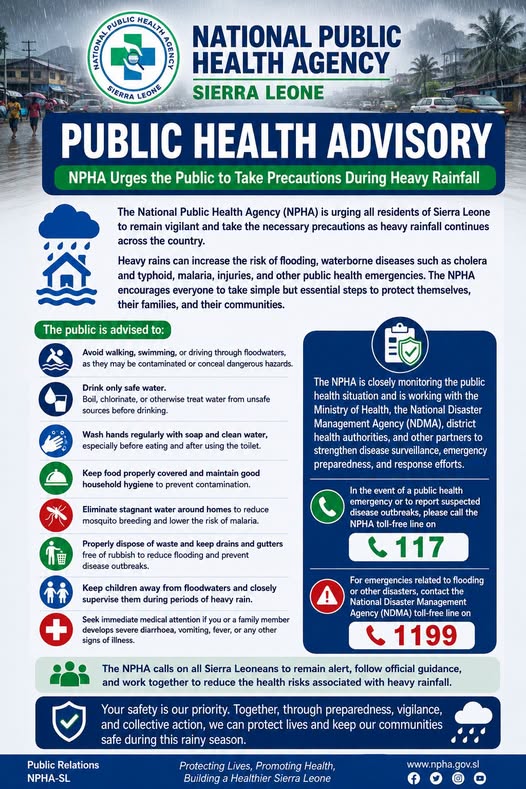
The National Public Health Agency (NPHA) has urged Sierra Leoneans to take precautionary measures to protect themselves and their communities as heavy rainfall continues to affect several parts of the country.
In a public health advisory, the agency warned that persistent rains increase the risk of flooding, waterborne diseases such as cholera and typhoid, malaria, injuries, and other public health emergencies.
NPHA advised residents to avoid walking, swimming, or driving through floodwaters, noting that floodwater may be contaminated or conceal dangerous hazards. The agency also encouraged the public to drink only safe water by boiling, chlorinating, or treating water obtained from unsafe sources before consumption.

The agency further stressed the importance of regular handwashing with soap and clean water, maintaining proper food hygiene, eliminating stagnant water around homes to reduce mosquito breeding, and ensuring proper waste disposal to prevent flooding and disease outbreaks.
Parents and guardians were also encouraged to keep children away from floodwaters and closely supervise them during periods of heavy rainfall.
NPHA advised members of the public to seek immediate medical attention if they or their family members develop symptoms such as severe diarrhoea, vomiting, fever, or other signs of illness.
According to the agency, it is working closely with the Ministry of Health, the National Disaster Management Agency (NDMA), district health authorities, and other partners to strengthen disease surveillance, emergency preparedness, and response efforts throughout the rainy season.
The agency urged the public to report suspected disease outbreaks or public health emergencies through its toll-free line, 117, while emergencies related to flooding and other disasters should be reported to the NDMA via its toll-free line, 1199.
NPHA called on all Sierra Leoneans to remain vigilant, follow official public health guidance, and support collective efforts to reduce the health risks associated with the ongoing heavy rains, emphasizing that preparedness and community cooperation remain essential to protecting lives during the rainy season.