


 Post a comment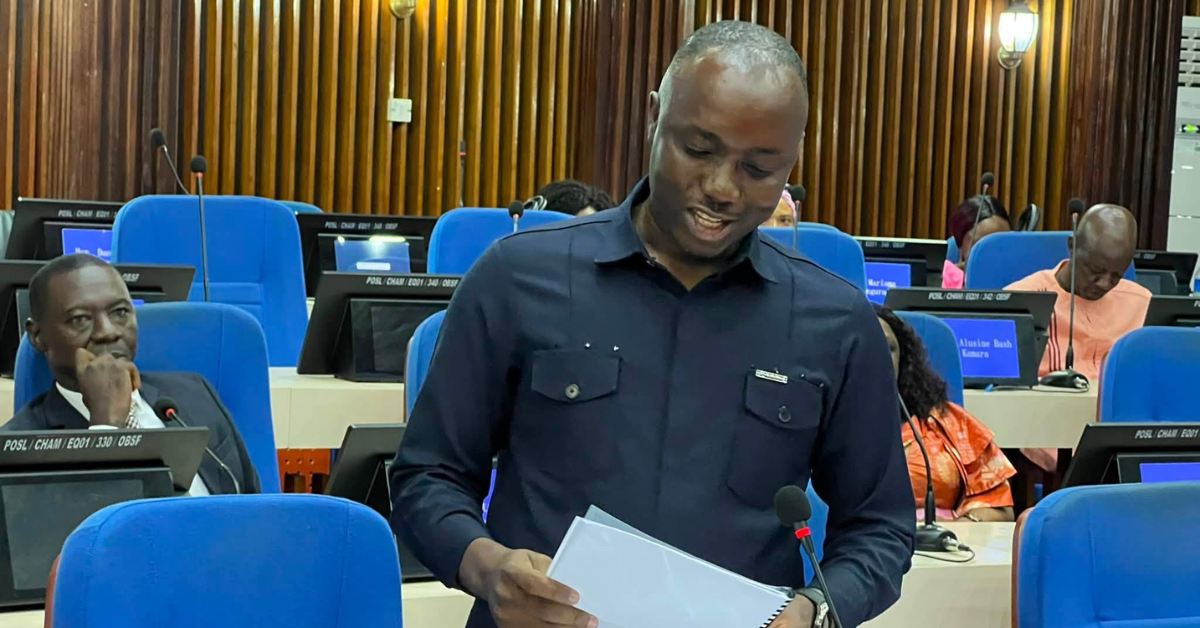
Tonkolili District MP Hon. Aaron Aruna Koroma told Parliament on Tuesday that lawmakers must thoroughly scrutinise agreements, not just approve them, in the national interest.
One of the key concerns highlighted by Hon. Koroma was what he described as the absence of a commencement date in the agreement. While acknowledging that the document specifies the date on which it was signed, he argued that it does not clearly indicate when its provisions are expected to take legal effect, describing the omission as an important issue in contract administration.
The opposition legislator also challenged assertions that the Government Printing Department is no longer functional. According to him, the department continues to undertake official assignments, including the printing of Government Gazettes, Finance Bills, Budget Speeches, Acts of Parliament and Presidential communications. He maintained that the institution’s challenges stem primarily from years of inadequate investment rather than an inability to perform its statutory functions.

Hon. Koroma further questioned the proposed 70-30 revenue-sharing arrangement, arguing that the Government’s contribution to the joint venture appears substantially greater than that of the private investor. He noted that the Government is expected to provide land, existing infrastructure, printing equipment, trained personnel and various tax incentives, while the investor’s financial commitment is estimated at approximately Le5 billion.
To ensure transparency and fairness, the Deputy Opposition Leader called for an independent valuation of all Government assets and incentives being committed to the partnership before the revenue-sharing formula is implemented. Such an assessment, he argued, would enable Parliament and the public to determine whether the proposed arrangement offers value for money.
Another major issue raised during the debate was the provision granting the joint venture exclusive rights to undertake Government printing services for a period of 10 years. Hon. Koroma warned that such exclusivity, combined with tax waivers and duty exemptions, could place existing private printing companies at a competitive disadvantage and potentially threaten their sustainability.
Rather than granting exclusive rights, he proposed that Government printing contracts should remain open to competition, allowing qualified local printing companies to bid for a portion of public sector printing jobs while the joint venture handles the remainder. He also recommended that the agreement be subjected to a mandatory review after five years to assess the investor’s performance and, where necessary, renegotiate terms that better protect the Government’s interests.
The lawmaker also expressed reservations about Clause 21 of the agreement, which reportedly requires the Government to facilitate the enactment of relevant legislation within three months. He argued that no contractual agreement should appear to dictate Parliament’s legislative timetable, emphasising that the Constitution vests legislative authority solely in Parliament.
Despite outlining several reservations, Hon. Koroma clarified that he was not opposed to the ratification of the agreement. Instead, he urged the Government to address the identified concerns through greater transparency, periodic reviews and independent asset valuation to ensure the partnership delivers value for money while protecting both public resources and the interests of local businesses.
Parliament is expected to continue deliberations on the proposed agreement as lawmakers examine its potential economic and legal implications before its implementation.


