Government Confirms Measles Outbreak as 41 Cases Recorded Across Eight Districts
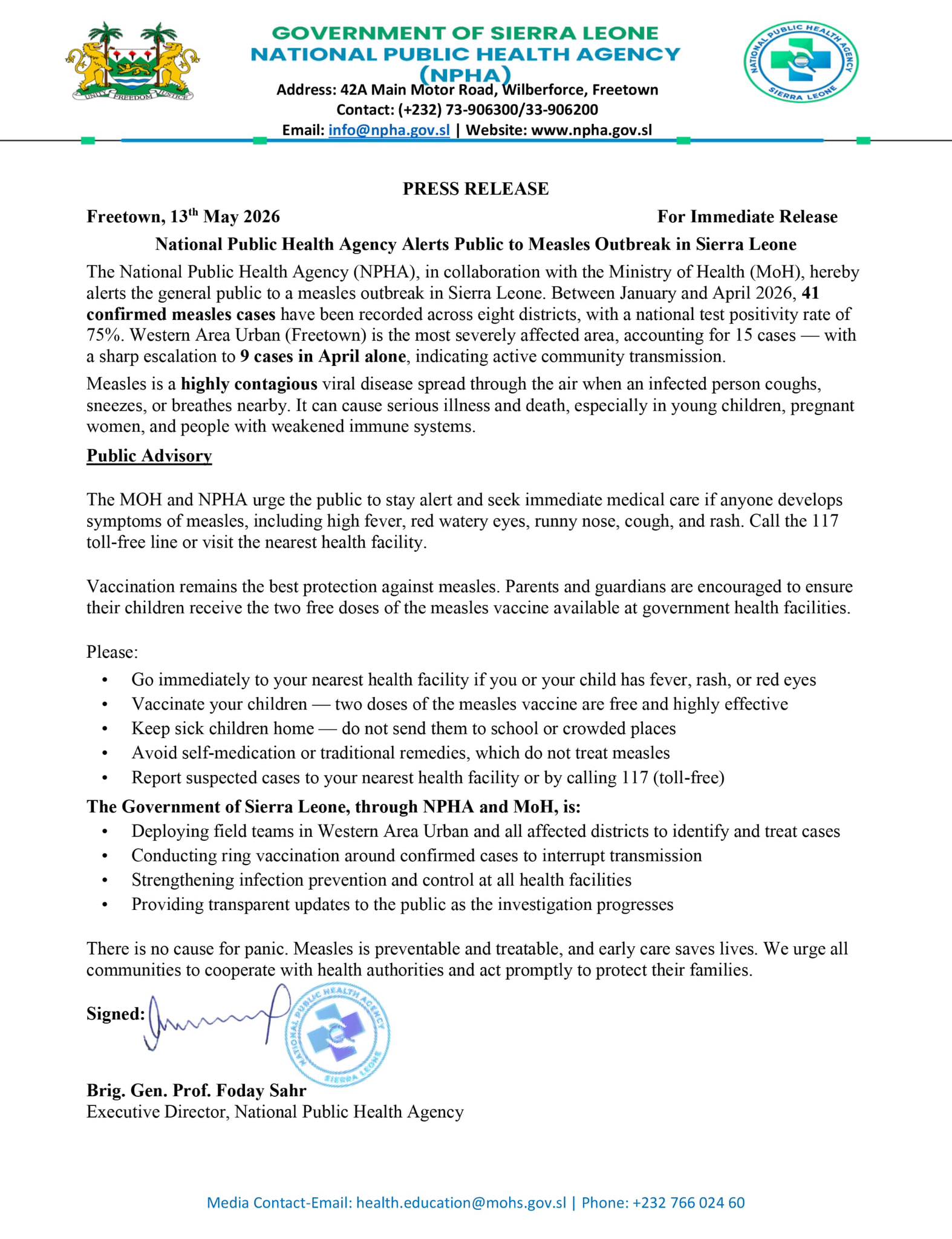
The National Public Health Agency, in collaboration with the Ministry of Health, has alerted the public to a measles outbreak in Sierra Leone, following the confirmation of 41 cases recorded between January and April 2026 across eight districts nationwide.
According to a press release issued on Tuesday, 13th May 2026, the outbreak has shown a national test positivity rate of 75 percent, with Western Area Urban identified as the most severely affected area.
Health officials disclosed that the district has recorded 15 confirmed cases so far, including a sharp rise of nine cases in April alone, a development they say indicates active community transmission in Freetown.

Measles is described as a highly contagious viral disease that spreads through the air when an infected person coughs, sneezes, or breathes near others. Authorities warned that the illness can lead to severe complications and death, particularly among young children, pregnant women, and persons with weakened immune systems.



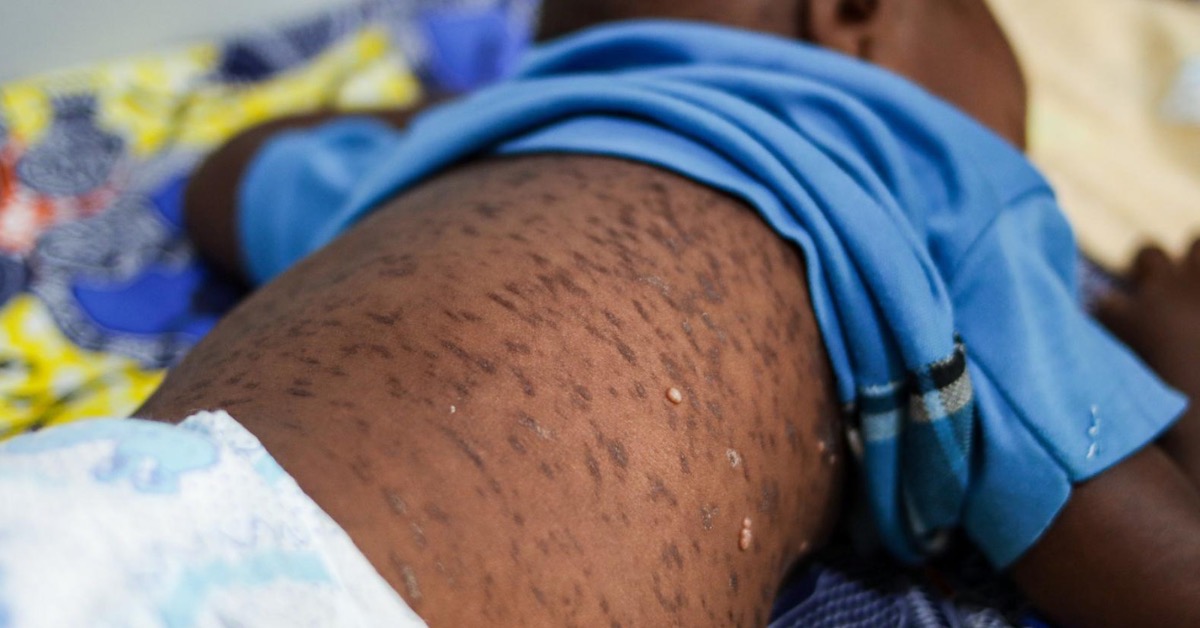
The two institutions have urged members of the public to seek immediate medical attention if they or their children develop symptoms such as high fever, red watery eyes, runny nose, cough, or rash.
Citizens have also been encouraged to call the 117 toll-free emergency line or visit the nearest health facility for assistance.
The health authorities emphasized that vaccination remains the most effective protection against measles and called on parents and guardians to ensure children receive the two free doses of the measles vaccine available at government health facilities nationwide.
As part of its emergency response, the Government of Sierra Leone said it is deploying field teams to Western Area Urban and other affected districts to identify and treat cases, while also conducting ring vaccination exercises around confirmed infections to curb further spread.
Officials added that infection prevention and control measures are being strengthened at health facilities, while regular public updates will be provided as investigations continue.
The Government reassured the public that there is no cause for panic, stressing that measles is both preventable and treatable when detected early, and called on communities to cooperate fully with health authorities to protect families and prevent further transmission.