

 Post a comment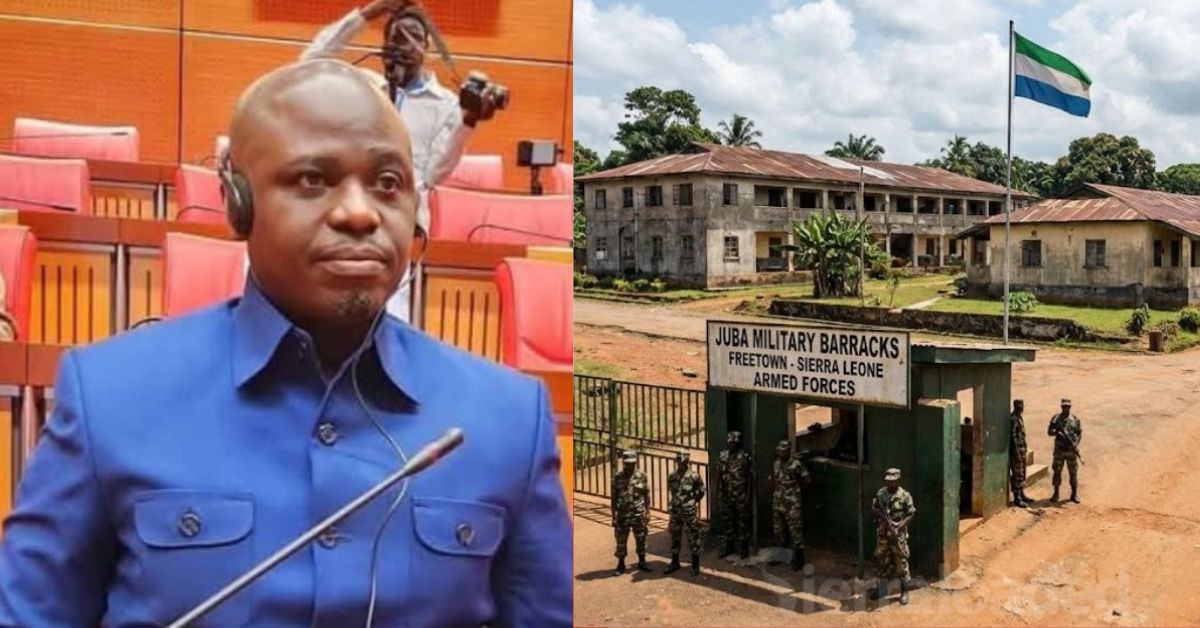
Opposition Leader Hon. Abdul Kargbo has raised concerns over the proposed sale of Juba Barracks, urging policymakers to carefully weigh national security against commercial interests.
In his recent analysis titled “National Security or Commercial Gain? Re-examining the Proposed Sale of Juba Barracks,” Kargbo highlights the strategic importance of the military installation.
According to Kargbo, Juba Barracks was deliberately established along Freetown’s western coastline because of its military value. The Juba-Lumley axis sits directly on the Atlantic Ocean, offering a critical vantage point over maritime routes and reinforcing coastal defense capabilities. Its seaside location allows for effective monitoring of maritime activity and timely operational response. The barracks’ location, Kargbo emphasizes, was driven by national security and logistical considerations rather than aesthetics or commercial potential.
Over the years, however, the surrounding area has evolved into prime residential real estate. The same sea-facing location, once valued solely for its strategic function, is now increasingly seen for its commercial worth. This shift, Kargbo warns, raises important policy questions: decisions regarding national defense infrastructure should prioritize long-term security needs over short-term financial gains.
One justification for the proposed sale is the argument that Juba Barracks does not meet modern military standards. Kargbo argues that upgrading and modernization, rather than disposal, is the proper policy response. He points out that other military installations, such as Lungi Garrison Barracks, remain in far worse condition, with unreliable water supply, inadequate sanitation, and aging infrastructure. At times, two officers are forced to share a single apartment, underscoring the need for nationwide systematic improvements in military facilities.
The public has also been presented with architectural drawings of a new military facility in Masiaka, complete with a stadium and modern structures. While Kargbo welcomes long-term planning, he cautions that attractive renderings do not always translate into completed projects. He recalls earlier plans for the Lungi Bridge and an international conference center in Lungi that have yet to materialize. He questions how a new facility with a stadium would be prioritized when even the rehabilitation of the national stadium took years, forcing the national team to play home matches in Liberia. Sound policy, he argues, requires realistic planning, fiscal discipline, and measurable delivery.
Kargbo calls for a balanced and transparent national approach. Strengthening and modernizing military infrastructure across Sierra Leone-including Juba, Lungi, and other barracks-should be pursued through sustainable investment and clear accountability. Decisions concerning strategic facilities, he concludes, must prioritize long-term security, community stability, and responsible management of national assets.


