

ACC Launches Nationwide Ethics Scorecard Initiative to Boost Public Sector Accountability

 Sahid Bangura
 The Anti-Corruption Commission (ACC) has initiated a nationwide rollout of its Ethics and Integrity Scorecard, engaging key public institutions in a bid to strengthen accountability and transparency across government.
At an inception meeting held on 30 April 2026 at the Commission’s Integrity House in Tower Hill, Freetown, the ACC brought together senior management and technical staff from several Ministries, Departments, and Agencies (MDAs).
Among the institutions represented were the Sierra Leone Roads Authority, the National Disaster Management Agency, and the Teaching Service Commission.

The engagement, according to the ACC, was aimed at deepening participants’ understanding of the Ethics and Integrity Scorecard and its role in enhancing governance within the public sector.



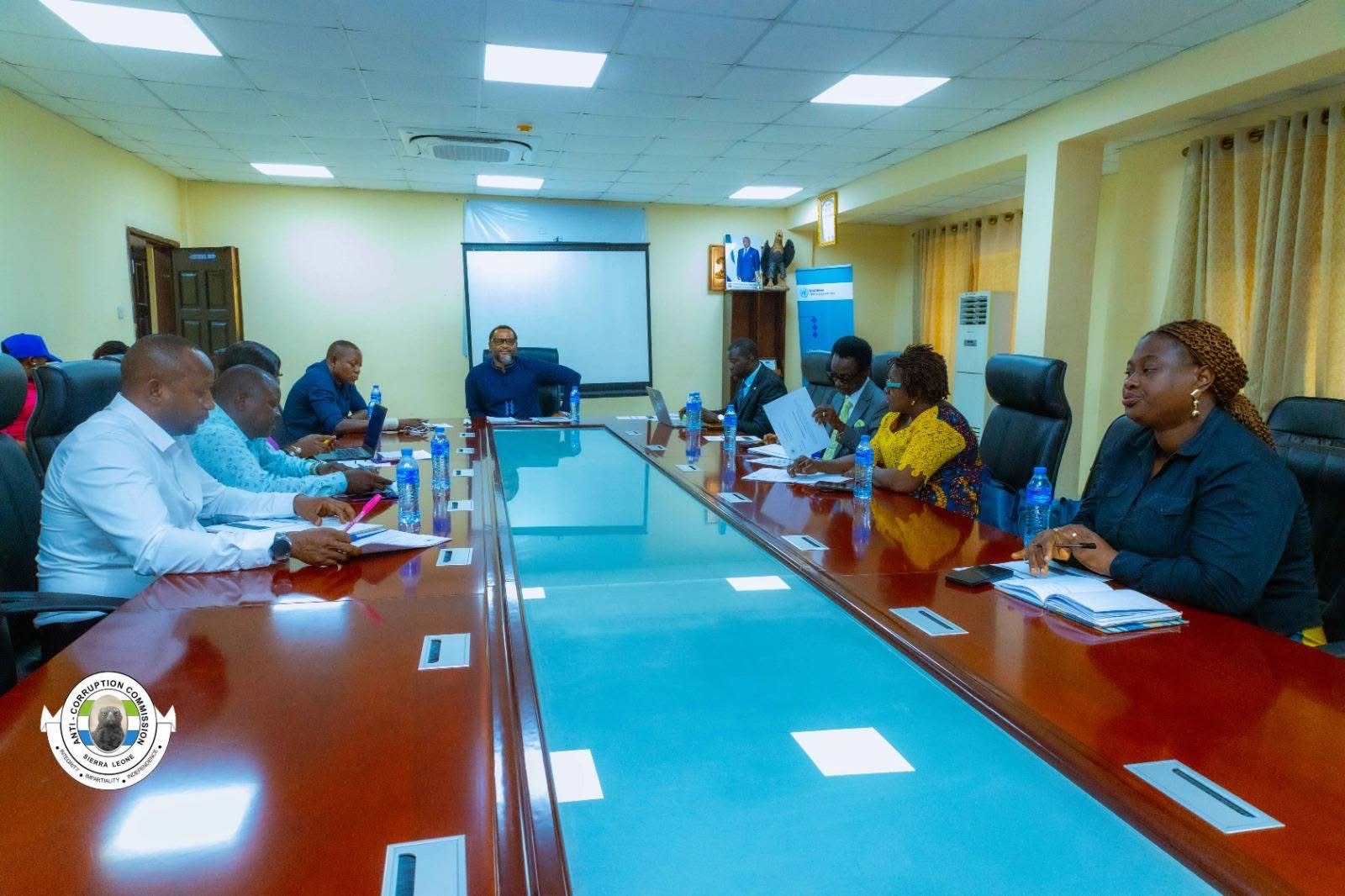
Speaking during the session, Samuel Muti Marah, Deputy Director of the Prevention Department at the ACC, said the initiative is designed to introduce MDAs to the objectives, methodology, and expected outcomes of the assessment process. He emphasized that the Scorecard should not be seen as punitive.
“This process is about improvement. It enables institutions to assess their current standing and take practical steps towards enhancing integrity and service delivery,” Marah stated.
Also addressing participants, Musa Kanteh, Head of Unit in the Commission’s Policy and Ethics Unit, outlined the framework of the Scorecard. He explained that the tool will be used to evaluate institutional compliance with ethical standards, internal controls, and anti-corruption measures.

Participants at the meeting welcomed the initiative, describing it as timely and necessary for reinforcing public trust in state institutions. They highlighted the importance of institutional self-assessment and expressed their commitment to cooperating fully with the ACC during implementation.
At the end of the engagement, the Commission distributed hard copies of key Ethics and Integrity compliance indicators to the participating MDAs. The ACC noted that the exercise represents a critical step in its broader strategy to proactively identify and mitigate corruption risks within public institutions.
The Commission reaffirmed its commitment to working collaboratively with MDAs to build resilient systems that promote integrity, accountability, and good governance throughout Sierra Leone’s public sector.