ACC Monitoring Reveals Weak Internal Audit Systems Across MDAs

 Daniel Amara
The Anti-Corruption Commission (ACC) has revealed significant weaknesses in internal audit systems across Ministries, Departments and Agencies (MDAs) and Local Councils, following a nationwide monitoring exercise under the National Anti-Corruption Strategy (2024–2028).
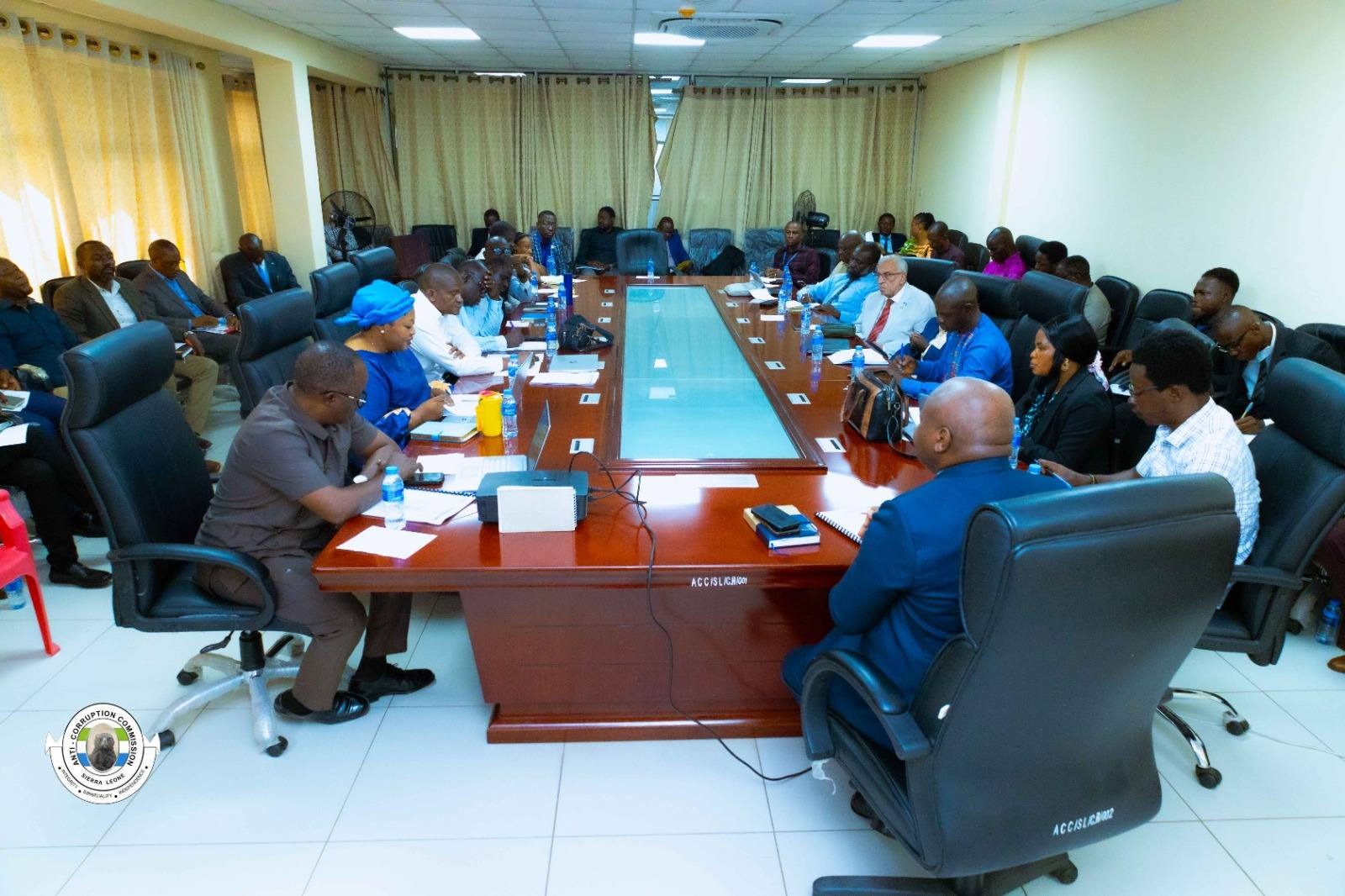
The findings were presented during an engagement held on Wednesday at the ACC Conference Room, Integrity House, Tower Hill, where representatives from Integrity Management Committees (IMCs), focal persons from MDAs, Local Councils, and members of the National Anti-Corruption Strategy (NACS) Steering Committee reviewed progress on the strategy’s implementation.

Presenting the monitoring report, Senior Corruption Prevention Officer Moses Bangura disclosed that although internal audit structures exist in most institutions, many are not functioning effectively.



He cited limited capacity, inadequate operational support, and a lack of independence as key challenges affecting the performance of internal audit units, warning that these gaps continue to expose public institutions to risks of mismanagement and weak financial oversight.
According to the ACC, the weaknesses identified undermine efforts to strengthen accountability and transparency within the public sector.

The engagement also reviewed overall progress of the National Anti-Corruption Strategy, with ACC Commissioner Francis Ben Kaifala noting that implementation currently stands at 47 percent.
He described the progress as moderate, stating that while it is “not as good as expected, but not as bad as it could be,” there remains substantial work to be done ahead of 2028.
Kaifala stressed the importance of strengthening implementation from the foundation level, adding that effective systems must be in place early to achieve long-term results.
He further explained that disaggregated monitoring data will help assess the performance of individual MDAs, highlighting both strong and weak performers. The findings, he said, will guide targeted interventions and improve accountability across institutions.
The ACC Deputy Commissioner, who chaired the session, said the monitoring process is a national exercise overseen by a Steering Committee chaired by the Vice President, with active participation from the Office of the President and Vice President.
He described the initiative as a preventive and collaborative mechanism aimed at improving governance systems and public service delivery.
Director of the NACS Secretariat, Mariama Navo, outlined the four pillars of the strategy—prevention, enforcement and compliance, public engagement, and coordination and monitoring—stressing that success will be measured by tangible impact rather than compliance alone.
Representing the Steering Committee, Adonis Aboud highlighted additional gaps identified during monitoring, including weaknesses in road safety enforcement, vehicle certification systems, porous borders, and pharmaceutical regulation.
The meeting concluded with discussions emphasizing the need to strengthen Integrity Management Committees as key drivers of accountability and transparency within Sierra Leone’s public institutions.