

Muslim Organisation in Sierra Leone Welcomes Government Clarification on ‘Fake’ Religious Policy
 Deborah Sorie
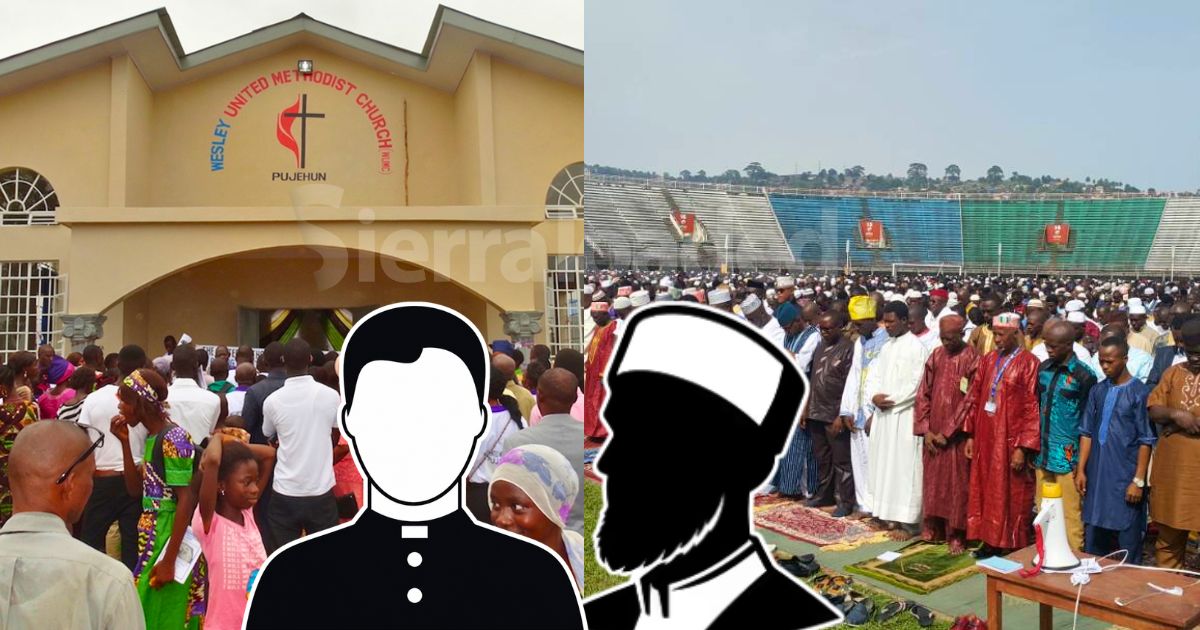
 The Muslim Organisation for Rights Advocacy and Justice (MORAJ) has welcomed the government’s clarification that the so-called “Draft Policy on Religious Tolerance and Practice” is not an official document, while insisting on strict legal safeguards and a transparent consultative process before any future framework is adopted.
In a press statement issued on Friday, MORAJ expressed satisfaction with the Ministry of Social Welfare’s 12th May 2026 release and subsequent media engagements, which confirmed that the circulating document bears no official signature, logo, or endorsement and should be disregarded entirely.
The Ministry further clarified that ongoing national consultations led by the Inter-Religious Council of Sierra Leone remain the proper channel for developing any future framework on religious matters, and that no policy will be finalised without full and meaningful stakeholder engagement.

MORAJ commended the Ministry for what it described as “transparent and timely clarification,” noting that it reassures the Muslim community and all Sierra Leoneans that religious freedom remains protected under the 1991 Constitution.
However, the organisation also raised several legal and procedural concerns that it said must guide any future framework.
MORAJ insisted that any regulation with the force of law must be grounded in the Constitutional and Statutory Instruments Act No. 6 of 1999 and remain consistent with Chapter III of the 1991 Constitution, which guarantees fundamental rights and freedoms. The disowned draft made no reference to this legal basis, a flaw MORAJ said must not be repeated.
The organisation also called on the Ministry to publish a clear roadmap for the consultative process, including specific dates for regional and national consultations, a deadline for the first draft of any proposed framework, and a mandatory thirty-day public comment period after any draft is released.
On the question of registration of religious institutions, MORAJ stated that if registration is ever required, it must be purely administrative—for purposes such as legal personality, property ownership, or tax exemption—and must be voluntary rather than mandatory for worship. It also insisted that registration must be limited to institutions and not extended to individual imams or clerics.
MORAJ further demanded that any future framework be developed by a genuinely multi-faith technical committee, including nominated representatives of the Inter-Religious Council from both Muslim and Christian communities, recognised Islamic scholars with formal qualifications, Christian theologians and church leaders, and constitutional and human rights experts. The organisation warned against singular authorship of any future draft.
The statement also emphasised that any framework must explicitly distinguish between religious obligations and cultural practices. For Muslims, MORAJ noted, Islamic principles are supreme over local customs, and no Muslim shall be compelled to accept any cultural practice—such as secret society rites—that is inconsistent with their faith.
MORAJ offered its full cooperation to the Inter-Religious Council and the Ministry but warned that any expanded mandate for the Council must be agreed upon by all faiths and must not be unilaterally imposed by the state.
The organisation also called for the complete removal of vague provisions on “oversight” and “monitoring” that appeared in the disowned draft, particularly those suggesting active state surveillance of religious activities.
MORAJ reiterated its commitment to Sierra Leone’s tradition of religious tolerance and peaceful coexistence and urged all Muslim organisations, civil society, and citizens to remain vigilant and participate actively in the consultative process once timelines are announced.
Perfect piece of writing
We are waiting ✋️ 😌