

 Post a comment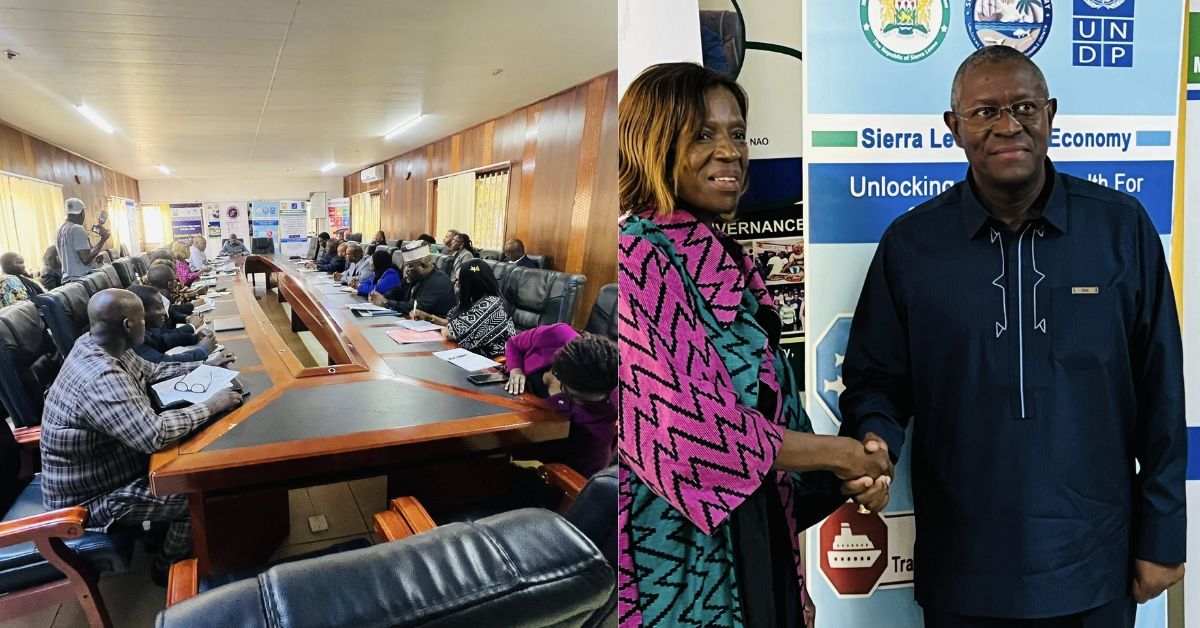
The ECOWAS Community Court of Justice has held high-level talks with Sierra Leone’s Ministry of Planning and Economic Development (MoPED) to address challenges in enforcing the Court’s judgments within the country.
The meeting, held at MoPED’s Conference Hall in Tower Hill, was led by ECOWAS Court President Hon. Justice Ricardo Cláudio Monteiro Gonçalves and his delegation. Sierra Leone’s team was headed by Minister Kenyeh Barlay, supported by senior management and technical staff.
Justice Monteiro Gonçalves explained that the talks are part of activities marking ECOWAS’s 50th Anniversary, during which the Court is consulting national authorities across member states to assess compliance with its rulings. He noted that the Court’s effectiveness is limited when judgments are not enforced.
“The main objective of our visit is to collectively examine how we can improve the enforcement of judgments and decisions of the ECOWAS Court of Justice,” he said, revealing that only about 20 percent of the Court’s judgments in Sierra Leone have been enforced, with eleven rulings still pending.
Minister Barlay reaffirmed Sierra Leone’s commitment to regional justice and governance, noting that enforcement of judicial decisions is embedded in the country’s Medium-Term National Development Plan under the governance, peace, and accountability framework.
“Economic and social development cannot thrive where justice systems are weak or enforcement mechanisms are ineffective,” she said, emphasizing the importance of the ECOWAS Court as a regional avenue for redress when domestic remedies fall short.
Both parties agreed on the need for sustained dialogue, stronger institutional cooperation, and practical measures to improve enforcement. The meeting concluded with a commitment to work closely with national institutions and ECOWAS structures to close enforcement gaps and enhance coordination.
The discussions highlight the critical role of regional judicial cooperation in promoting justice, governance, and accountability across West Africa, while underscoring Sierra Leone’s readiness to align national systems with regional obligations.


