

International Guarantors Urge Government to Establish Electoral Standing Committee Ahead of 2028 Polls
 Aaron Parker
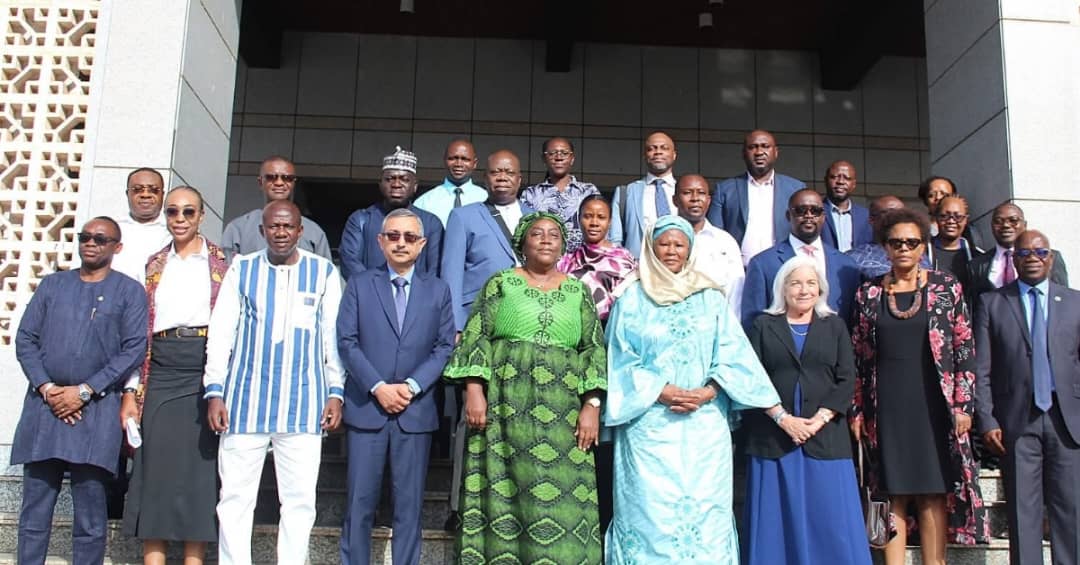
 A high-level joint assessment mission by international moral guarantors has concluded a week-long review of the implementation of the Agreement for National Unity (ANU) and recommendations of the Tripartite Committee in Sierra Leone, urging sustained dialogue, political restraint, and accelerated reforms ahead of the 2028 general elections.
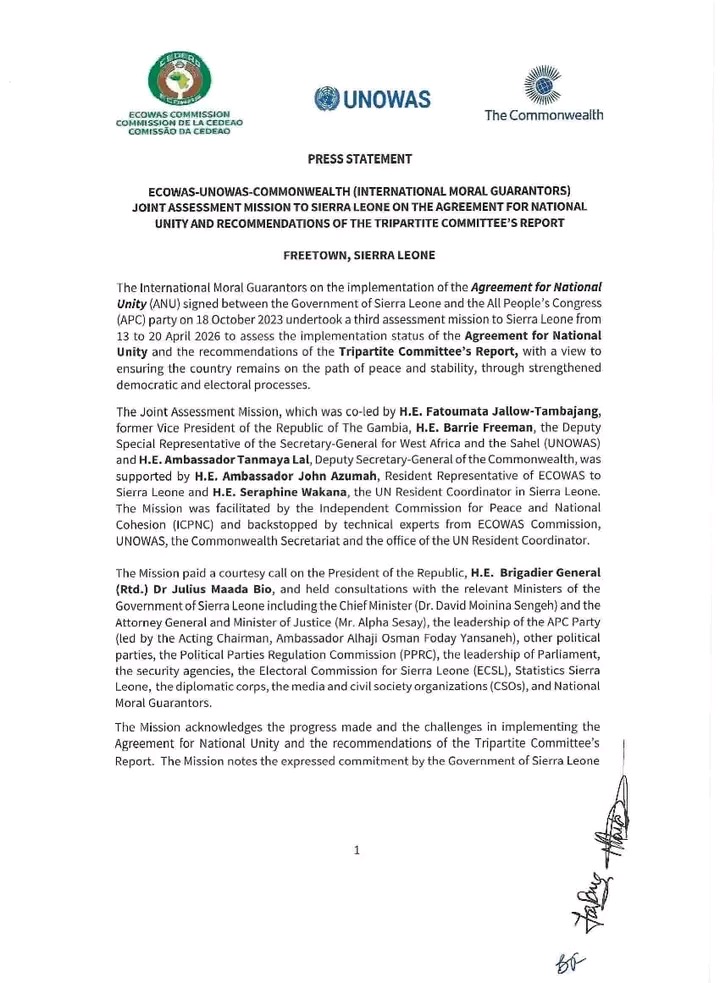
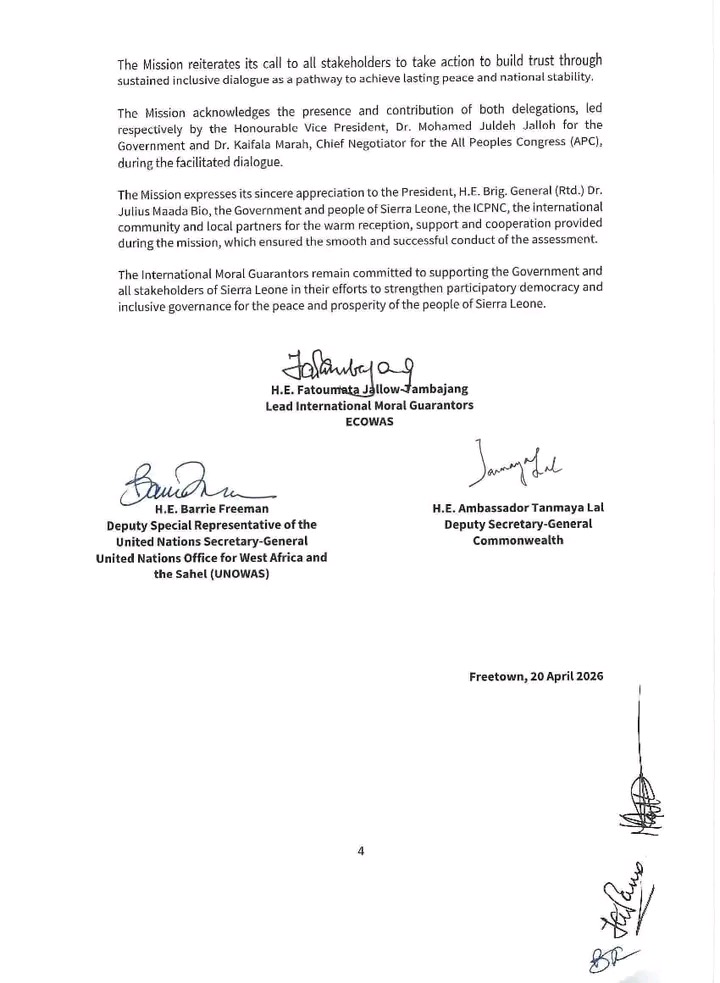
The mission, jointly undertaken by the Economic Community of West African States (ECOWAS), the United Nations Office for West Africa and the Sahel (UNOWAS), and the Commonwealth Secretariat, was in Sierra Leone from 13 to 20 April 2026.
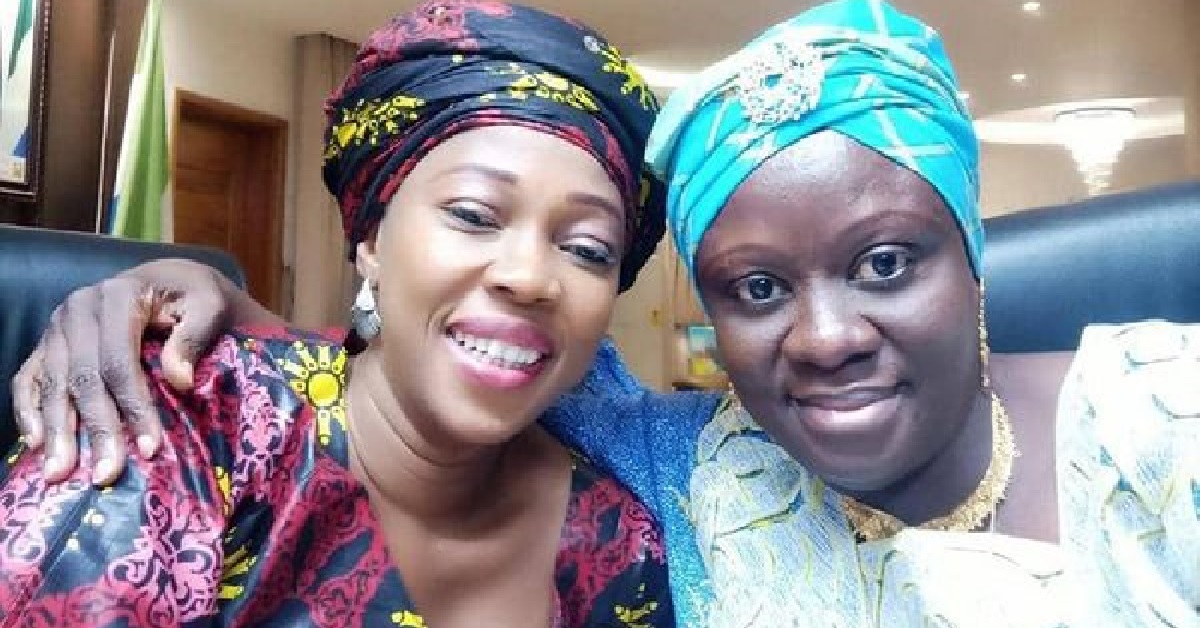
It was co-led by former Vice President of The Gambia, H.E. Fatoumata Jallow-Tambajang, UNOWAS Deputy Special Representative H.E. Barrie Freeman, and Commonwealth Deputy Secretary-General H.E. Ambassador Tanmaya Lal. The team was supported by ECOWAS, UN, and Commonwealth technical experts, with facilitation from the Independent Commission for Peace and National Cohesion (ICPNC).

During the visit, the delegation met President Julius Maada Bio, senior government officials including Chief Minister Dr. David Moinina Sengeh and Attorney General Alpha Sesay, as well as the leadership of the All People’s Congress (APC), other political parties, electoral authorities, security agencies, civil society groups, and the diplomatic corps.
The mission noted both progress and outstanding challenges in implementing the 2023 Agreement for National Unity and the Tripartite Committee’s recommendations. It emphasized the importance of inclusive dialogue and consensus-building among political actors to safeguard peace, stability, and democratic governance.
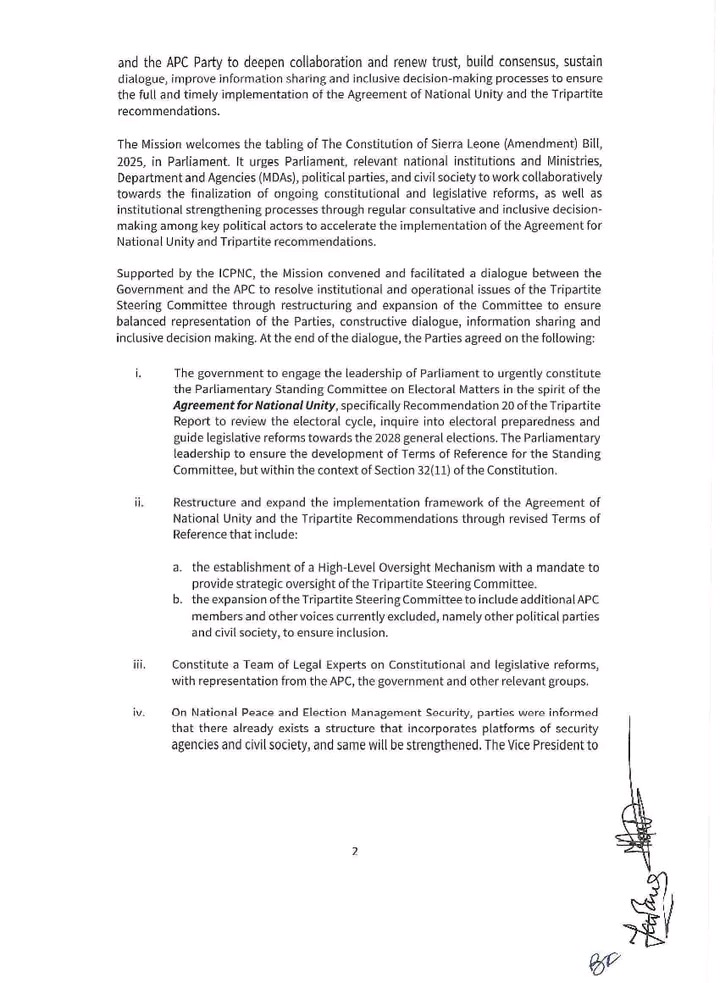
Key areas of discussion included electoral reforms, governance arrangements, census data usage, and political inclusion. The mission welcomed the introduction of the Constitution of Sierra Leone (Amendment) Bill, 2025 in Parliament, describing it as a crucial step in the reform process.
On electoral matters, the mission highlighted that the final electoral system for the 2028 elections will be determined through parliamentary processes currently underway. It also encouraged consensus on strengthening voter registration, results management systems, and broader electoral integrity frameworks in line with international standards.
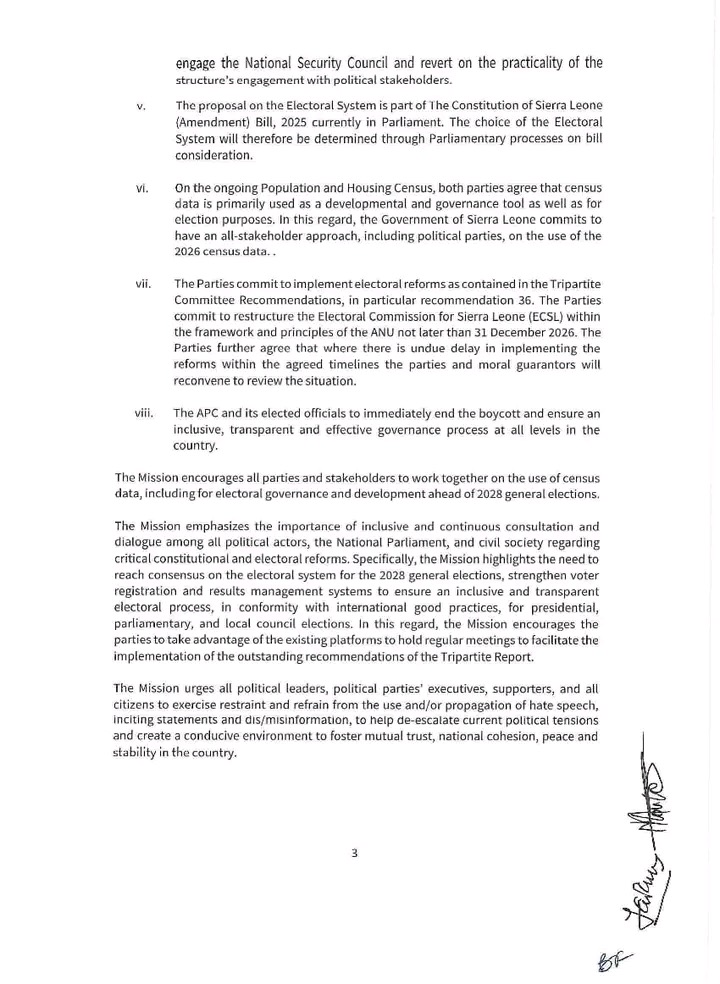
Regarding the ongoing Population and Housing Census, stakeholders agreed that the data should serve both development and electoral purposes. The government, according to the mission, committed to ensuring an inclusive approach involving political parties in the use of the 2026 census data.
The mission further stressed the need for electoral reforms, including the restructuring of the Electoral Commission for Sierra Leone (ECSL), which parties agreed should be completed by 31 December 2026 under the Tripartite framework. It warned that delays in implementation could trigger a review by the guarantors and stakeholders.
In a key outcome of facilitated dialogue between government and the APC, both parties agreed on restructuring the Tripartite implementation mechanism to improve inclusivity. This includes establishing a high-level oversight body, expanding the steering committee to include broader political and civil society representation, and creating a legal expert team to support constitutional and legislative reforms.
The mission also called for the urgent constitution of a parliamentary standing committee on electoral matters to strengthen oversight of electoral preparedness ahead of 2028.
On security and political engagement, stakeholders were encouraged to reinforce existing coordination structures among security agencies and civil society, while exploring stronger engagement between the National Security Council and political actors.
The mission urged all political leaders, parties, and citizens to avoid hate speech, misinformation, and inflammatory rhetoric, warning that such actions could undermine national cohesion and peace.
It further called for sustained trust-building measures, regular dialogue, and improved information sharing among political stakeholders to ensure timely implementation of outstanding reforms.
The delegation expressed appreciation to President Bio, the Government of Sierra Leone, political parties, the ICPNC, development partners, and civil society for their cooperation and hospitality during the mission.
The international moral guarantors reaffirmed their continued commitment to supporting Sierra Leone’s democratic consolidation, inclusive governance, and long-term peace and stability.
Interesting human beings in Sierra Leone. Foreigners has to come and telling them how to rule themselves or how to live in peace. Colonial masters mentality.