
Labour Minister Swaray Sounds Alarm Over AI’s Impact on Workers at Geneva Conference
 Aminata Koroma
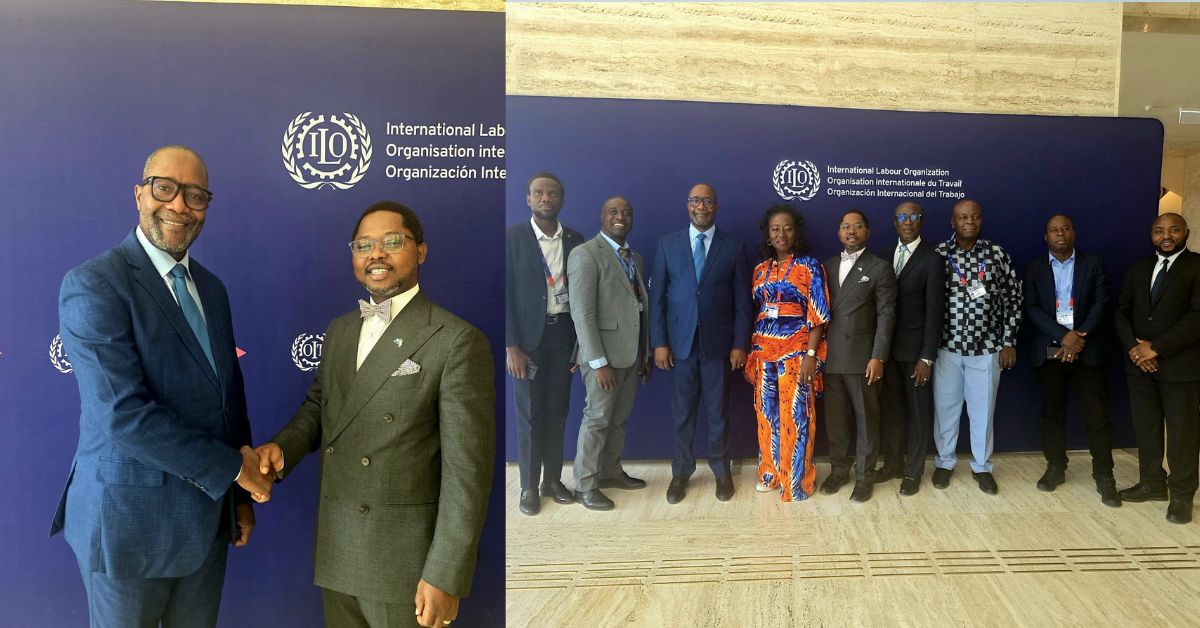
 The Minister of Employment, Labour and Social Security, Hon. Mohamed Rahman Swaray, has called on the international community to take decisive action to ensure that artificial intelligence (AI) advances human dignity and decent work rather than widening inequality.
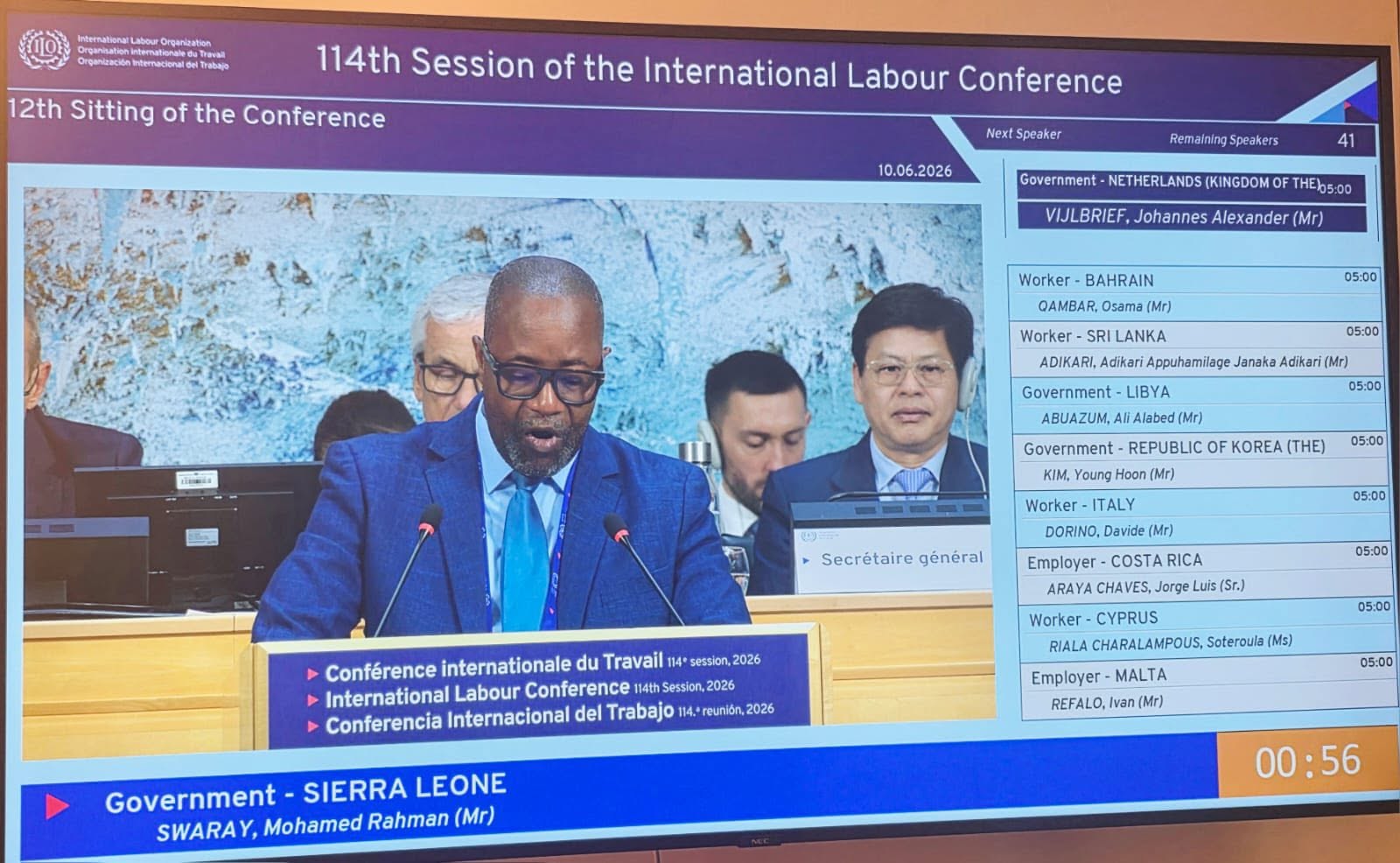
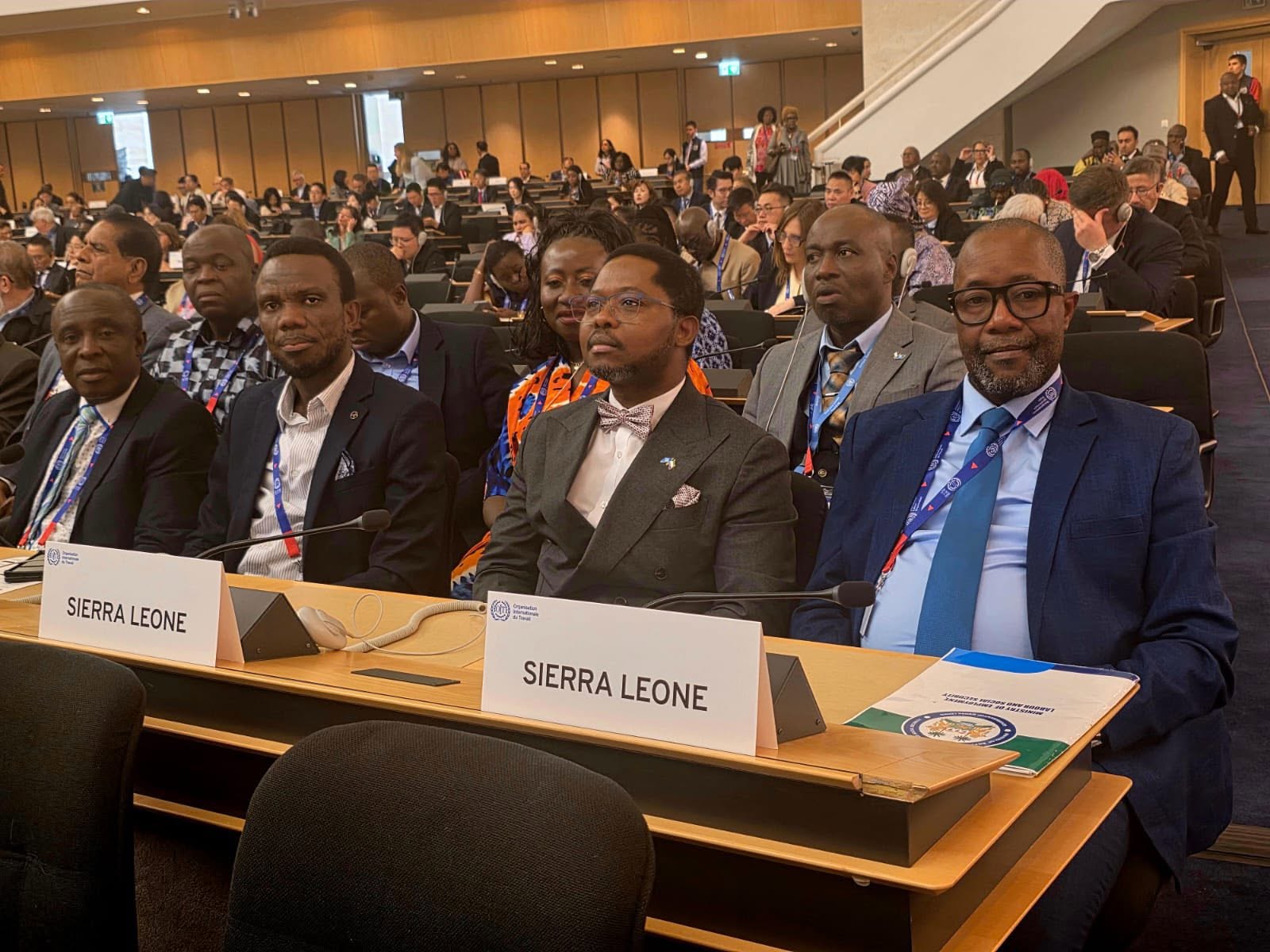
Speaking at the 114th Session of the International Labour Conference in Geneva, Minister Swaray stressed that AI must be treated not just as a technological innovation, but as a critical issue of development, employment, and social justice. He warned that Africa faces the real risk of a growing digital divide-both within countries and between nations-if urgent steps are not taken.

Highlighting Sierra Leone’s proactive role in labour governance, the Minister pointed to the country’s recent hosting of the 52nd African Regional Labour Administration Centre (ARLAC) Governing Council Meeting and a high-level symposium in Freetown, which brought together labour leaders and stakeholders from across the continent. He also referenced the Second National Labour Conference and Social Dialogue Forum held during this year’s May Day celebrations.


Minister Swaray outlined key reforms being implemented under President Julius Maada Bio’s administration, including a 50 per cent increase in the national minimum wage from Le 800 to Le 1,200, effective April 2026. He further noted the launch of a digital work permit system in January 2026 and ongoing efforts to establish an Informal Sector Social Security Scheme aimed at extending protection to self-employed workers.
He also disclosed that the Cabinet has approved a new Data Protection and Right to Access Information Bill, a move aimed at strengthening governance and safeguarding citizens’ rights in an increasingly digital era.
While acknowledging the opportunities AI presents, particularly for youth entrepreneurship, e-commerce, and remote employment, the Minister cautioned that unequal access to technology, digital skills, and internet connectivity could deepen existing social and economic disparities. He raised additional concerns about worker surveillance, algorithmic bias, data privacy, and the potential loss of jobs due to automation.
Minister Swaray concluded by calling for stronger international cooperation and a renewed global commitment to placing people at the centre of technological progress.
“Artificial intelligence cannot and must not replace our commitment to human dignity,” he said, reaffirming Sierra Leone’s resolve to work with global partners to ensure that technological advancement benefits all workers and leaves no one behind.