

Vice President Mohamed Juldeh Jalloh Leads Global South Call for Fair Climate Finance in Hamburg
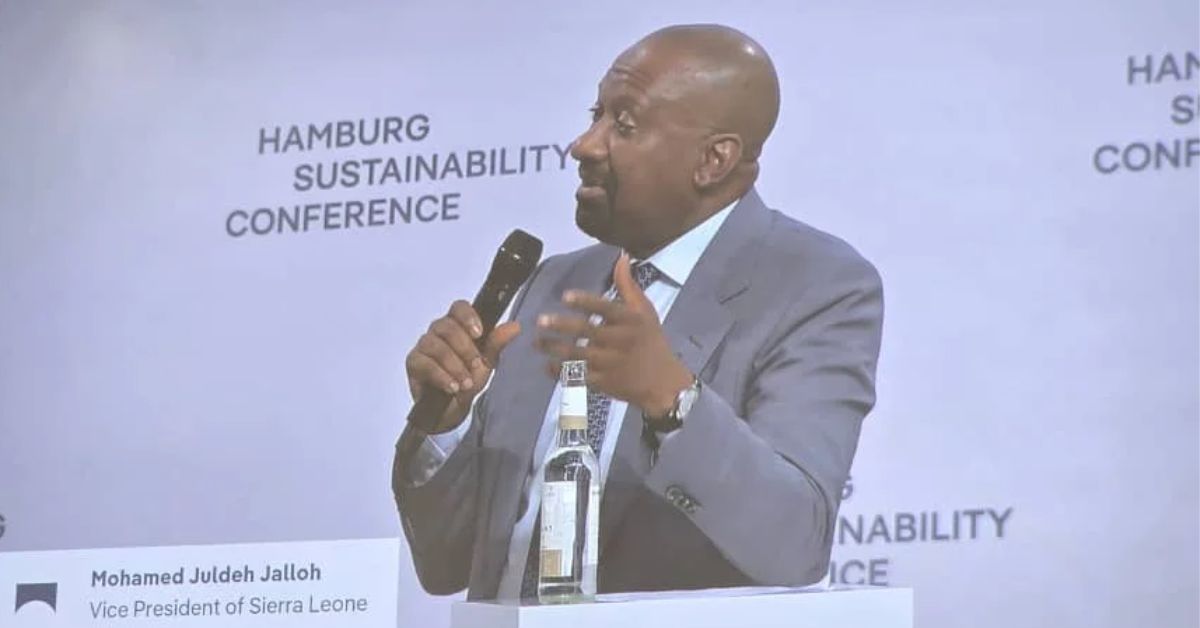
Sierra Leone’s Vice President, Dr Mohamed Juldeh Jalloh, has positioned himself as a leading advocate for the Global South after delivering a strong message on climate, debt, and inclusive development at the Hamburg Sustainability Conference.
Addressing delegates, government leaders, and development partners, Dr Jalloh called for a rebalancing of the global sustainability agenda to ensure that low-income and climate-vulnerable countries are not left behind. He emphasised that for nations like Sierra Leone, sustainability must be measured not only by emissions targets, but by energy access, food security, jobs, and resilience.
The Vice President urged international financial institutions and donor countries to reform access to climate finance, reduce the cost of capital for African states, and provide predictable, grant-based funding. He noted that high debt service burdens continue to crowd out investments in clean energy, health, and education across the Global South.

Dr Jalloh also highlighted Sierra Leone’s own efforts, pointing to the government’s investments in renewable energy, coastal protection, and digital public infrastructure as part of a broader human capital agenda. He said the country is prioritising “bankable, inclusive projects” that create jobs for young people and women while protecting ecosystems.


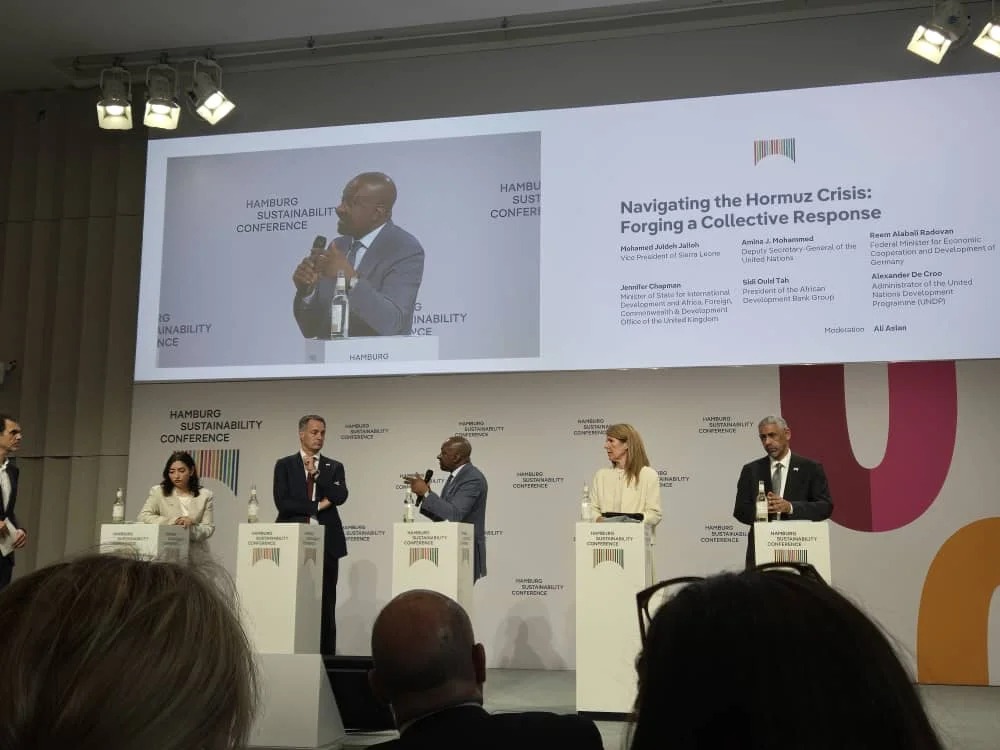
His intervention resonated with several delegations from Africa, Asia, and Latin America, who echoed concerns about uneven implementation of sustainability commitments. Analysts at the conference described Dr Jalloh’s remarks as one of the clearest articulations of the Global South’s position on aligning climate action with development needs.
The Hamburg Sustainability Conference, which brings together policymakers, private sector leaders, and civil society, is designed to accelerate action ahead of global climate and development negotiations later this year.
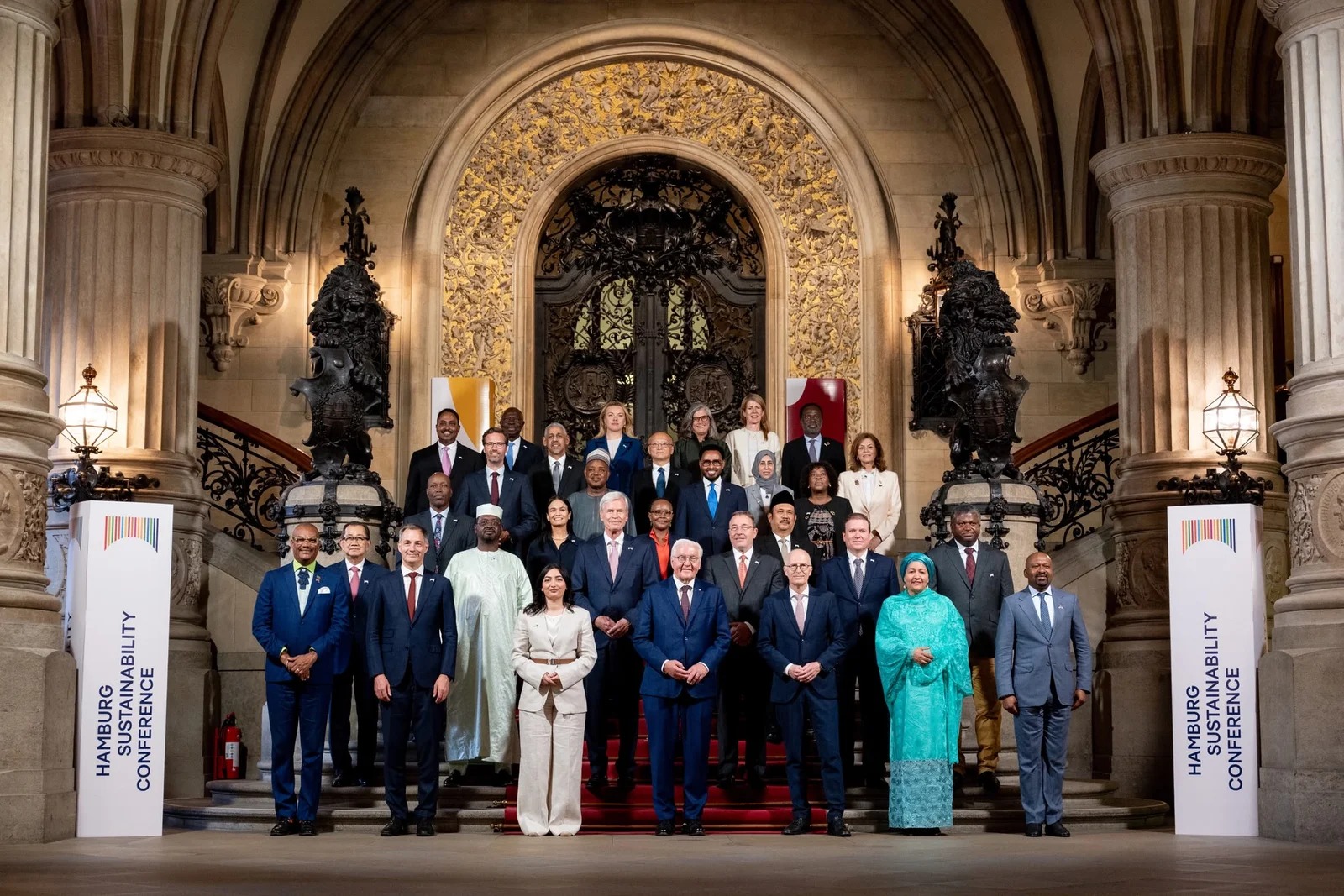
Sierra Leone’s participation signals Freetown’s intent to shape, not just respond to, international sustainability policy. Officials said the Vice President used the platform to build new partnerships around green energy, adaptation finance, and technology transfer.
The Vice President is expected to continue bilateral engagements on the margins of the conference before returning to Freetown.