

 Post a comment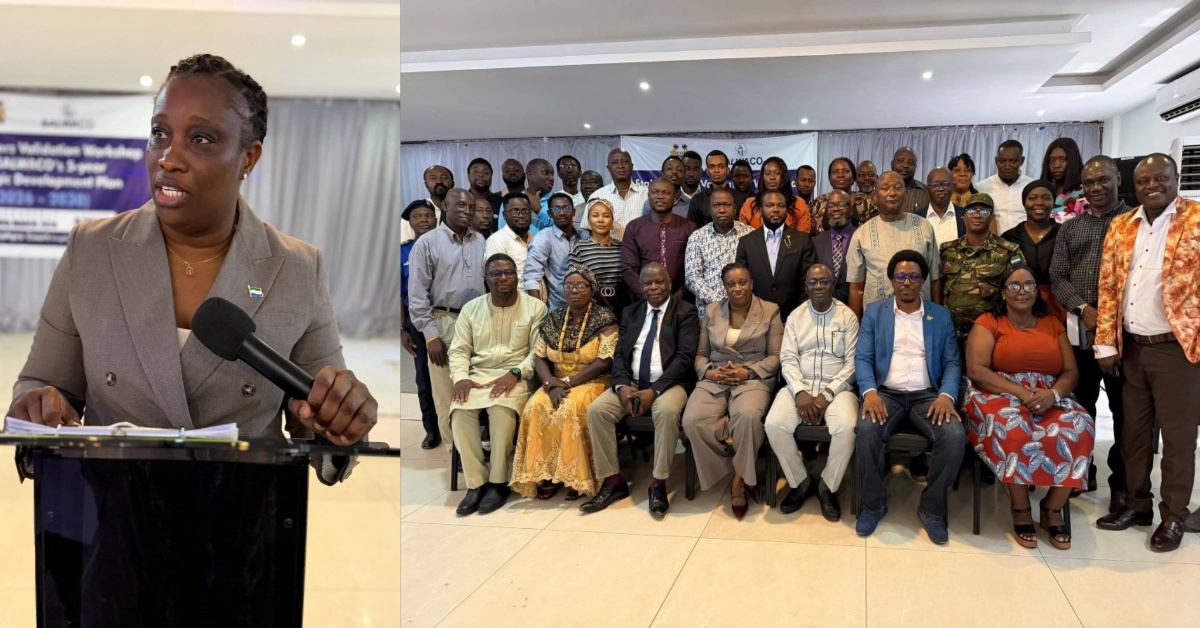
The Sierra Leone Water Company has concluded a one-day stakeholders’ validation workshop for its Draft 5-Year Strategic Development Plan covering the period 2026 to 2030, setting out a renewed roadmap aimed at improving water and sanitation delivery across Sierra Leone.
The workshop, held at the Saphyre Court Hall on Kingharman Road in Freetown, brought together a wide range of stakeholders, including members of SALWACO’s Board of Directors, management and staff, representatives from Ministries, Departments and Agencies (MDAs), development partners, security personnel, as well as local and international organizations.
The engagement forms part of efforts to refine and validate the strategic document that will guide the institution’s operations over the next five years, with a focus on strengthening service delivery and institutional performance.
Speaking at the event, Deputy Managing Director of SALWACO, Albert Harrison Harvey, described the validation exercise as a crucial step toward transforming the institution into a functional and financially sustainable entity, in line with the leadership vision of the Managing Director.
He emphasized that the strategic plan is designed to reposition SALWACO to better deliver on its mandate of expanding access to safe water and sanitation services nationwide.
The Chairman of the Board of Directors, Joseph Joe Ndanema, underscored the importance of stakeholder participation in strengthening the document, noting that SALWACO remains one of the key institutions responsible for water service delivery in the country. He also highlighted government commitment under President Julius Maada Bio to improving access to safe drinking water as part of the national development agenda.
In her opening remarks, SALWACO Managing Director, Ing. Tiideni Hawa Jabbi, said the Strategic Development Plan is aligned with national and global frameworks, including Sierra Leone’s Medium-Term National Development Plan (2024–2030) and Sustainable Development Goal 6 (SDG 6), which focuses on ensuring access to clean water and sanitation for all by 2030.
She explained that the plan identifies five priority areas: water and sanitation development initiatives, sustainable service delivery, commercialization and financial viability, protection and management of infrastructure, and capacity development and knowledge management.
According to her, these pillars are essential to transforming SALWACO into a resilient and efficient utility capable of meeting growing national demand.
She further noted that the validation process also reviewed key technical components of the plan, including the SWOT analysis, logical framework, and expected outcomes that will guide implementation.
The technical session was facilitated by Senior Water and Environmental Sanitation Engineer, Sahr Augustine Sinah, who guided participants through the technical structure and content of the draft plan.
Delivering the vote of thanks, Planning Manager Chrisla Alberta Koroma expressed appreciation to stakeholders for their active participation and constructive contributions toward strengthening the strategic document.
The workshop concluded with a group photograph, marking the successful completion of the validation exercise and signaling the next phase in SALWACO’s strategic planning process aimed at improving water and sanitation delivery nationwide.


