Sierra Leone Government Urge Vigilance Following Ebola Outbreaks in DRC and Uganda
 Osman Tolo Sesay
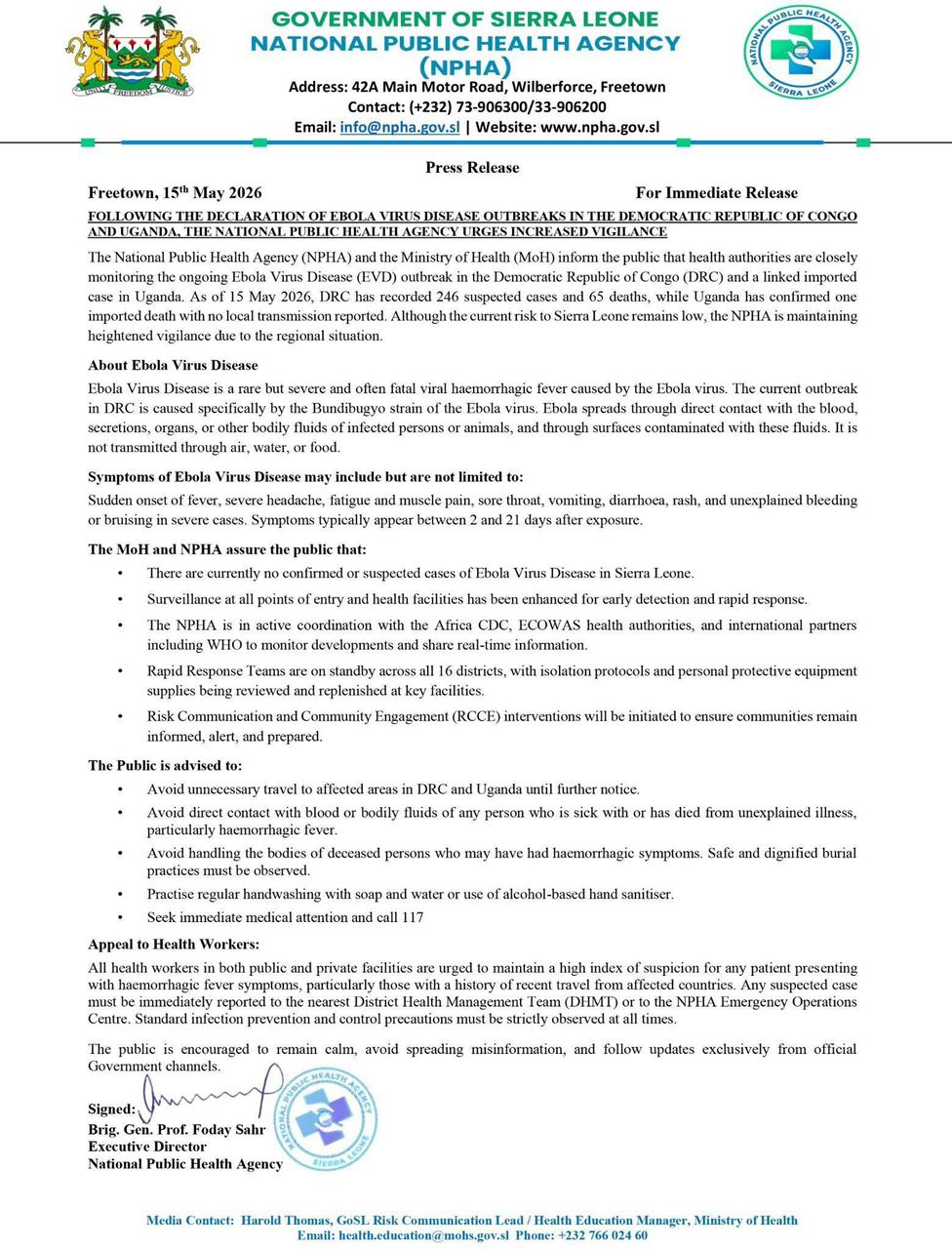
 The National Public Health Agency (NPHA) and the Ministry of Health (MoH) have called for increased vigilance after Ebola Virus Disease (EVD) outbreaks were declared in the Democratic Republic of Congo (DRC) and Uganda.
In a press release issued on 15th May 2026, the agencies said they are closely monitoring the situation. As of 15th May, the DRC had recorded 246 suspected cases and 65 deaths. Uganda confirmed one imported death with no local transmission reported.
The NPHA stated that the current risk to Sierra Leone remains low, but heightened vigilance is being maintained due to the regional situation.

The MoH and NPHA said there are currently no confirmed or suspected cases of EVD in Sierra Leone. Surveillance at all points of entry and health facilities has been enhanced for early detection and rapid response.



The NPHA said it is coordinating with the Africa CDC, ECOWAS health authorities, WHO, and other international partners to monitor developments and share real-time information. Rapid Response Teams are on standby across all 16 districts, and isolation protocols and personal protective equipment supplies are being reviewed and replenished at key facilities. Risk Communication and Community Engagement interventions are also planned to keep communities informed.
The public has been advised to avoid unnecessary travel to affected areas in the DRC and Uganda until further notice. Other advice includes avoiding contact with blood or bodily fluids of people sick with or who have died from unexplained illness, avoiding handling bodies of deceased persons who may have had haemorrhagic symptoms, practicing regular handwashing, and seeking immediate medical attention by calling 117 if symptoms appear.
Symptoms of EVD may include sudden onset of fever, severe headache, fatigue, muscle pain, sore throat, vomiting, diarrhoea, rash, and unexplained bleeding or bruising in severe cases. Symptoms typically appear between 2 and 21 days after exposure.
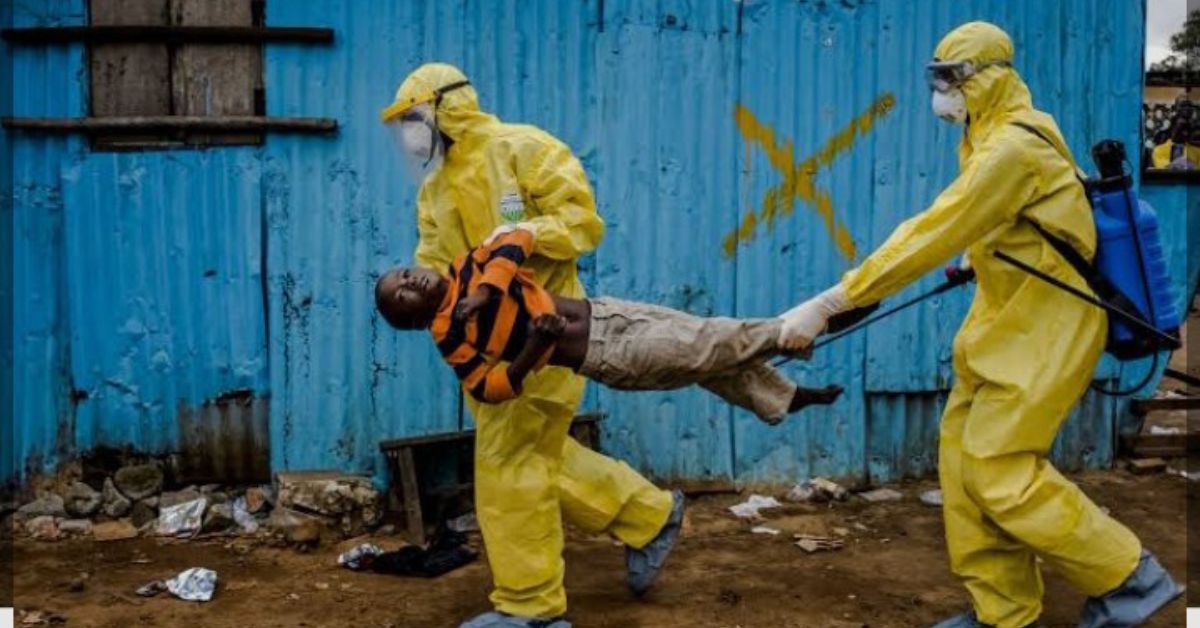
Health workers in both public and private facilities have been urged to maintain a high index of suspicion for patients presenting with haemorrhagic fever symptoms, particularly those with recent travel history to affected countries. Any suspected case must be reported immediately to the District Health Management Team or the NPHA Emergency Operations Centre.
The NPHA and MoH encouraged the public to remain calm, avoid spreading misinformation, and follow updates only from official government channels.
The release was signed by Brig. Gen. Prof. Foday Sahr, Executive Director of the National Public Health Agency.