

 Post a comment
The Statistician General and Chief Census Officer for the 2026 Population and Housing Census, Andrew Bob Johnny, addressed the 7th Interparty Dialogue Committee (IPDC) meeting organised by the Political Parties Regulation Commission (PPRC).
During the Meeting, Johnny started by providing updates on the ongoing census process and stressed the national importance of the exercise. He described the census as a “momentous national endeavor” that produces vital demographic and socio-economic data used to guide evidence-based policymaking, government programming, and equitable resource allocation.
The Statistician-General added that a census serves as a measurement tool for evidence-based decision-making, a basis for resource distribution, and a benchmark for monitoring change over time. “We simply cannot plan effectively as a country without credible census data; it is the sine qua non for national development over the next decade,” Mr. Johnny said.
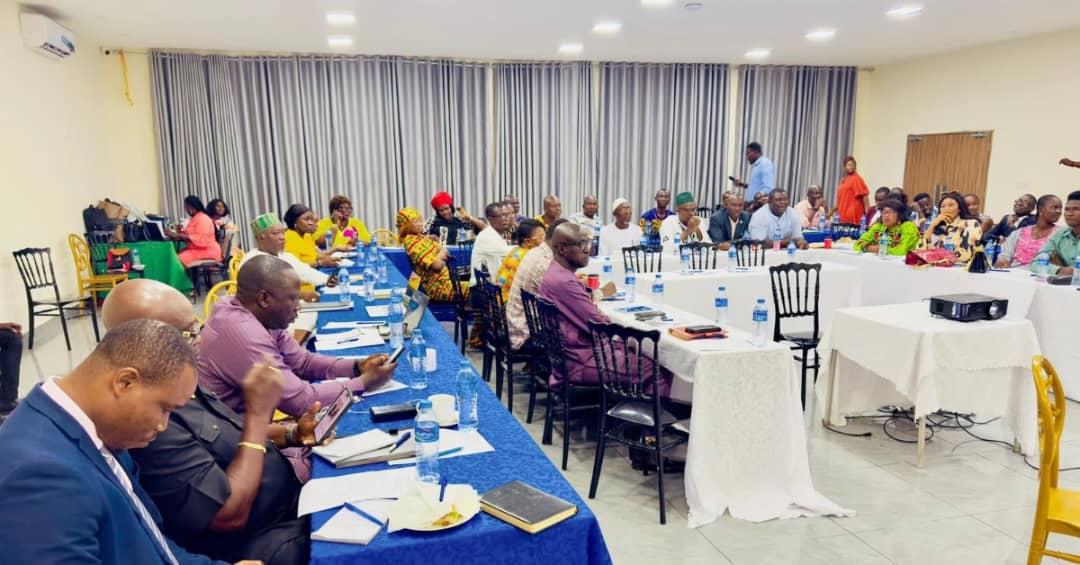
He informed the IPDC that several specialised committees have been established to guide and implement the census, including the Advisory Committee, comprising political party representatives to advise the Chief Census Officer. The committees include, the Technical Committee: responsible for designing questionnaires and census instruments, The Publicity Committee: focused on raising public awareness and understanding, and the Census Secretariat serving as the operational hub managing all aspects of the census.
Furthermore, He announced that national training for cartographic mapping began across all regions on 22nd September 2025 and will run for 10 days. This will be followed by the deployment of field staff who will map and delineate enumeration areas.
“This phase is the bedrock of the census; it involves dividing the country into small, manageable units that each enumerator can cover. It’s a critical step that will take about 6 months.” Mr. Johnny explained.
Also, he commended the Government of Sierra Leone for its support in procuring key technologies and equipment, including ESRI software, GeoApp, satellite imagery, vehicles, laptops, tablets, and the Starlink internet system. He revealed that the government has already committed $24 million to the census effort, with a funding gap of $13 million remaining.
He also acknowledged UNFPA for leading donor coordination efforts and called on donors, private sector actors, and development partners to contribute financially or otherwise to the success of the census.
“The census is not a political exercise; it is a tool for national development’’
Finally, Representatives from the All Political Parties Association (APPA) and other parties also echoed their support and shared constructive feedback during the dialogue.


