


 Post a comment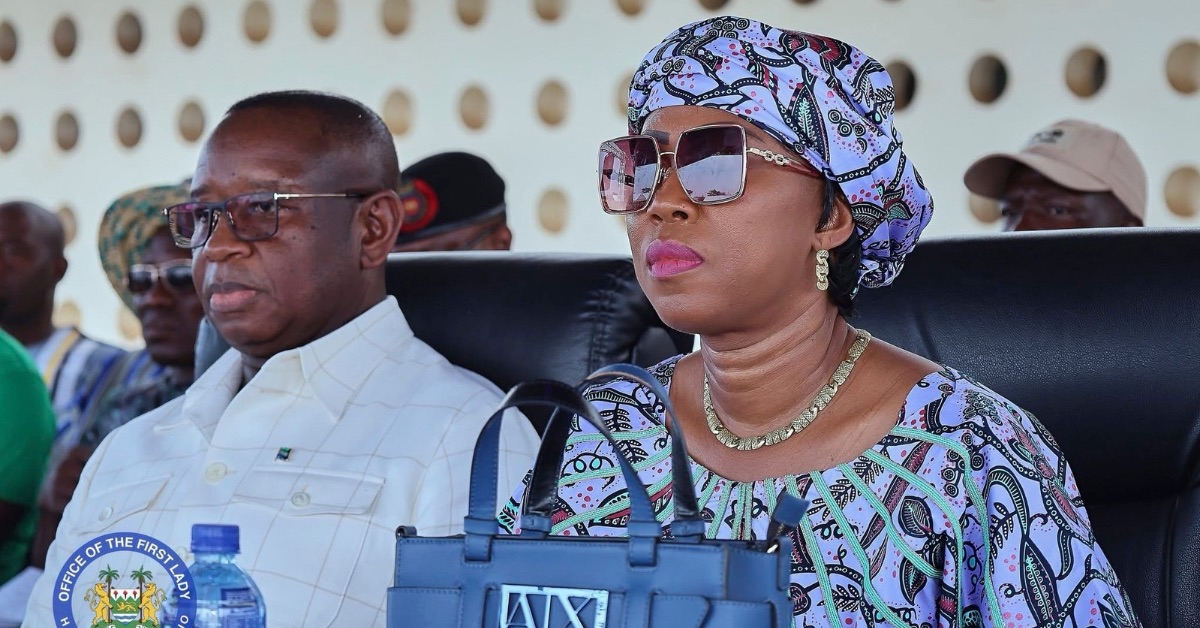
The National Coordinator of the Civil Rights Coalition, Alphonso Manley, has publicly asserted that First Lady Fatima Bio has been more active and impactful than President Julius Maada Bio during his second term in office, citing her visibility and hands-on involvement in development initiatives across the country.
Speaking during a public radio interview, Manley praised the First Lady’s role in championing social and infrastructure projects, including the construction of a hospital and other community-based interventions, which he said were largely initiated and driven by her office.
“I want President Bio to stand before me so I can tell him plainly that Fatima Bio has worked more than him in this second term,” Manley stated. “She is more visible than the President in many programmes and development activities.”

According to Manley, while the First Lady has taken a proactive approach to addressing social welfare issues—particularly in health, women’s empowerment, and child protection—the President’s second-term agenda has, in his view, fallen short of expectations.
He further alleged that several key government projects announced by the President remain incomplete or stalled, raising concerns about delivery and accountability at the highest level of governance.
“Many of the projects promised by President Bio are yet to be completed,” Manley added. “Meanwhile, the First Lady continues to show commitment and leadership by directly engaging with communities and delivering tangible results.”
Fatima Bio has, in recent years, gained national and international attention for her advocacy against sexual and gender-based violence, as well as her involvement in humanitarian and development initiatives. Her increased public presence has drawn both praise and criticism, with supporters lauding her activism and critics questioning the expanding influence of the Office of the First Lady.
Manley’s remarks have since sparked debate in political and civil society circles, with observers divided over the role of the First Lady in governance and the broader performance of the Bio-led administration in its second term.


