


 1 Comment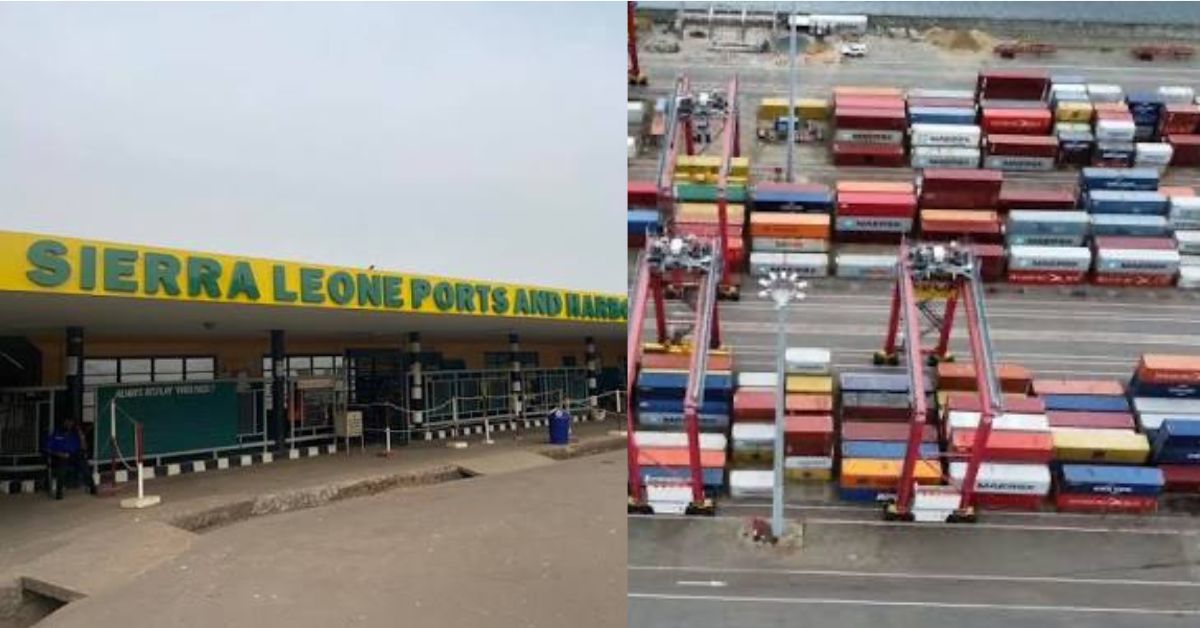
As geopolitical tensions intensify between Iran, Israel, and the United States, analysts are urging African nations, including low income countries like Sierra Leone, to examine how global disruptions could reshape economic opportunities for the region.
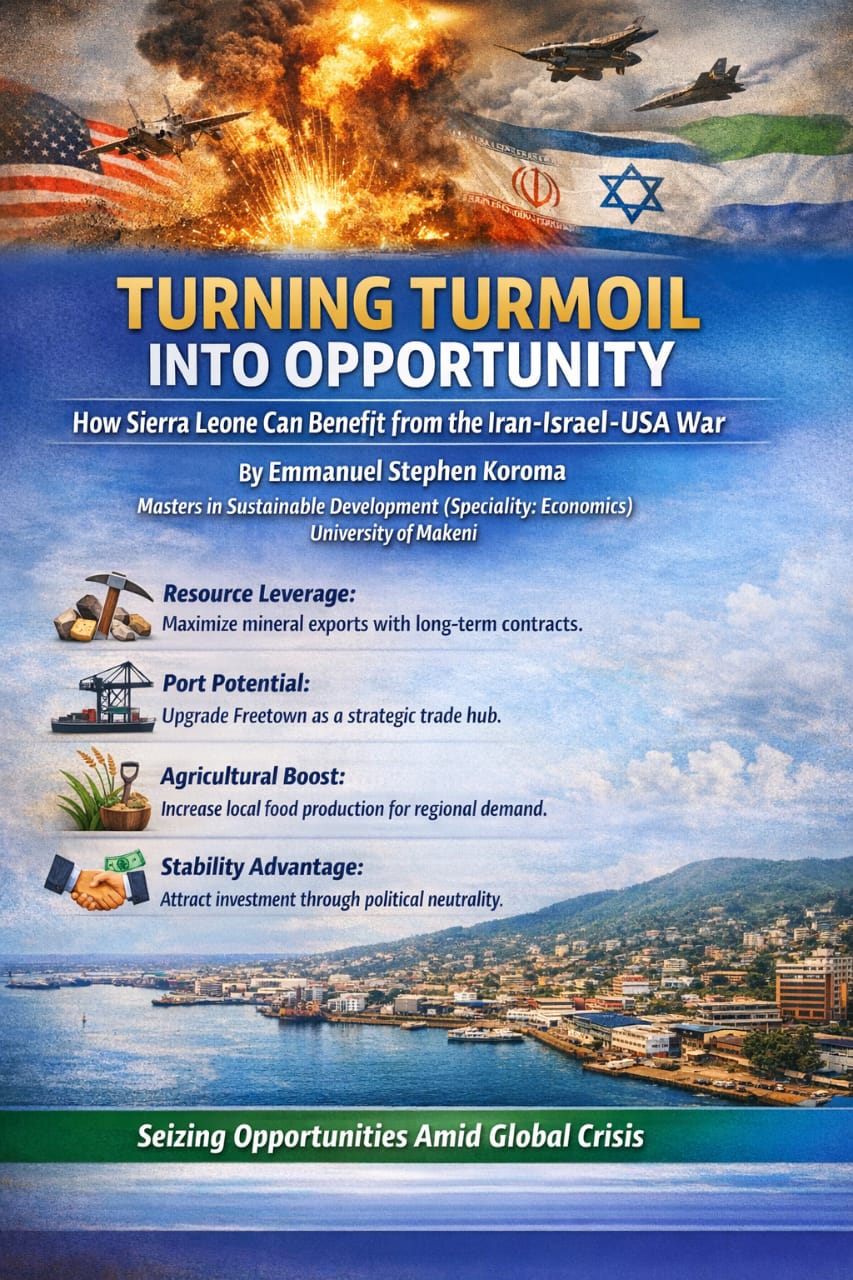
In an analysis authored by Emmanuel Stephen Koroma, the ongoing crisis is described not only as a political confrontation but also as a development with the potential to reorganise global trade, commodity flows, and investment patterns. According to Koroma, countries that respond strategically could gain significant economic advantages.

Commodity Markets Could Favour Resource-Rich Countries
The analysis notes that conflicts in the Middle East frequently disrupt oil supply routes and raise uncertainty in global markets. When such instability occurs, investors and industrial economies often seek alternative suppliers of key raw materials.
Sierra Leone, which exports minerals such as iron ore, rutile, and bauxite, could see increased demand if global buyers attempt to diversify supply chains away from politically sensitive regions. The author argues that the country should move beyond selling raw materials at fluctuating spot prices and instead negotiate long-term supply contracts with industrial economies seeking reliable sources.
Strategic Port Location Remains Underutilised
The report also highlights the geographic advantage of the country’s main port facilities in Freetown, located along the Atlantic trade corridor connecting Europe, the Americas, and parts of Asia.
However, infrastructure limitations remain a major barrier. Inefficient port turnaround times, customs delays, and weak logistics systems reduce the likelihood that multinational shipping firms will choose Sierra Leone as a major logistics hub.
The author suggests that improving port efficiency and introducing digital customs systems could position the country as an alternative trade route if maritime disruptions intensify in the Middle East.
Agriculture Seen as Another Opportunity
Global conflicts often push up fertiliser, grain, and transportation costs, creating food security concerns in many regions. According to the analysis, Sierra Leone could benefit if it increases domestic agricultural production and reduces reliance on imported staple foods.
With significant arable land, the country could expand rice and other staple crop production to supply both local demand and regional markets during periods of global supply disruption.
Neutral Diplomacy May Attract Investment
Another recommendation involves maintaining political neutrality during geopolitical crises. Smaller economies that avoid alignment with major power blocs while maintaining open trade relationships can sometimes attract investment from companies seeking politically stable operating environments.
For Sierra Leone, this would require stronger economic governance, regulatory stability, and greater transparency in taxation and business regulations.
Need for Strategic Planning
Koroma concludes that many African countries historically fail to benefit from global disruptions because of slow policy responses and overreliance on raw commodity exports.
He argues that Sierra Leone could convert the current geopolitical uncertainty into economic opportunity if it focuses on four key reforms: renegotiating mineral export frameworks, modernizing port infrastructure, expanding domestic agriculture, and strengthening economic governance.
According to the analysis, global conflicts often reshape economic power structures, but the nations that benefit are typically those that act early and implement disciplined economic policies.


Your piece is worth reading. However, it is evidently clear that the losers of globalization are the poor Africa nation. We are net importers of everything we consume, thereby receiving the greater negative economic impact in case of global shocks. On the other hand supply chain disruption serves as an advantage for other nations, what is the position of African nations that have less control over their resources? In my view investors use global disruption as an advantage to devalue African resources.