

“Kono is SLPP, Freetown at 55/45, Kambia and Karene up for Grabs” – SLPP Politician Reveals 2028 Elections Strategy
 Sorie Abubakar
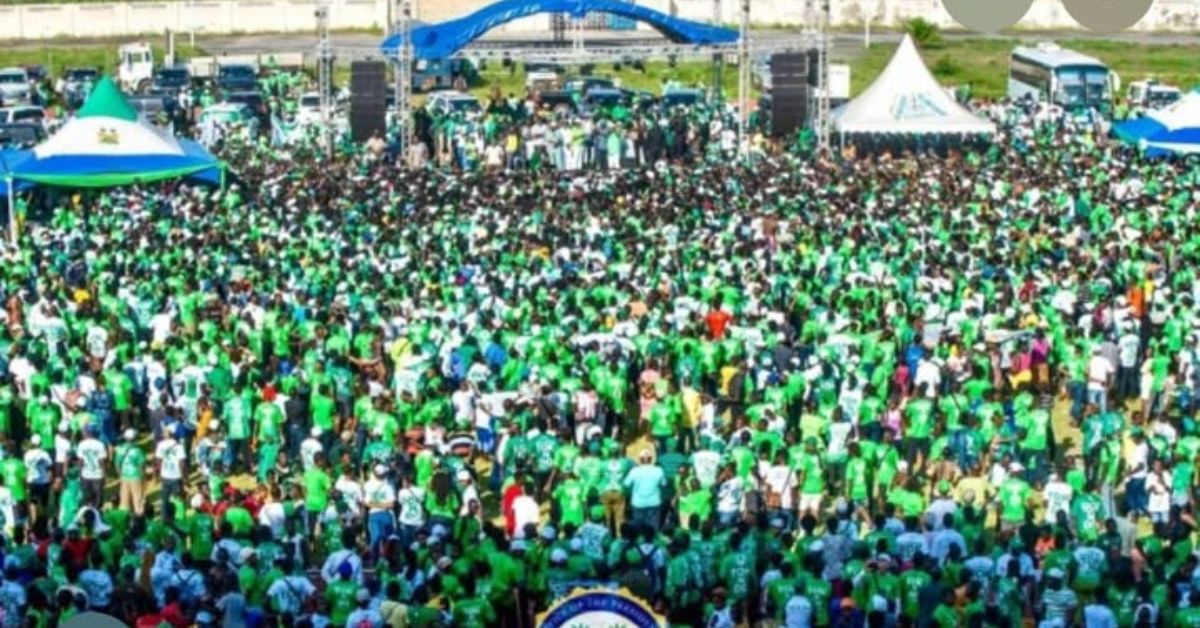
 A senior government official has offered a glimpse into the ruling Sierra Leone People’s Party (SLPP) electoral strategy for 2028, confidently predicting victory based on rapid population growth in the party’s southeastern strongholds and expanding political influence in traditionally contested areas.
Myk Berewa, the Director of Communications at Sierra Leone’s State House, made the projections in a Facebook post on Saturday, laying out a detailed electoral map that he argues favors the Sierra Leone People’s Party (SLPP) in the next presidential vote.
“Kailahun, Kenema, Bo, Moyamba, Pujehun, and Bonthe are awash and soaked in solid green. Kono is no more swing district. Kambia and Kareneh are still up for grabs. Freetown presently is a close call at 55/45. This is a numbers game, not a social media game,” Berewa wrote.

The statement challenges decades of electoral history. Kono, a diamond-rich district in eastern Sierra Leone, has long been considered a classic swing district, changing hands between the SLPP and APC in multiple elections. In 2002, the SLPP won Kono under late President Ahmad Tejan Kabbah, but the APC took the district in both 2007 and 2012.
Berewa’s confidence appears rooted in population trends. Data from the United Nations shows that the southeastern districts—SLPP strongholds—are experiencing significant population growth, while northern districts, traditionally APC bases, are growing more slowly. Freetown, the capital, remains the largest urban center with nearly 1.94 million residents, followed by Bo (345,988) and Kenema (249,485)—all SLPP-leaning territories.
Political analysts have long noted that Sierra Leone’s voting patterns follow strong regional and ethnic lines. The APC has historically dominated the north and western areas, while the SLPP commands the south and east. However, the 2023 elections demonstrated narrowing margins.
In the Western Area—which includes Freetown and its surroundings—the APC’s dominance has steadily eroded. In 2012, the APC outperformed the SLPP by approximately 263,000 votes in the region. By 2018, that margin had shrunk significantly, with the SLPP reclaiming nearly 109,000 of those votes . Official results from the June 2023 presidential election show that while APC candidate Samura Kamara won Western Area Urban with 290,723 votes against President Bio’s 177,393, the ruling party remains competitive in the capital.
Berewa argues that with 939,786 registered voters in the Western Area—representing nearly 28 percent of the national electorate—even a close contest in Freetown favors the SLPP when combined with its southeastern strongholds.
The post triggered immediate backlash from opposition supporters and political commentators, who accused Berewa of overconfidence and potential manipulation of census figures.
Francess Massaquoi warned that “elections are not only stolen on polling day,” alleging that the SLPP could attempt to skew population representation through the census process. “The APC and all citizens who believe in democracy must remain vigilant throughout the entire process,” she wrote.
Others pointed to the sheer size of the north. Samuel Saidu Sam Sr. countered: “The North is bigger and populated than south-East combined. So just conduct free and fair Elections and see if there will be any Run-off.”
Berewa dismissed such concerns, accusing the APC of lacking “a compelling message and viable policy alternatives.” He added, “Aware that they don’t have a clear democratic route to victory, it’s no surprise that many coup plotters come from their ranks.”
Despite Berewa’s mathematical confidence, the political landscape remains complicated by Sierra Leone’s deepening economic crisis. Rising living costs, high unemployment, and declining purchasing power have placed massive strain on households across the country.
Young lawyer and human rights activist Mamoud Bah urged voters to “please vote wisely in the next election,” accusing the current government of prioritizing its own interests over those of ordinary citizens.
The ruling SLPP currently holds 81 seats in parliament compared to the APC’s 54, a majority the party secured in the June 2023 elections under a new proportional representation system. Whether that majority survives another five years of economic hardship—and Berewa’s demographic projections—remains an open question.
For now, the State House communications director has drawn a clear line: “This is a numbers game, not a social media game.” With the next elections nearly two years away, both parties are already making their case—one district, one demographic, and one mango at a time.
With all these, you will still intimidate APC in the south-east. Una feel say na we all fool eh