
Sierra Leone Strengthens International Collaboration to Capture Fugitive Drug Lord ‘Bolle Jos’
 Deborah Sorie
 The Sierra Leone government is ramping up collaboration with Western allies on counter-narcotics and intelligence operations amid increasing diplomatic pressure from the European Union and heated domestic discussions about drug syndicates exploiting West African shipping routes.
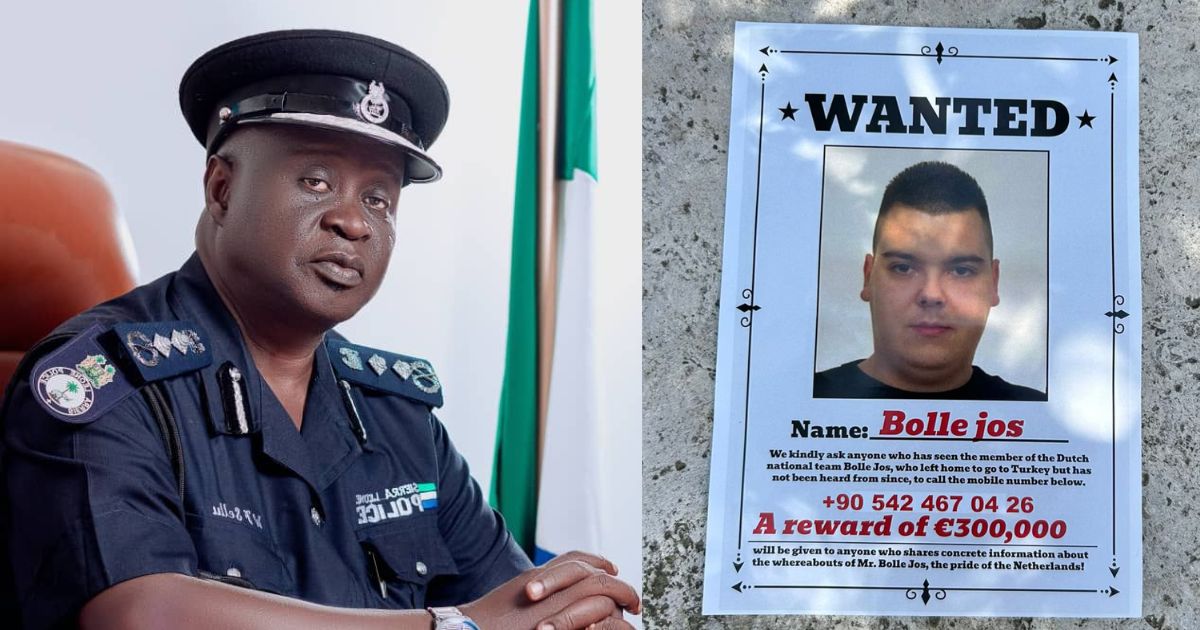
At the forefront of this security initiative is a coordinated manhunt to locate and apprehend Jos “Bolle Jos” Leijdekkers, a Dutch fugitive who is the Netherlands’ most wanted criminal. He was sentenced in absentia in 2024 to 24 years for large-scale cocaine smuggling and ordering a murder.
The manhunt comes as the Dutch government pushes the EU to cut development aid to Sierra Leone over Leijdekkers’ presence in the country. The European Union has allocated €352 million in grants to Sierra Leone for the 2021-2027 period.

Dutch Justice Minister David van Weel described it as “bizarre” that the Netherlands is still helping to fund a country sheltering one of its most wanted criminals. According to reports, Leijdekkers is in a relationship with a daughter of President Julius Maada Bio — a connection that may be complicating efforts to remove him.

The pressure intensified following the record seizure of more than 30 tonnes of cocaine off the coast of West Africa on May 1, 2026 — the largest single cocaine seizure in recorded history. Spanish authorities intercepted the cargo ship Arconian off Western Sahara, carrying the massive haul.
According to a report by the Geneva-based Global Initiative Against Transnational Organized Crime (GI-TOC), the shipment was most likely loaded in Freetown and coordinated by Leijdekkers’ network. The report concludes that the seizure was not an isolated event but part of an established smuggling route running from Sierra Leone to Europe.
Since at least 2024, multiple small cargo ships have departed from Freetown or nearby waters following near-identical routes toward North Africa. At least eight such voyages have been identified.
In response, the Office of National Security (ONS) and the maritime division of the Republic of Sierra Leone Armed Forces (RSLAF) have strengthened deep-sea coordination with the United States Africa Command (AFRICOM), the French Navy, and the Maritime Analysis and Operations Centre – Narcotics (MAOC-N).
The intelligence-sharing network is implementing radar tracking and synchronized patrols along the Atlantic coast. Objectives include bolstering port infrastructure in Freetown, tightening verification of shipping manifests, and preventing cartels from infiltrating container vessels.
The Sierra Leone Police have launched targeted operations across the nation, reviewing local identity and border records to track down potential aliases, including “Umarr Sheriff,” which the fugitive may have used to evade capture. While intelligence reports indicate he may have fled the jurisdiction due to intensifying scrutiny, security forces are prioritizing the investigation.
Government officials have also conducted an overhaul of internal immigration processes, including the dismissal of senior personnel to mitigate vulnerabilities.
Members of the European Parliament have called on the European Commission to take stronger action against Sierra Leone, arguing that the country has become both a key transit point for cocaine destined for Europe and a refuge for EU citizens seeking to evade prosecution.
The lawmakers noted that despite bilateral and EU-level diplomatic engagements, no extraditions have been secured to date. Sierra Leone is a party to the United Nations Convention against Transnational Organized Crime, which includes provisions on extradition, but the country has not implemented these obligations in cases involving EU member states.
Government communication officials assert that Sierra Leone is committed to fulfilling its international obligations under the UN Convention against Transnational Organized Crime.
“We are sending a clear and firm message to the world,” a senior security source told the Journalists. “Sierra Leone will not serve as a playground or transit zone for international drug lords. Our active partnerships with American, French, and European allies, both on land and at sea, affirm our unyielding commitment to uphold the rule of law and defend our national sovereignty.”
Keep fooling yourselves. The world knows Bolle Jos is being protected by the illegitimate Sierra Leone government led by Julius Maada Bio.
The I.G and the government still think we are in 1901, where we don’t know anything about the world 😊😊 but keep on hiding bolle jos(place go clear pa una one day.