

Spain vs Argentina Preview: Tactical Masterclass Vs Resilient Champions in World Cup Final Showdown
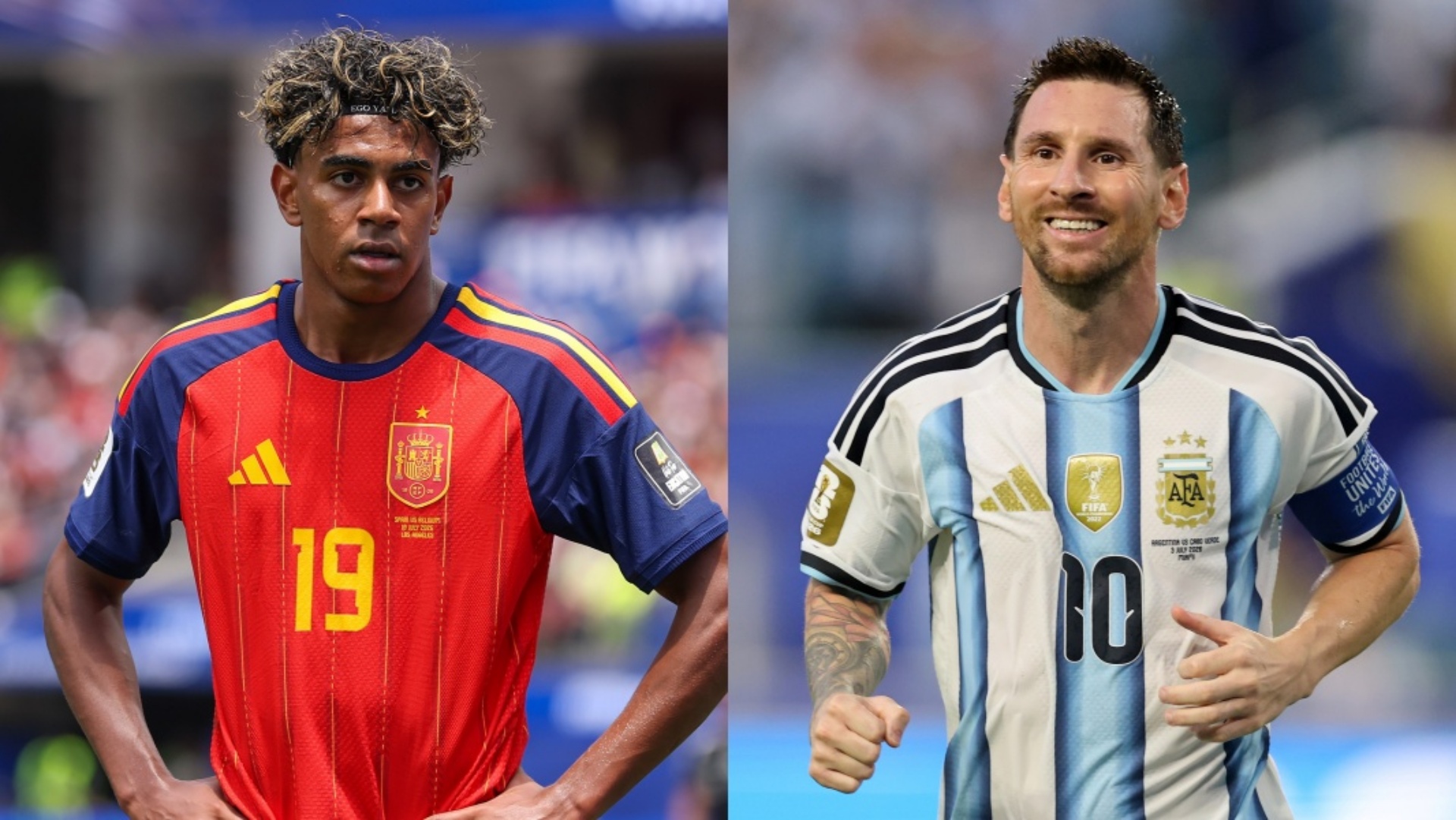
Spain and Argentina meet in the first-ever World Cup final between the reigning European and South American champions, in what promises to be a fascinating clash of styles.
Spain have been the tournament’s standout side, conceding just one goal in seven matches and producing a dominant semi-final performance to neutralise France’s formidable attack. Argentina, meanwhile, have built their run on resilience, experience and the enduring brilliance of Lionel Messi, pulling off dramatic late comebacks in every knockout match.
The final also carries a compelling personal narrative. Lionel Messi, widely expected to be playing his final World Cup match at 39, faces Spain and Lamine Yamal — the teenager many consider his natural heir at Barcelona. Nearly two decades after a famous photo showed Messi bathing a baby Yamal in a charity photoshoot, the two generations collide on football’s biggest stage.

Spain’s Dominant Run

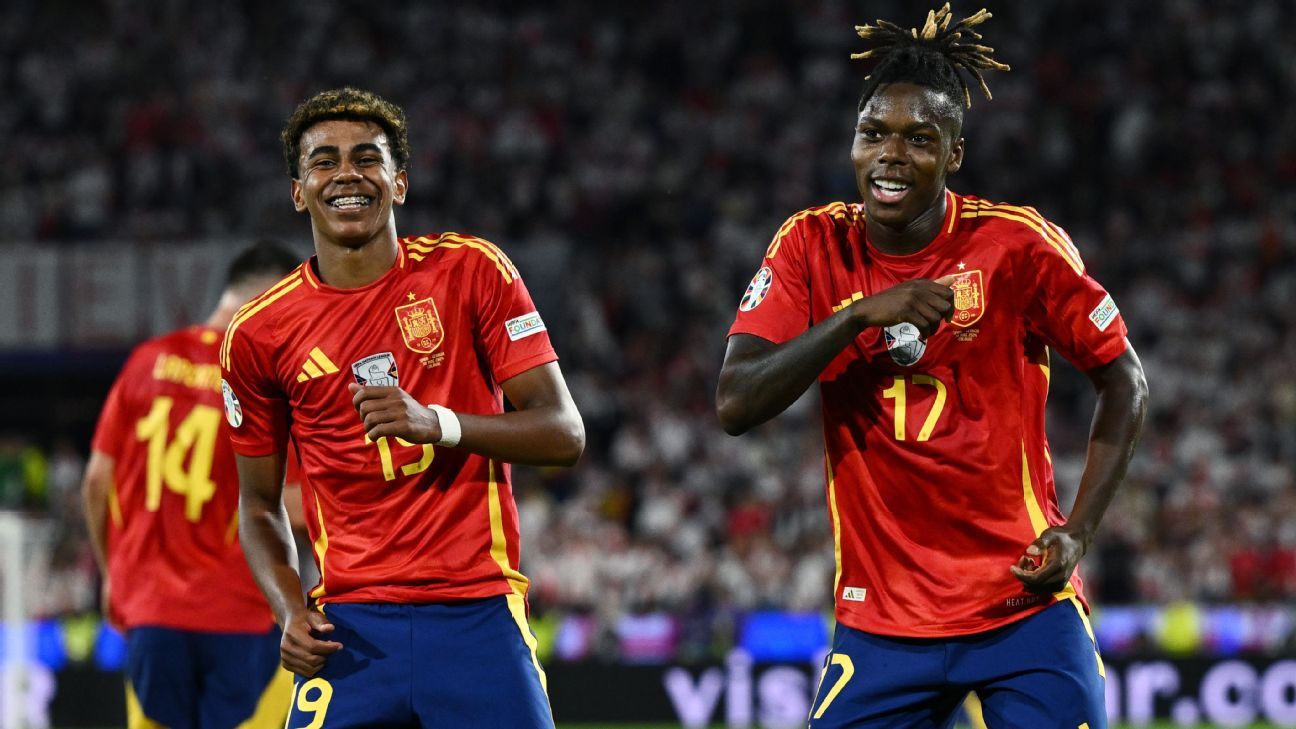
Spain have been the most complete team of the tournament. They have conceded just one goal in seven matches, keeping six clean sheets — the most ever at a single World Cup. Their semi-final performance against France was a tactical masterclass, holding Kylian Mbappe and co. to just 0.3 expected goals — the lowest figure recorded in a World Cup semi-final since data began being collected in 1966.
La Roja have not trailed for a single minute at this tournament. They control games through possession, with Rodri dictating the tempo from midfield, and have the attacking depth to punish opponents when gaps appear.
Argentina’s Comeback Kings
Argentina’s path could hardly be more different. The defending champions have been taken to extra time in three knockout matches and have not been ahead at the 90th minute in any of their four knockout ties — yet they won every one.
Against Egypt in the Round of 16, they trailed 2-0 until the final 10 minutes before completing the latest two-goal comeback leading to a regulation win in World Cup history. In the semi-final against England, they scored twice in the final seven minutes to turn a 1-0 deficit into a 2-1 victory.
Messi has been at the heart of it all, with a direct hand in 12 of Argentina’s 19 goals — eight goals and four assists.

TACTICAL BREAKDOWN
Spain: The Master of Control
Spain’s game is built on possession with purpose. They do not keep the ball for its own sake — they use it to control the tempo, exhaust opponents, and create openings. As former England striker Robbie Fowler noted, “They play forward, break presses and look to attack in transition“.
Key strengths:
-
Defensive solidity: The backline of Pedro Porro, Pau Cubarsi, Aymeric Laporte, and Marc Cucurella has been immaculate, conceding just once.
-
Midfield control: Rodri has been the tournament’s most influential midfielder, leading in distance covered (83.47 km), passes completed (629), and through balls (62).
-
Attacking unpredictability: The full-backs push high, with Porro making 139 runs behind the defensive line — the fifth-most of any player. Lamine Yamal provides width and dribbling threat on the right wing.
Key weakness: The high line of the full-backs can leave space behind for Argentina’s counter-attacks, as Germany legend Oliver Kahn noted: “Spain’s only vulnerability could arise if its attacking full-backs push too high up the pitch, leaving space for Messi & Co. to exploit on the counter“.
Argentina: The Art of Resilience
Argentina are a team of passion and aggression, doing the “ugly stuff better than anyone else, flying into late challenges and trying to intimidate the opposition”. They are as comfortable dominating the ball as they are defending without it, leading the World Cup for through balls.
Key strengths:
-
Messi’s genius: Involved in 52.7% of Argentina’s shots, he is content to wait for the game to come to him, decisive when it matters.
-
Tactical flexibility: Lionel Scaloni has switched between formations throughout the tournament, giving Argentina flexibility both in and out of possession.
-
Set-piece threat: Argentina lead the tournament for headed and set-piece goals, scoring from a variety of situations.
-
Substitutions: Scaloni’s reading of the game and timing of changes have been crucial to Argentina’s comebacks.
Key weakness: Argentina have conceded seven goals in seven matches — Spain have conceded one. Their defence, while resilient, is vulnerable to well-worked attacking moves.
Messi vs Spain’s “Steel Wall”
Spain neutralised France’s attack, the tournament’s most feared, in the semi-final. But Messi presents a different challenge. He does not need rhythm or momentum; he is content to be anonymous for long stretches, decisive when it matters.
Spain have confirmed they will not man-mark Messi. Coach Luis de la Fuente recalled a previous experience: “We assigned a player to mark him man-to-man, but in the 70th minute… Messi scored four goals against us. So we won’t use man-to-man marking this time“.
Instead, Rodri will patrol the pockets outside the box where 19% of Messi’s touches occur. When that space closes, Messi simply relocates, drifting wider as defences tyre — the source of both assists in the semi-final win over England.
Rodri vs Enzo Fernandez
Rodri has been Spain’s midfield anchor, completing a competition-high 648 passes with 93% accuracy. Fernandez, who scored the equaliser against England and has forced more turnovers than any teammate, will be tasked with disrupting Spain’s rhythm.
This battle could decide the tempo of the final. Whoever gains the upper hand will dictate how the match is played.
Yamal vs Tagliafico
Lamine Yamal has been central to Spain’s attack, with 22 successful dribbles at the tournament — second only to Messi. Standing in his way will be veteran Nicolas Tagliafico, part of Argentina’s 2022 World Cup-winning squad with over 80 international caps.
The 33-year-old left-back’s experience will be crucial in neutralising the teenager who many consider Messi’s heir.
TEAM NEWS
Spain:
Lamine Yamal and Pedro Porro both sat out Thursday’s training session but are expected to be fit for the final. Yamal had a “strong knock” after the semi-final but trained on Friday and is in “optimal condition”. Porro’s issue was described as “muscle overload” rather than a major injury.
Spain otherwise have a clean bill of health. Luis de la Fuente is expected to name the same side that beat France, with Fabian Ruiz preferred to Pedri in midfield.
Predicted Spain XI (4-2-3-1): Simon; Porro, Cubarsi, Laporte, Cucurella; Rodri, Ruiz; Yamal, Olmo, Baena; Oyarzabal
Argentina:
Emiliano Martinez has been playing through a hand injury, admitting: “My arm still hurts every day. I decided against surgery because it would be too painful“. He has returned to normal training and feels “much better”.
Argentina have no suspensions and a full squad available.
Predicted Argentina XI (4-3-3): E. Martínez; Molina, Romero, L. Martínez, Tagliafico; De Paul, Paredes, Mac Allister; Messi, Álvarez, L. Martínez.
WHAT THE EXPERTS SAY
Opta’s supercomputer gives Spain a 59% chance of winning, with Argentina at 41%.
Robbie Fowler (former England striker): “Spain will have a little bit more of the ball. How we stop Messi from dominating games is you don’t let them have the ball. Spain are a possession-based team with a purpose“.
Oliver Kahn (legendary Germany goalkeeper): “Spain are playing like clockwork, without any weaknesses… This game is a match between rational guys playing super-smart football against fully emotional, aggressive guys playing a totally different style“.
Luis de la Fuente (Spain coach): “Two super teams, in my opinion, very similar in many respects in terms of attitude and talent. I believe both Spain and Argentina will have a game plan where talent and good football will rule over everything else“.
Emiliano Martinez (Argentina goalkeeper): “The team’s success is the result of collective effort. Over the years, we’ve built something together that’s hard to put into words“.
SIERRA LOADED INSIGHT
This is a final of polarising styles and iconic narratives. Spain have been the tournament’s most complete team, with a defence that has conceded just once and a midfield that controls every game. Argentina have been the tournament’s most resilient team, finding a way to win when it matters most.
The individual battles are fascinating. Messi vs Spain’s defence is the headline act, but the midfield duel between Rodri and Enzo Fernandez could be just as decisive. Yamal vs Tagliafico is a clash of generations — the teenager many consider Messi’s heir against the veteran who has seen it all.
For African football, this final offers lessons. Spain’s tactical intelligence and defensive organisation are a blueprint for how to compete with the world’s best. Argentina’s resilience and fighting spirit are a reminder that belief and experience can overcome adversity.
Morocco were the last African team standing at this tournament, reaching the quarter-finals for the second consecutive tournament. They were outclassed by France, who were in turn outclassed by Spain. The challenge for African nations is to build on this progress and find the extra quality needed to compete with the world’s best.
On Sunday, two footballing philosophies collide. One will be crowned world champion. The other will be left wondering what might have been. Either way, the world will be watching.