

Sylvia Blyden Links Sierra Leone’s UN Peacebuilding Exit to Rising Transnational Crime Threats
 Sahid Bangura
 Political commentator and journalist, Dr. Sylvia Olayinka Blyden, has questioned whether Sierra Leone’s removal from the formal agenda of the United Nations Peacebuilding Commission (PBC) was a premature decision that may have weakened international scrutiny at a time of increasing transnational organised crime threats across West Africa.
In a public commentary, Blyden argued that the decision by the Government of President Julius Maada Bio to request Sierra Leone’s exit from the PBC framework after the 2018 elections may have reduced sustained international governance oversight and institutional support for the country.
“I ponder: Was removal of the United Nations Peace Building Commission oversight of Sierra Leone, at request of H.E. Bio Government after 2018 Victory, a premature step?” Blyden stated.

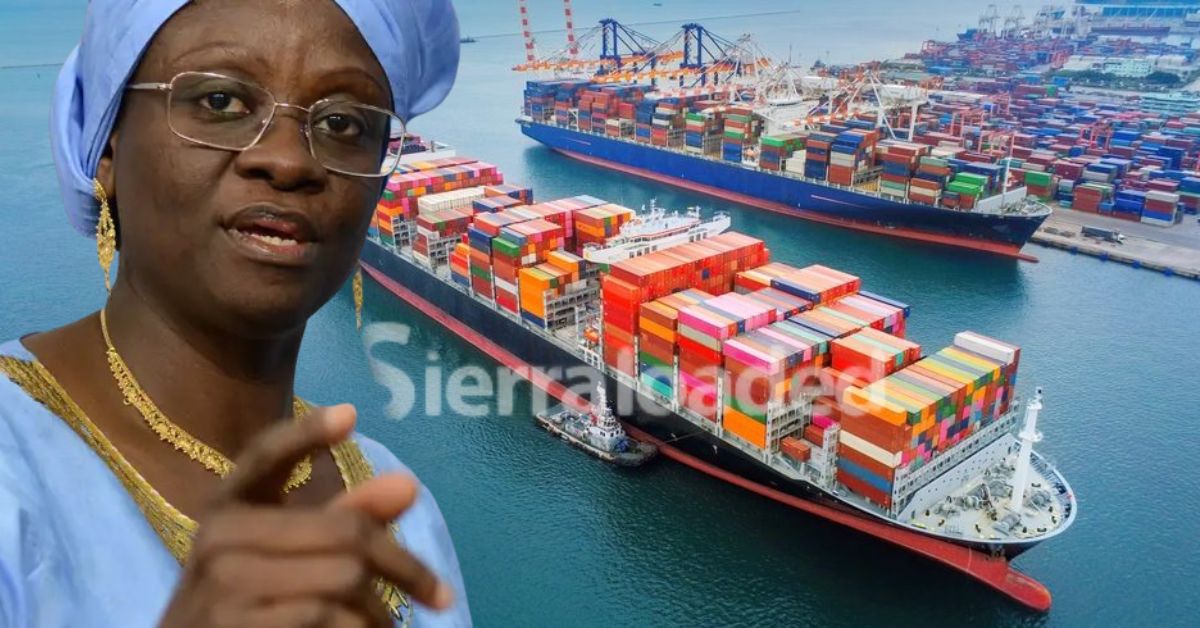
She said the withdrawal of formal multilateral oversight coincided with a period in which Sierra Leone experienced growing concerns over organised transnational crime, narcotics trafficking, corruption vulnerabilities and institutional weaknesses, particularly at the country’s ports and harbours.


According to Blyden, the reduction of international diplomatic scrutiny may have contributed to a weaker governance environment at a time when cocaine trafficking networks were expanding their operations across West Africa.
“The withdrawal of structured multilateral oversight and preventive engagement definitely contributed to a weaker governance environment with reduced international scrutiny,” she stated.
Blyden referenced repeated warnings from the United Nations regarding the vulnerability of post-conflict states with weak institutions, youth unemployment, corruption risks, porous maritime borders and fragile law-enforcement systems to international drug trafficking networks operating between Latin America, West Africa and Europe.
She noted that countries within the Mano River region, including Sierra Leone, Liberia, Guinea and Guinea-Bissau, have long been identified by the United Nations Office on Drugs and Crime as vulnerable transit corridors for cocaine trafficking.
Blyden further suggested that Sierra Leone may need renewed engagement with the United Nations Peacebuilding Commission in light of emerging governance and security concerns.
“It may be time for Sierra Leone to be put back on the Agenda of the United Nations Peace Building Commission,” she stated.
Her comments referenced official United Nations documentation confirming Sierra Leone’s exit from the Commission’s formal agenda.
Paragraph seven of the Chairperson’s Summary of the Meeting of the United Nations Peacebuilding Commission held on 17 December 2019 stated: “The Chair of the Sierra Leone Configuration (Canada) informed the Commission about the decision of the Sierra Leone Government to exit from the Commission’s formal agenda, which was clearly conveyed during the Commission’s visit to the Mano River Union region in November 2019. The last configuration meeting on Sierra Leone is scheduled at the beginning of 2020.”
The Peacebuilding Commission was established by the United Nations to support countries emerging from conflict through international coordination, institution-building and peace consolidation efforts.
Sierra Leone had remained under the Commission’s framework following the country’s civil war, with the United Nations previously supporting governance reforms, democratic consolidation and peacebuilding initiatives before the government requested its removal from the formal agenda.
The Government of Sierra Leone has previously maintained that the country had made significant progress in democratic governance and national stability, justifying the transition away from formal peacebuilding oversight.