

Debt Dispute Cripples Karpowership Supply to Freetown
 Aaron Parker
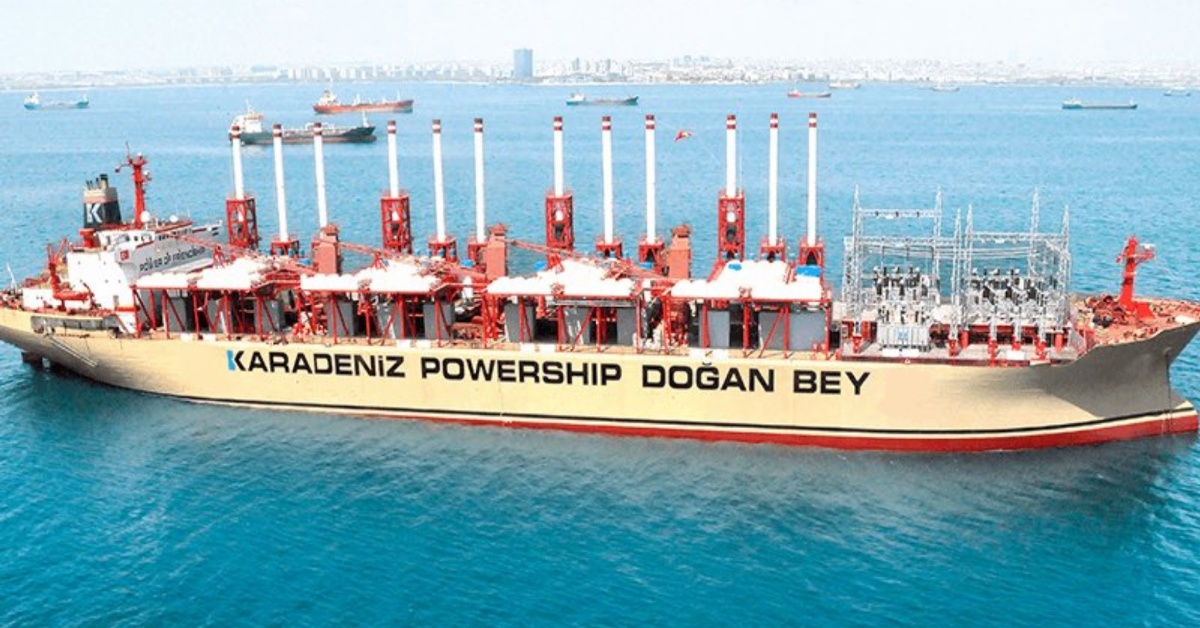
 A prolonged financial dispute between the Government of Sierra Leone and Karpowership has severely reduced electricity supply to Freetown, contributing to ongoing blackouts across the capital and intensifying public concern over the stability of the country’s power sector.
Under a renewed one-year agreement signed in June 2025, Karpowership was contracted to supply up to 45 megawatts (MW) during the dry season and scale down to 25 MW during the rainy season. However, since January 2026, actual output has dropped dramatically to between 5.6 MW and 6 MW, far below contractual expectations.
The reduction in supply is largely attributed to an escalating debt dispute involving accumulated arrears owed by the government. Sources familiar with the situation indicate that the unresolved payment obligations have constrained Karpowership’s ability to ramp up generation, despite the country’s increasing demand for electricity during the dry season.

The limited power output has left the Electricity Distribution and Supply Authority (EDSA) struggling to stabilize supply, forcing intensified load shedding across Freetown. Many parts of the city, particularly in eastern communities such as Wellington, Calaba Town, Portee, Allen Town, and surrounding areas, have experienced prolonged outages lasting several days in some instances.

The situation has been further aggravated by the temporary shutdown of the Bumbuna Hydroelectric Power Plant for scheduled annual maintenance, a necessary operational requirement aimed at ensuring long-term safety and efficiency of the national grid. With hydro generation offline, reliance on thermal generators and independent power producers has increased, but the shortfall from Karpowership has left a significant gap in supply.
Despite the contractual obligation for higher dry-season output, analysts note that the financial standoff has effectively undermined the agreement’s implementation. The dispute has also raised broader concerns about the sustainability of power purchase arrangements and the government’s ability to meet long-term energy financing commitments.
The Energy Ministry has previously acknowledged the challenges, with the minister issuing public assurances that efforts are underway to resolve the crisis. However, the continued low output has fueled public frustration and renewed scrutiny of the country’s electricity management framework.
Residents and business owners in Freetown report severe disruptions to economic activities, with frequent outages affecting productivity, increasing operational costs, and damaging small enterprises that depend heavily on stable electricity supply.
Energy experts warn that without a swift resolution to the debt dispute and a coordinated recovery strategy, Sierra Leone’s power crisis could deepen further, especially during periods when hydroelectric capacity is limited.
As negotiations continue behind the scenes, the capital remains gripped by uncertainty, with many citizens calling for urgent intervention to restore stable and reliable electricity supply.