

European Union Meets APC Leadership, Urges Adherence to Eight-Point Agreement
 Sorie Abubakar
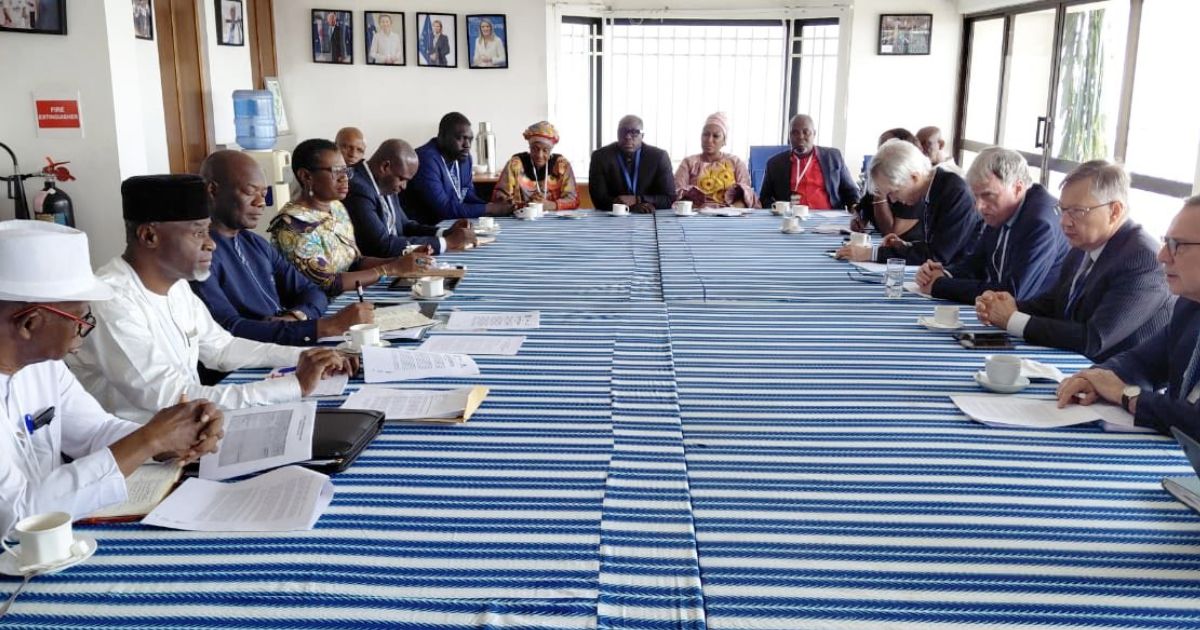
 The European Union has held a high-level meeting with the leadership of Sierra Leone’s main opposition All People’s Congress (APC), calling on both the ruling government and the opposition to honor the eight-point agreement that ended a protracted political standoff.
Ambassador Jacek Jankowski, Head of the European Union Delegation to Sierra Leone, confirmed the engagement on his official social media account, stating that discussions centered on the country’s recent political developments and the opposition’s return to governance.
“Team Europe held an insightful meeting with the leadership of the All Peoples Congress (PC) party today,” Ambassador Jankowski wrote. “Our discussions centered on the country’s recent political development, specifically calling on both sides to honour the eight points agreement, and the APC’s return to governance following engagement of International Moral Guarantors.”

The meeting represents the latest diplomatic engagement with Sierra Leone’s political actors following the resolution of a two-month boycott by the APC, which had paralyzed parliamentary business and withdrawn elected officials from local councils across the country.

The APC launched its boycott in February 2026 following President Julius Maada Bio’s appointment of Edmond Sylvester Alpha as Chief Electoral Commissioner. The opposition party maintained that the appointment violated the 2023 Agreement for National Unity (ANU) and specifically breached Recommendation 36 of the Tripartite Committee report, which calls for establishing an independent search and nomination committee for Electoral Commission appointments .
The standoff raised alarm among civil society and international partners about the health of Sierra Leone’s democracy . After a week-long assessment mission to Freetown from April 13-20, 2026, the International Moral Guarantors—comprising the Economic Community of West African States (ECOWAS), the United Nations Office for West Africa and the Sahel (UNOWAS), and the Commonwealth—brokered a breakthrough agreement on April 20, 2026.
Under the mediated agreement, the government committed to restructuring the Electoral Commission for Sierra Leone (ECSL) by December 31, 2026, directly addressing the APC’s core grievance. Other provisions include the urgent constitution of a Parliamentary Standing Committee on Electoral Matters and expansion of the Tripartite Steering Committee to include broader political and civil society representation.
Vice President Dr. Mohamed Juldeh Jalloh had previously confirmed on April 18 that five out of eight points in the National Unity Agreement had been completed, with three ongoing—particularly electoral reforms.
The agreement also includes a provision that “where there is undue delay in implementing the reforms within the agreed timelines the parties and moral guarantors will reconvene to review the situation”
Ambassador Jankowski further noted that discussions also covered the Agreement for National Unity and progress of the Tripartite Committee’s recommendations, which he described as “vital for future electoral integrity.”
“We are grateful for the APC’s commitment to dialogue and the shared goal of strengthening inclusive democracy and good governance in Sierra Leone,” the Ambassador added.
The EU’s engagement follows similar calls from other international partners. On April 23, the Embassies and High Commissions of Germany, Ghana, Iceland, Ireland, Nigeria, and the United Kingdom issued a joint statement welcoming the mediation efforts and urging implementation of the eight-point agreement within proposed timelines .
“We urge all stakeholders to implement the eight-point agreement within the proposed timelines, and as friends of Sierra Leone, we remain committed to supporting government and all stakeholders in their efforts to strengthen participatory democracy and inclusive governance,” the joint statement read.
President Bio himself addressed the political crisis during Sierra Leone’s 65th Independence Day address on April 27, calling on the opposition to embrace “presence, participation, and duty” while welcoming the return of elected officials to their responsibilities.
“Political disagreement must never suspend public service,” Bio said, reaffirming his government’s commitment to the Agreement for National Unity and to advancing electoral reforms through the Tripartite Committee.
The APC confirmed on April 20 that all its elected officials would immediately resume duties in Parliament and local councils, marking a critical step toward restoring political normalcy.
With the December 31, 2026 deadline for ECSL restructuring now fixed, and continued international oversight from the Moral Guarantors and diplomatic partners including the EU, the coming months will test whether both parties can sustain the spirit of dialogue that ended the standoff.
The EU meeting with APC leadership signals that international partners intend to remain actively engaged in monitoring the implementation of commitments made under the eight-point agreement as Sierra Leone prepares for the 2028 general elections.
Why EU not AU why?
Thank you my brother for that wonderful question ❓
What is the meaning of this 8 point?