

Government Set to Introduce New Code of Conduct for Presidential Appointees
 Deborah Sorie
 The Sierra Leone government has begun moves to introduce a new code of conduct for presidential appointees, including ministers, deputy ministers, and heads of government agencies, following a draft proposal presented to the Anti-Corruption Commission (ACC) on Friday, May 15, 2026.
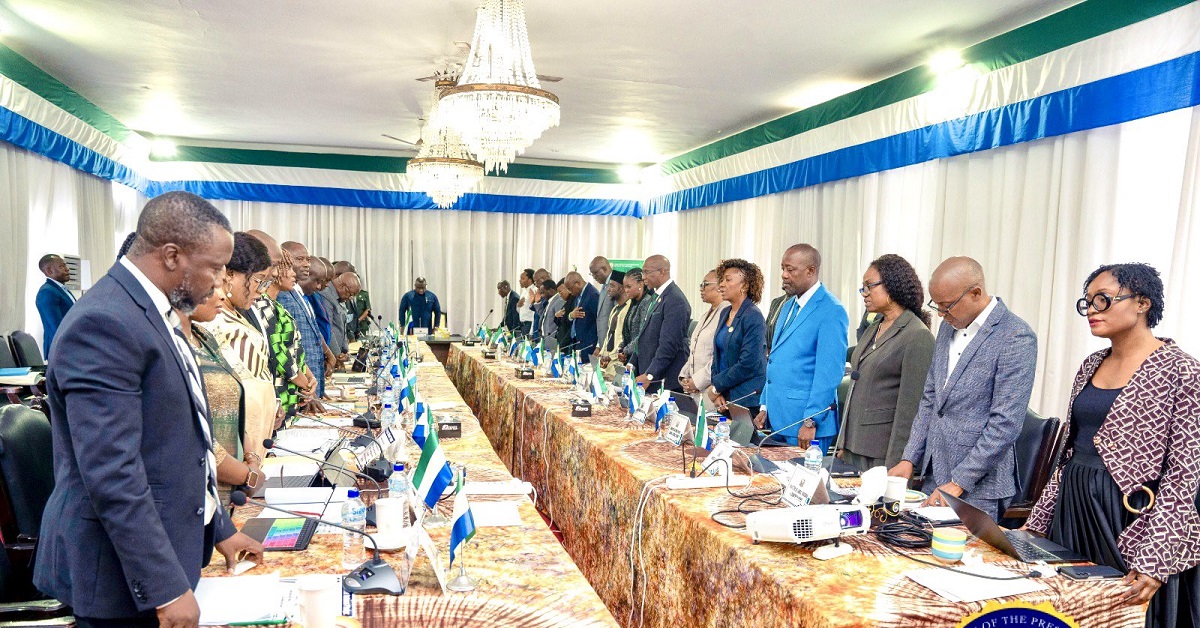
The Minister of Public Administration and Political Affairs, Amara Kallon, submitted the codified framework to ACC leadership at the Commission’s conference room at Integrity House, Tower Hill, Freetown, seeking the anti-graft body’s support for the initiative.
Presenting the draft document, Minister Kallon outlined ongoing efforts to establish clear ethical standards aimed at guiding public officials in promoting integrity, accountability, and the responsible use of public resources. He noted that the initiative forms part of broader public service reforms designed to strengthen governance systems across the country.

The proposed Code of Conduct is intended to serve as a benchmark for ethical leadership in governance by defining clear behavioral expectations for ministers and other senior government officials, the Minister explained. He added that the framework would help reinforce public trust and improve institutional performance across government.



Responding to the proposal, ACC Commissioner Francis Ben Kaifala Esq. emphasized that such standards are essential in strengthening public trust and ensuring that governance processes align with the principles of transparency and accountability. He further noted that the initiative would contribute to improving oversight in the management and utilization of public resources.
Commissioner Kaifala commended the Minister’s proposal, describing it as “a step in the right direction” towards enhancing integrity systems within government. He also underscored the importance of broad stakeholder consultation and called for the establishment of clear timelines to guide the implementation process.
The Commissioner reaffirmed the ACC’s commitment to supporting reforms that promote accountability and good governance, assuring the Ministry of the Commission’s guidance and technical support towards the successful rollout of the initiative.
Discussions during the meeting also explored the possibility of expanding the scope of the framework to include other political appointees, with participants advocating for wider application of ethical standards across public service. However, attendees cautioned against adopting a “one-size-fits-all” approach and emphasized the need for flexibility in implementation.
The proposed code, once finalized and adopted, would apply to all presidential appointees, setting clear rules of conduct for senior government officials and agency heads. No specific timeline for the rollout of the new code has been announced, though Minister Kallon indicated that the government is working to establish clear implementation timelines with support from the ACC.