

ECSL Unveils Plans to Boost Accessibility for Persons With Disabilities Ahead of 2028 Elections
 Salamatu Y. Kamara
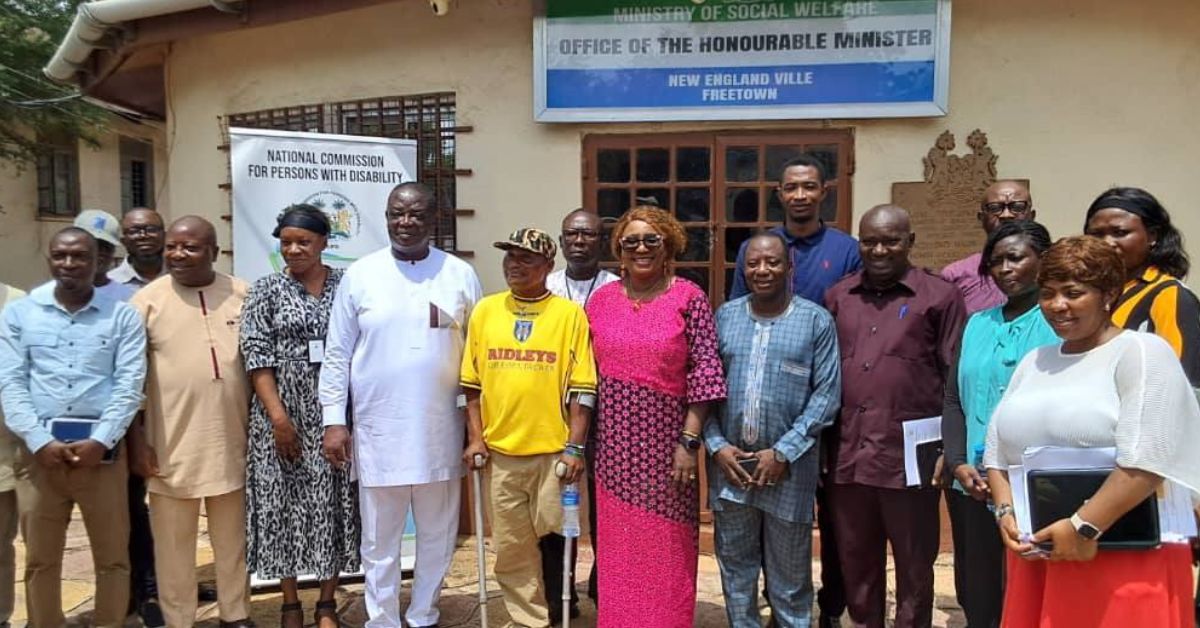
 The Ministry of Social Welfare (MOSW), in collaboration with the Electoral Commission for Sierra Leone (ECSL) and the Commission for Persons with Disability, held a landmark meeting to discuss greater inclusion of persons with disabilities in Sierra Leone’s electoral and governance processes.
Welcoming the ECSL delegation, Minister of Social Welfare Mrs Melrose Karminty highlighted the Ministry’s mandate to support vulnerable groups, including persons with disabilities, trafficking victims, returning migrants, and individuals affected by drug and substance abuse. She noted that the Ministry now oversees three key agencies: the Commission for Persons with Disability, the Anti-Human Trafficking Agency, and the newly approved Social Work Regulatory Council.
The Minister praised the visit as an important step toward strengthening collaboration on disability inclusion before, during, and after elections. She emphasised that Sierra Leone has made significant progress in disability rights through legislation, government policies, and programmes, and stressed the need to mainstream disability issues across all aspects of governance and electioneering.

Mrs Karminty commended the ECSL leadership for its commitment to ensuring that no one is left behind in the democratic process and expressed confidence that the concerns of persons with disabilities would remain a priority in the Commission’s work.

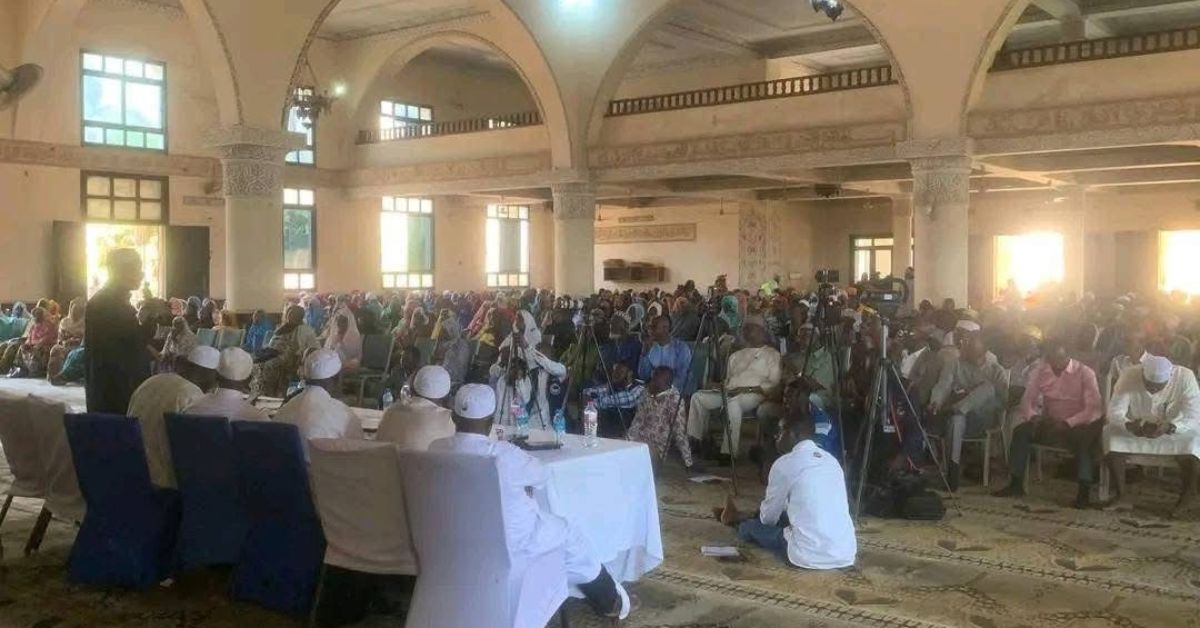
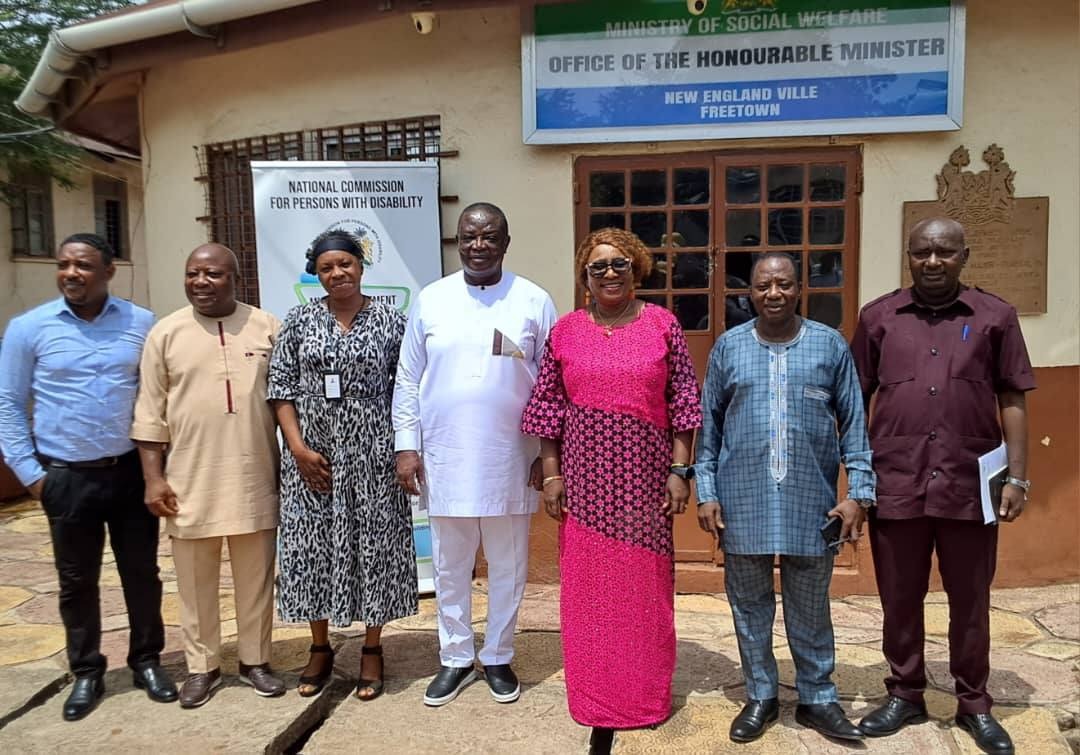
Speaking at the event, ECSL Chairman and Chief Electoral Commissioner Edmond S. Alpha described the meeting as historic, noting that while the Commission has worked with disability stakeholders for more than 15 years, this was the first engagement of its kind. He highlighted the Commission’s progress from establishing a disability desk to creating a full Department of Inclusion and reaffirmed the ECSL’s commitment to deepening its partnership with the Ministry of Social Welfare and the National Commission for Persons with Disabilities.
Mr Alpha pledged to strengthen the recruitment, training, and participation of persons with disabilities in electoral activities and to ensure their representation at both national and international electoral forums. Chairman Alpha also unveiled a series of commitments aimed at making the 2028 elections more accessible and inclusive. These include conducting accessibility audits of polling stations, improving voting facilities with ramps and accessible booths, expanding assistive voting tools such as tactile ballot guides and Braille materials, and ensuring voter education campaigns are available in accessible formats.
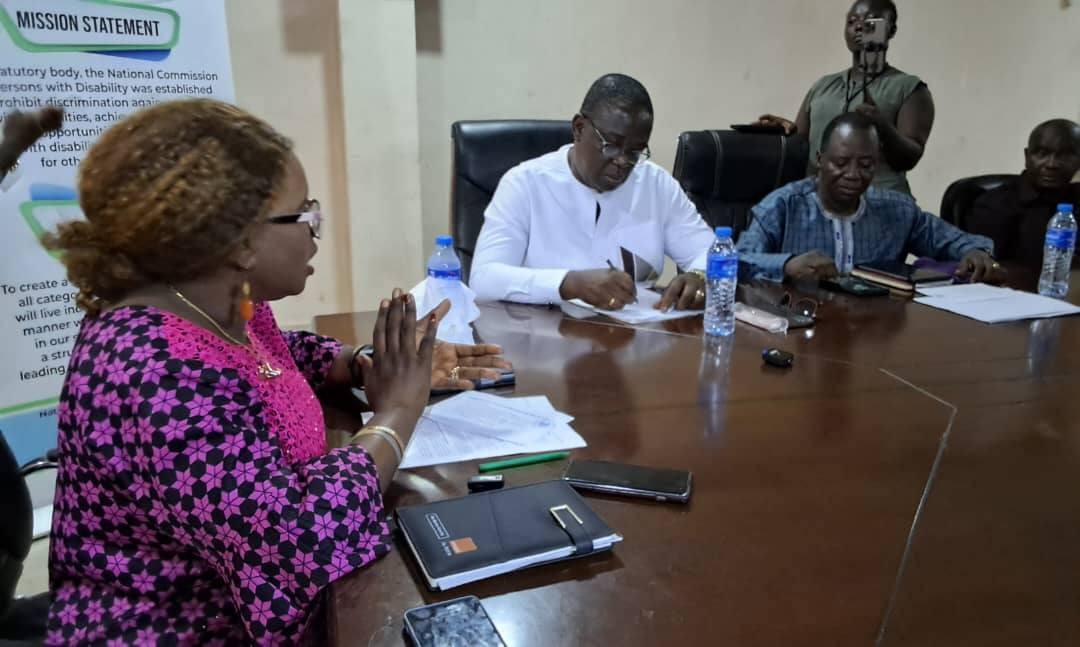
He announced mandatory disability-awareness training for election officials, greater involvement of persons with disabilities as trainers and election workers, and the establishment of a rapid-response mechanism to address accessibility challenges on election day. Emphasising that voting is a fundamental right, not a privilege, he called for accountability and collaboration, promising that the ECSL would work closely with disability stakeholders to ensure that every citizen can participate in elections freely, independently, and with dignity.
In conclusion, the Chairperson of the National Commission for Persons with Disability (NCPD), Commissioner Brima Sheriff, presented a position paper on behalf of the Commission to the Chairman and Chief Electoral Commissioner.