Post a comment
A citizens’ opinion poll conducted by the Campaign for Human Rights and Development International (CHRDI) has revealed strong public sentiment in favour of a democratic system built on accountability, transparency, and national unity.
The survey indicates that a significant majority of Sierra Leoneans are skeptical about the proposed Proportional Representation (PR) electoral system, with 68 percent of respondents rejecting the model and expressing preference for direct representation in elections.
Respondents also voiced concerns over potential changes to the electoral threshold. According to the poll, 74 percent opposed lowering the threshold, arguing that such a move could undermine national cohesion and political stability.

The findings further highlight gaps in civic awareness regarding the proposed 2025 Amendment Bill. The poll shows that 60 percent of participants said they lack adequate civic education to make informed decisions about the legislation, underscoring the need for broader public education before major constitutional or electoral reforms are undertaken.
Debate surrounding diaspora participation in governance also revealed mixed views. While 50 percent of respondents supported dual citizenship for Members of Parliament, citing the potential benefits of international expertise and skills, 44 percent expressed concerns about loyalty and national commitment.
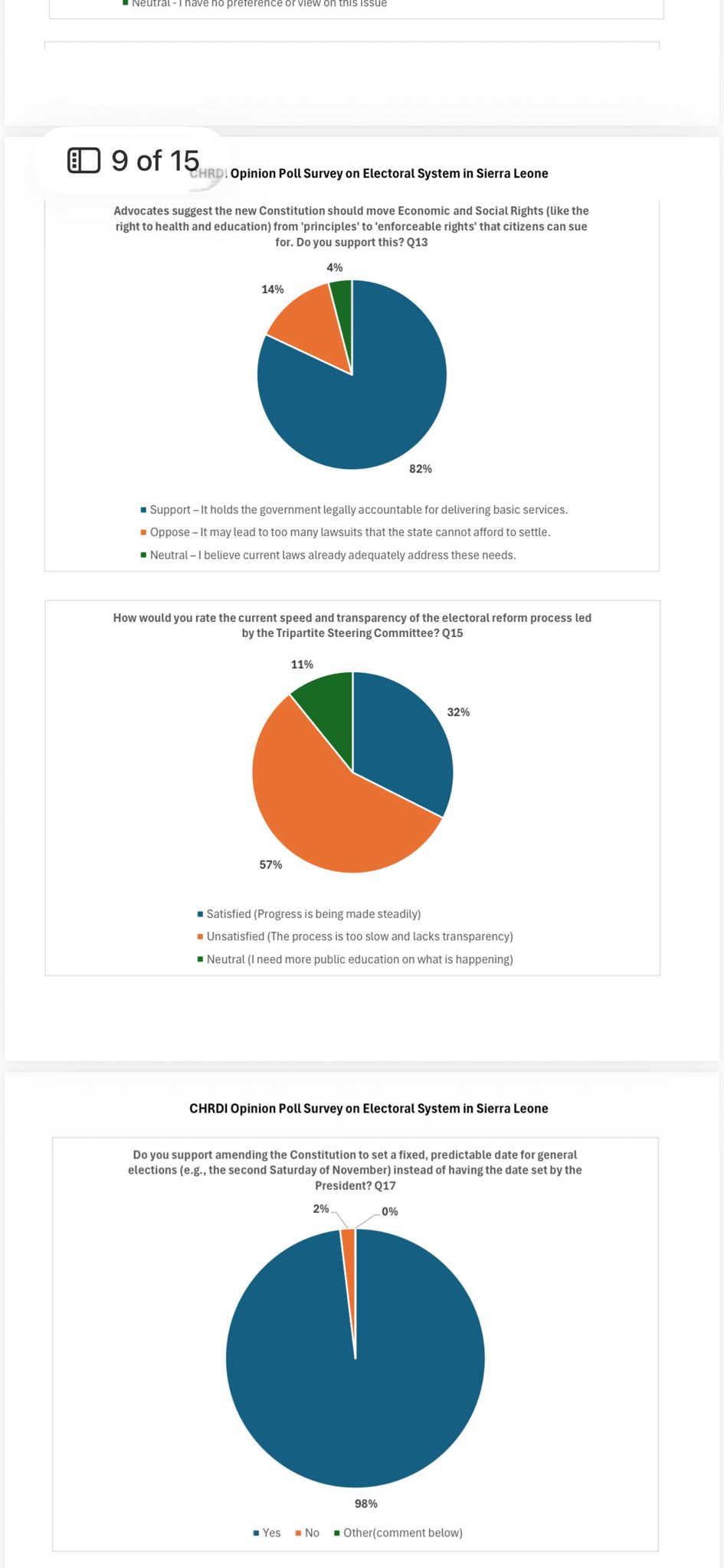
The survey also found overwhelming support for reforms aimed at improving electoral predictability. Ninety-eight percent of respondents favored the introduction of fixed election dates, suggesting that such a measure would strengthen planning and public confidence in the democratic process.
In the area of social rights, 82 percent of those surveyed called for enforceable constitutional guarantees to healthcare and education, reflecting growing public demand for stronger protections in essential services.
The poll also assessed public perceptions of ongoing political reform processes. Fifty-seven percent of respondents criticized the pace of the Tripartite Steering Committee, arguing that the process has been slow and urging authorities to prioritize concrete action rather than prolonged consultations.
CHRDI noted that the findings reflect a broader public desire for reforms that promote accountability and inclusive governance, while also highlighting the importance of civic education in ensuring that citizens are well-informed about key national issues.