
Sierra Leone at 65: Indigenous Investment Signals New Era as Gento Develops Strategic Seaport at Kent
 Sahid Bangura
 As Sierra Leone marks its 65th Independence Anniversary, a bold and symbolic investment is reshaping the national narrative-one that bridges the painful echoes of history with the promise of economic transformation.
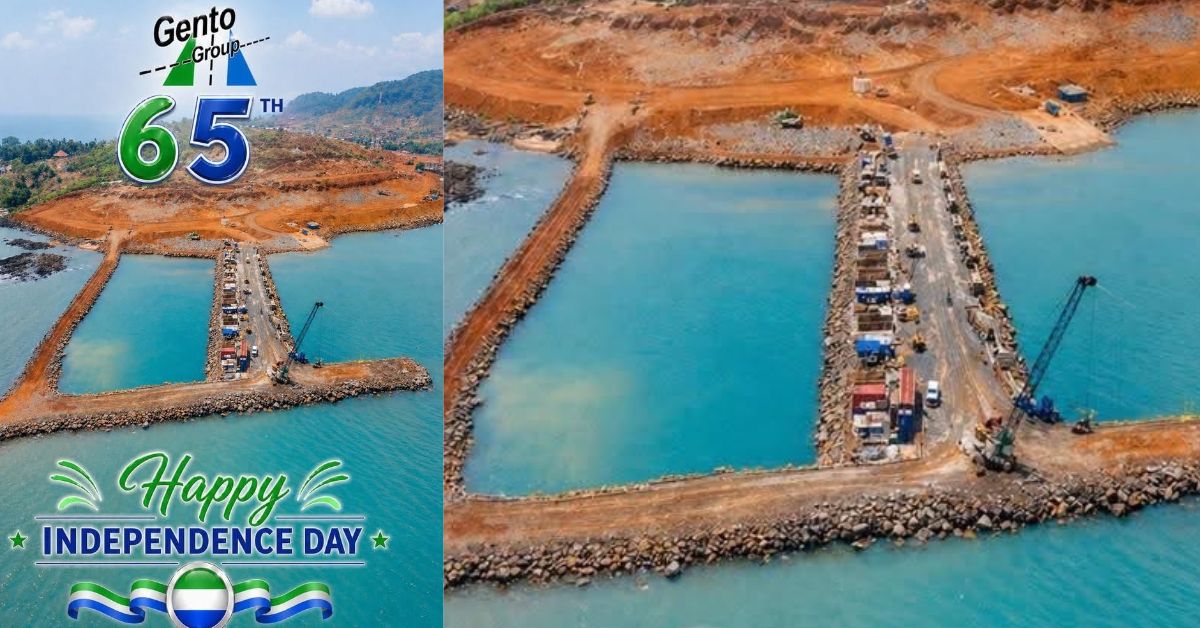
At the historic coastal community of Kent, where enslaved Africans were once held before being shipped across the Atlantic, a new chapter is being written by Sierra Leonean entrepreneur Mohamed Gento Kamara, Chief Executive Officer of the Gento Group of Companies.
In what many observers are describing as both symbolic and strategic, the ongoing construction of a modern seaport at Kent stands as a powerful testament to local investment, resilience, and national pride. The site, once associated with the transatlantic slave trade, is now being transformed into a hub for commerce-where goods will be exported and imported to drive Sierra Leone’s economic growth.

The significance of this development cannot be overstated. At a time when concerns persist over capital flight and limited domestic industrial investment, the initiative by Mohamed Gento Kamara represents a deliberate shift toward reinvesting in Sierra Leone’s future. The project is expected to create substantial employment opportunities for Sierra Leoneans, stimulate local businesses, and contribute meaningfully to national revenue generation.



Kent’s historical relevance adds a deeper layer of meaning to the project. During the slave trade era, the area served as a holding point for enslaved Africans destined for Europe and the Americas. Today, as Sierra Leone celebrates 65 years of independence—a journey that traces back to the resettlement of freed slaves and the founding of Freetown-the construction of a seaport at this same location symbolizes a reversal of fortunes. Where human lives were once exported under oppression, economic goods will now move freely in pursuit of prosperity.
Analysts view the Kent Seaport project as a potential game-changer for Sierra Leone’s maritime and trade sectors. Once completed, the facility is expected to ease pressure on existing ports, enhance logistics efficiency, and position the country as a competitive player in regional and international trade. Beyond infrastructure, the ripple effects of such an investment are likely to be felt across sectors including transportation, fisheries, tourism, and small-scale enterprises.
Importantly, the project also reinforces the growing call for increased local participation in national development. Mohamed Gento Kamara’s initiative is being widely praised as a model of patriotism in action—demonstrating that Sierra Leoneans can lead transformative investments capable of shaping the country’s economic destiny.
Stakeholders have emphasized the need for strong government backing and policy support to ensure the successful completion and sustainability of the project. Calls are mounting for public-private collaboration, regulatory efficiency, and national ownership of such strategic ventures.
As Sierra Leone reflects on its journey at 65, the Kent Seaport project emerges as more than just an infrastructure development-it is a symbol of progress, a reclaiming of history, and a vision for a self-reliant future. In the midst of celebrations, it stands out as one of the most meaningful tributes to independence: turning a site of past suffering into a gateway for national prosperity.