CHRDI Unveils Findings of Baseline Survey Report on Electoral Justice and Accountability
 Aaron Parker
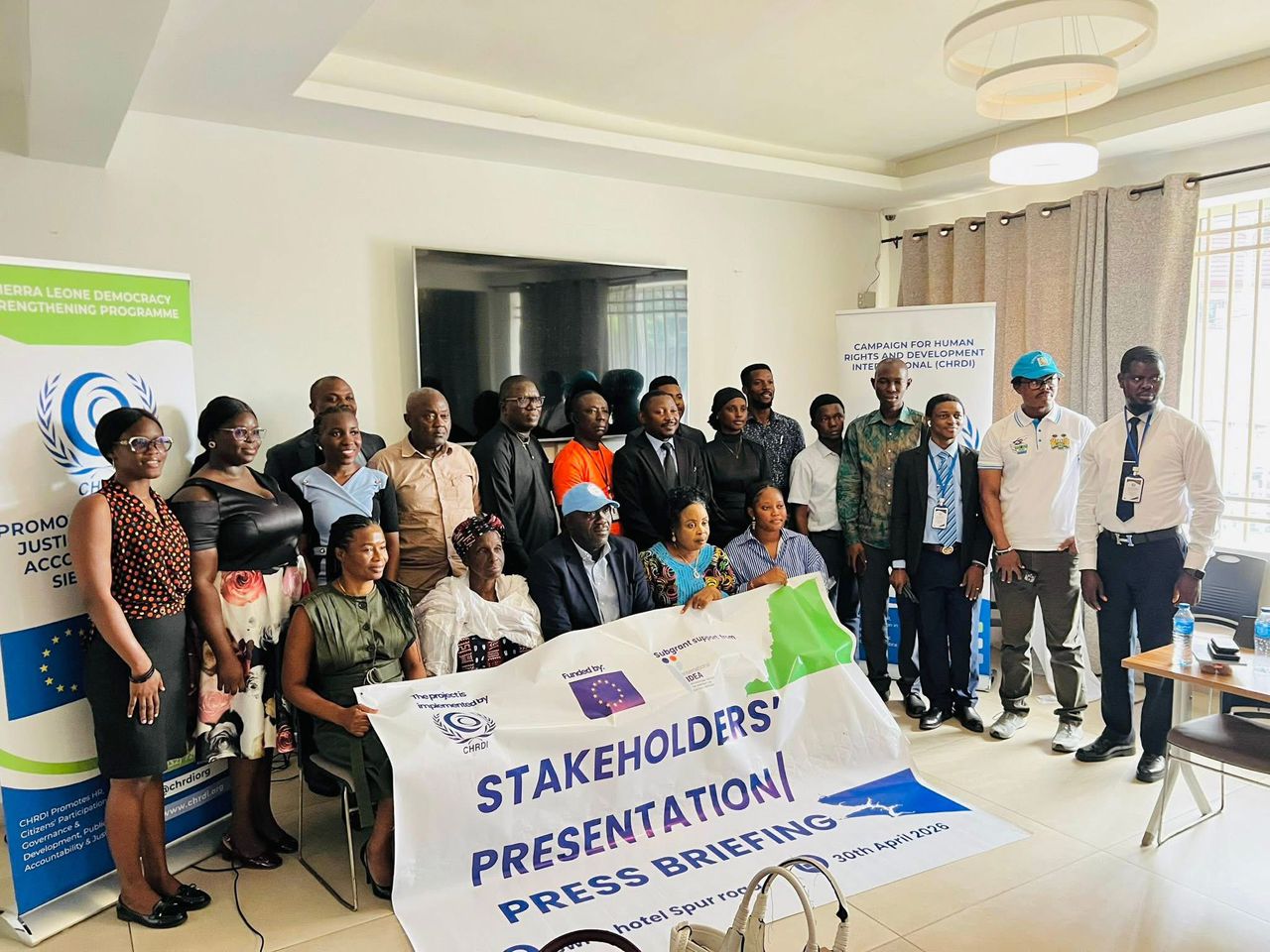
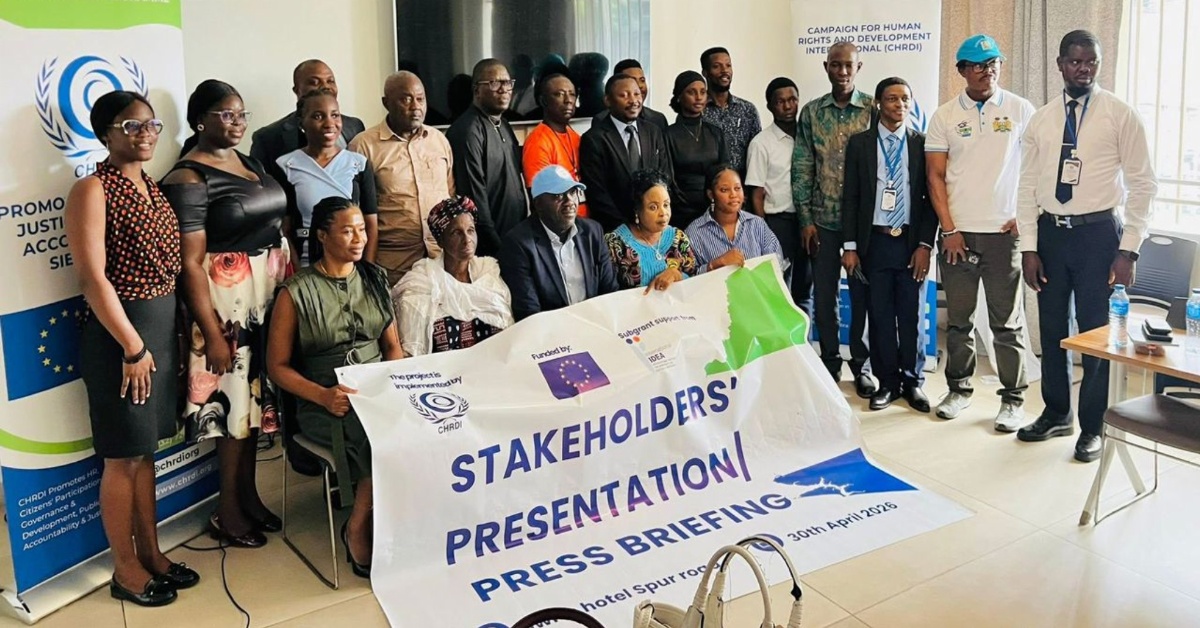
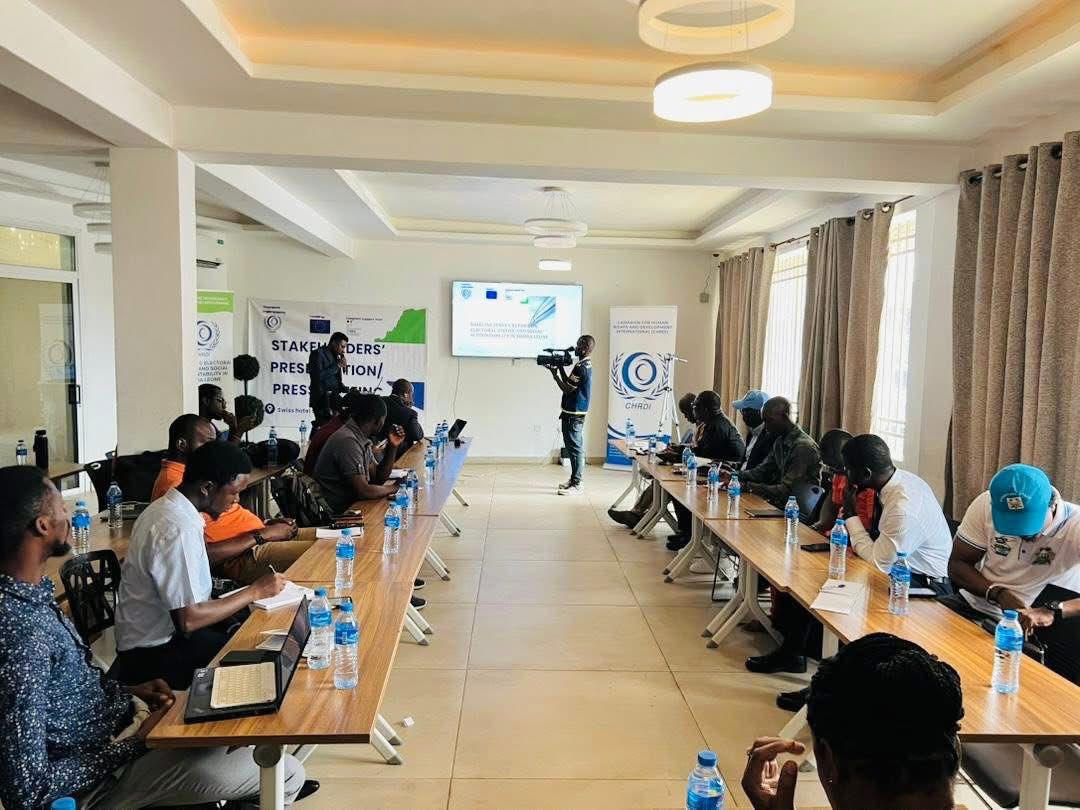
 The Campaign for Human Rights and Development International (CHRDI) on Thursday, 30 April 2026, hosted a stakeholders’ briefing at the Swiss Hotel in Freetown to present key findings, challenges, and recommendations from its baseline survey report on electoral justice and social accountability.
The briefing marked the conclusion of CHRDI’s six-month project, funded by International IDEA with support from the European Union in Sierra Leone, aimed at strengthening electoral processes and social accountability in the country.
The report was formally presented by the Chief Executive Officer of Campaign for Human Rights and Development International, Abdul Fatoma.

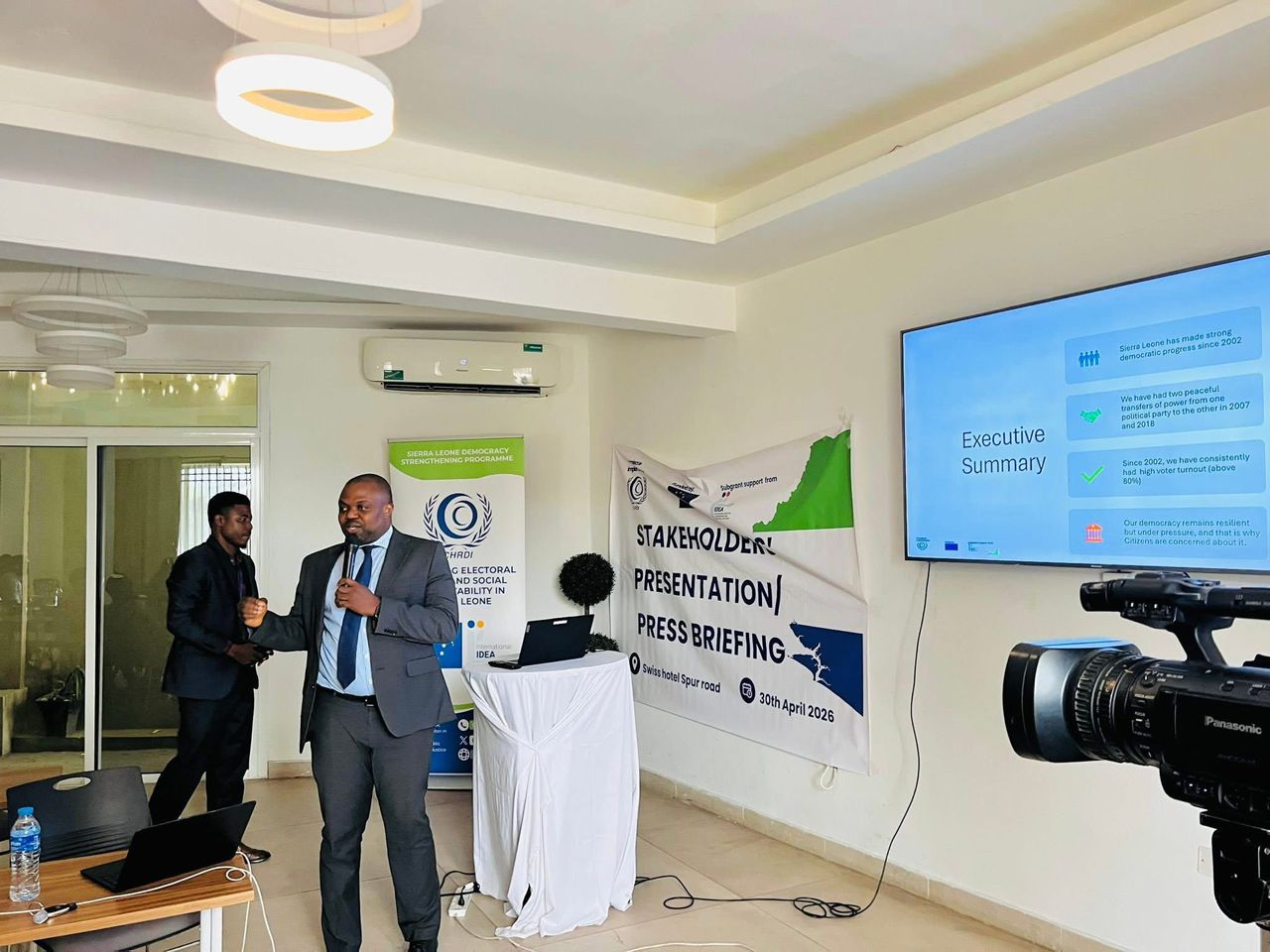

According to the findings, Sierra Leone has made notable democratic progress since 2002, including peaceful transfers of power in 2007 and 2018, as well as consistently high voter turnout. However, the report cautions that the country’s democratic system remains “resilient but under pressure.”
The 2023 general elections were identified as a critical turning point, exposing structural and institutional weaknesses that have deepened political divisions and public mistrust. The report notes that concerns over electoral credibility have heightened calls for urgent reforms.
It also references post-election interventions, including the Agreement of National Unity between the Sierra Leone People’s Party (SLPP) and the All People’s Congress (APC), as well as the Tripartite Committee’s “80+4 recommendations,” which are aimed at restoring confidence in the electoral system.
The baseline study employed a mixed-method approach, drawing on 415 survey respondents nationwide, 159 key informant interviews, eight focus group discussions, and a review of more than 60 literature sources.
A key finding of the report is that while citizens remain committed to democracy, trust in public institutions is steadily declining. This, it notes, has created a widening gap between democratic processes and the lived realities of citizens.
On electoral justice, the report highlights persistent challenges, including weak accountability mechanisms, delays in dispute resolution, high costs, and perceptions of bias. Only 32 percent of respondents considered existing electoral dispute resolution systems effective.
The report also documents incidents of electoral violence and intimidation, including harassment, threats, and physical confrontations during the electoral cycle. Young people and politically active groups were identified among the most affected, contributing to reduced civic participation and voter confidence.
Concerns were further raised about transparency in electoral administration, particularly the inconsistent publication of polling station results and reported discrepancies in electoral data. These issues, the report states, have contributed to declining public trust in the Electoral Commission for Sierra Leone and, in some instances, heightened political tensions.
On social accountability, the report finds low levels of citizen engagement with governance institutions. Only 19 percent of respondents reported interacting with Members of Parliament, while 42 percent had engaged with local councillors, largely on personal rather than policy matters.
Basic public services, including health, education, and water supply, were widely rated as poor, while Parliament was perceived as weak in its oversight role. The police and judiciary were also identified among the least trusted institutions due to perceived corruption.
Despite these challenges, the report acknowledges positive developments, including active civil society engagement, the role of the National Situation Room in managing electoral tensions, and community dialogue initiatives that have helped reduce conflict in some areas.
It also highlights opportunities for reform, pointing to strong public support for democracy, ongoing electoral and constitutional review processes, and the potential use of digital tools to enhance transparency.
Among its recommendations, the report calls for the publication of polling station-level results, reform of electoral dispute resolution mechanisms, strengthening the independence of electoral institutions, enhanced accountability of elected officials, expanded civic and voter education, and increased capacity building for institutions and civil society organisations. It also advocates for the use of digital platforms to improve transparency and the promotion of community-based accountability systems.
CHRDI concludes that while democracy in Sierra Leone remains resilient, it is increasingly vulnerable without sustained reforms. The report stresses that lessons from the 2023 elections should serve as a catalyst for institutional strengthening, noting that the future of democratic stability will depend on collective action by government, institutions, civil society, and citizens.