

Vice President Jalloh: Electricity Access is a “Binding Constraint” on Sierra Leone’s Growth
 Osman Tolo Sesay
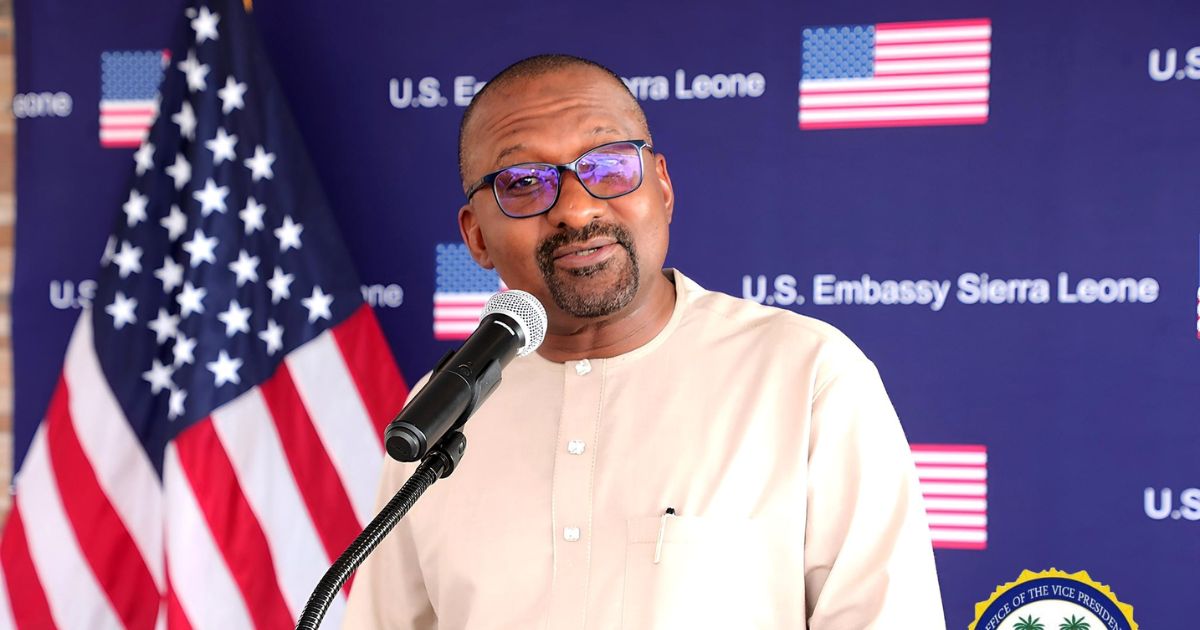
 Vice President Dr. Mohamed Juldeh Jalloh has said that access to reliable and affordable electricity remains a critical obstacle to economic growth in Sierra Leone, even as the government invests in human capital development, food security, and strategic sectors.
“Access to reliable and affordable electricity is a binding constraint on economic growth in Sierra Leone,” Jalloh said during the Freedom250 celebrations held on the rooftop of the MCC Sierra Leone office in Freetown.
He noted that the mining sector alone is projected to require over 500 megawatts of power by 2030, while current national generating capacity stands at around 200 megawatts. Even with increased generation, he said more than $300 million would be needed to expand and strengthen transmission and distribution systems to deliver electricity to industries, social institutions, and communities.

Jalloh acknowledged that governance challenges and capacity deficits make the energy problem daunting, but said it is not insurmountable. “We can turn this sector around in the medium term,” he said.
The Vice President said meeting the challenge will require credible, sustained partnerships, pointing to the MCC Compact and other initiatives as evidence of the United States’ consistent support. He described these investments as “more than financial commitments,” calling them “an overwhelming vote of confidence in Sierra Leone’s future and a foundation for growth, jobs, and opportunities that reliable energy can unlock.”
Reflecting on Sierra Leone’s history and ties with the United States, Jalloh said the future should be defined by transformation of the energy sector, powered by partnership and guided by a common commitment to progress. He said reliable electricity can unlock industrial growth, expand opportunity, and deliver lasting prosperity, while also strengthening ties that benefit both Sierra Leoneans and Americans.
Jalloh also noted the link between national growth and global stability. “Economic growth in one country is increasingly tied to opportunity, stability, and prosperity in others,” he said, adding that supporting Sierra Leone’s competitiveness is in the interest of both the United States and the wider international community.