

Sierra Leone’s First Visually Impaired Lawyer Raises Alarm Over Delayed Pupillage Despite AG Assurances
 Aminata Koroma
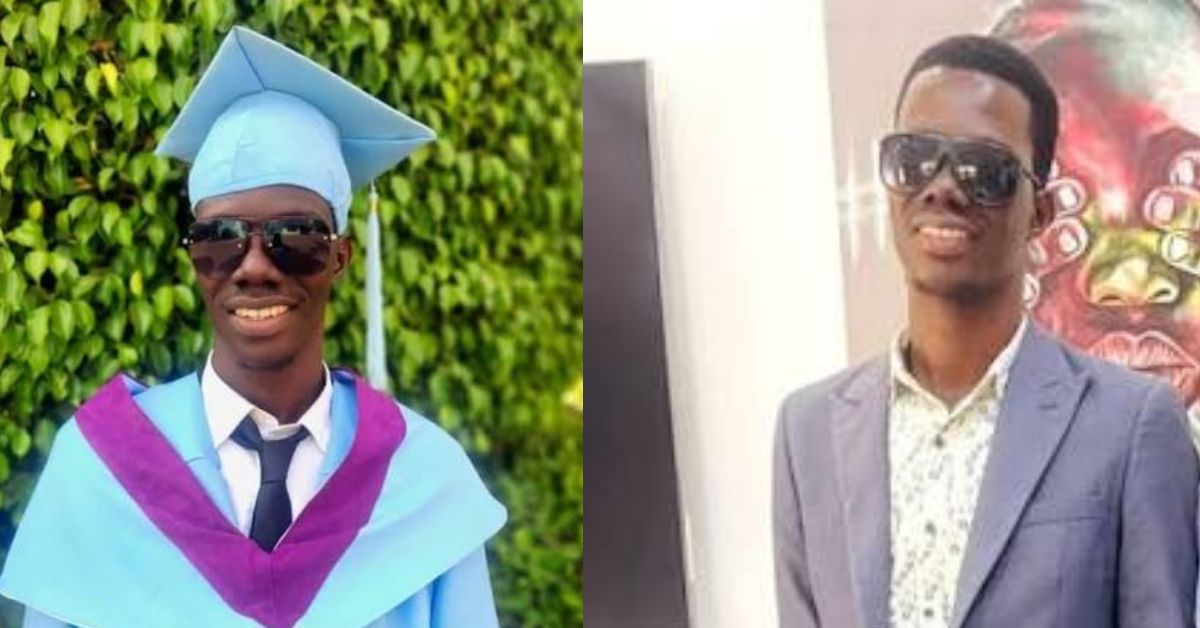
 Sierra Leone’s first visually impaired lawyer, Amidu Bubakarr Sankoh, has disclosed that he is yet to begin his pupillage months after graduating from Law School in December 2025.
Speaking in a media engagement, Sankoh revealed that efforts to secure placement have so far been unsuccessful despite engagements with the Attorney General (AG).
According to him, the AG has consistently assured him to remain patient while attempts are being made to find a suitable placement and convene a meeting with justice sector institutions.

“He usually tells me to be patient, that he is trying to find somewhere suitable for me and planning to summon a meeting with all justice institutions. He says from there he will call me, but whenever I try calling him, I do not get him,” Sankoh stated.
Sankoh explained that pupillage lasts 18 months for public institutions and 12 months for private law firms. However, since graduating on 16 December 2025, he has not secured any placement.
“I have been out of law school since 16 December 2025, and I have no placement. I really want to question this situation because something is wrong,” he said.
He further expressed concern over the lack of institutional support, noting that although his achievement as the first visually impaired barrister in the history of the High Court has been widely discussed, practical support has not materialised.
Reflecting on his academic journey, Sankoh highlighted the challenges he faced as a visually impaired student. He pointed out that libraries in educational institutions are not equipped with accessible materials for persons with disabilities.
“The books in the library are not in formats suitable for persons with disabilities. I had to rely on technology to surf the internet. But what if someone cannot use computer systems? That person will not be able to cope,” he explained.
He added that even at the University of Makeni (UNIMAK), the library facilities were not disability-friendly. As a result, he depended on braille, soft copies, and assistance from friends to read.
“It should not be like that. This is the 21st century and the world is moving-we should move along with the trend,” Sankoh emphasized.
His situation has raised broader concerns about inclusivity and equal opportunities within Sierra Leone’s legal and educational systems, particularly for persons living with disabilities.