

 Post a comment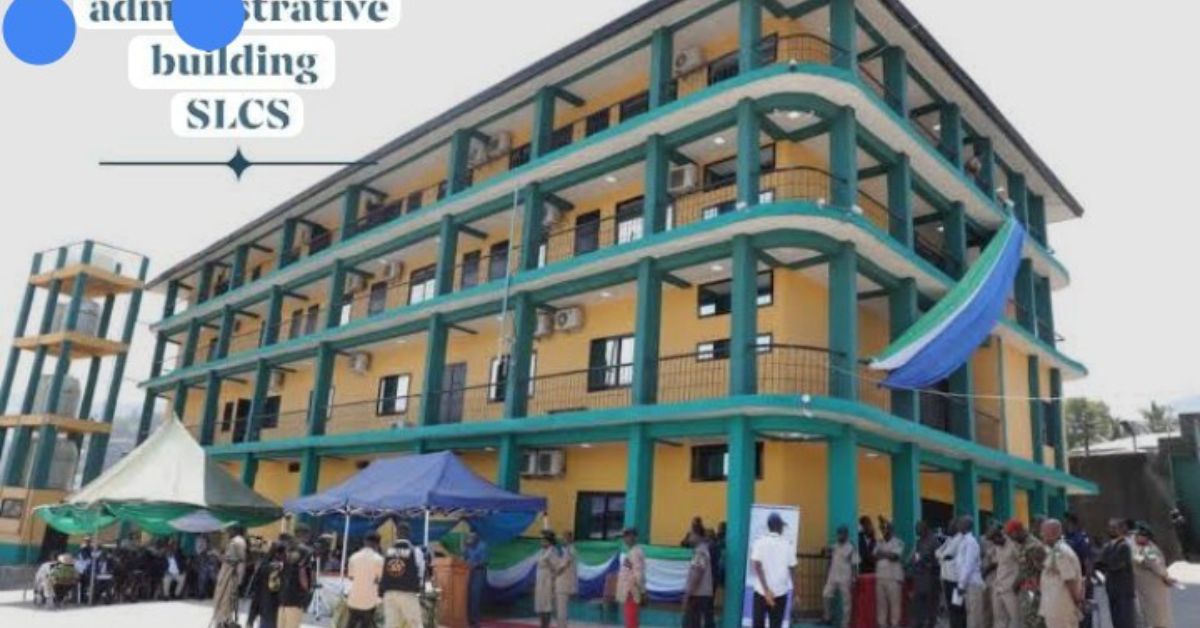
The Government of Sierra Leone has commissioned a new administrative headquarters for the Sierra Leone Correctional Service, marking a major step in the country’s ongoing correctional reforms.
The facility, unveiled on Tuesday, March 31, 2026, at the Special Court compound in Freetown, was officially opened by Vice President Mohamed Juldeh Jalloh. The event drew senior government officials, members of the security sector, and other stakeholders.
In his address, the Vice President described the new building as both an infrastructural development and a symbol of institutional reform. He emphasized discipline, dedication, and development as core values expected to guide correctional officers, noting that the upgraded facility is intended to support improved service delivery aligned with international standards.
Government officials highlighted broader efforts to strengthen the correctional system, including investments in infrastructure, logistics, and staff welfare. Authorities say these measures are aimed at enhancing operational efficiency and ensuring compliance with global best practices in corrections management.
Minister of Internal Affairs Morie Lengor reiterated the government’s commitment to improving working conditions for correctional officers. He acknowledged the challenges associated with their duties and pledged continued advocacy to address their needs.
Director General of the Sierra Leone Correctional Service, Joseph John Senessie, described the new headquarters as a historic milestone for the institution, noting that it provides a more suitable administrative base that reflects the service’s role in the criminal justice system.
Also speaking at the ceremony, S.D.T. Ngaujah, a former Acting Director General of SLCS, said the commissioning represents the realization of a long-standing vision initiated during his tenure.
The Sierra Leone Correctional Service has operated for over a century without a dedicated modern administrative headquarters. Officials say the new facility is expected to improve coordination, strengthen institutional capacity, and support ongoing reforms within the correctional system.
The commissioning is being viewed by authorities as part of a broader effort to modernize public institutions and enhance the effectiveness of Sierra Leone’s justice and security sectors.


