

Stats SL Begins Mock Census Training as 2026 National Population Count Nears
 Sahid Bangura
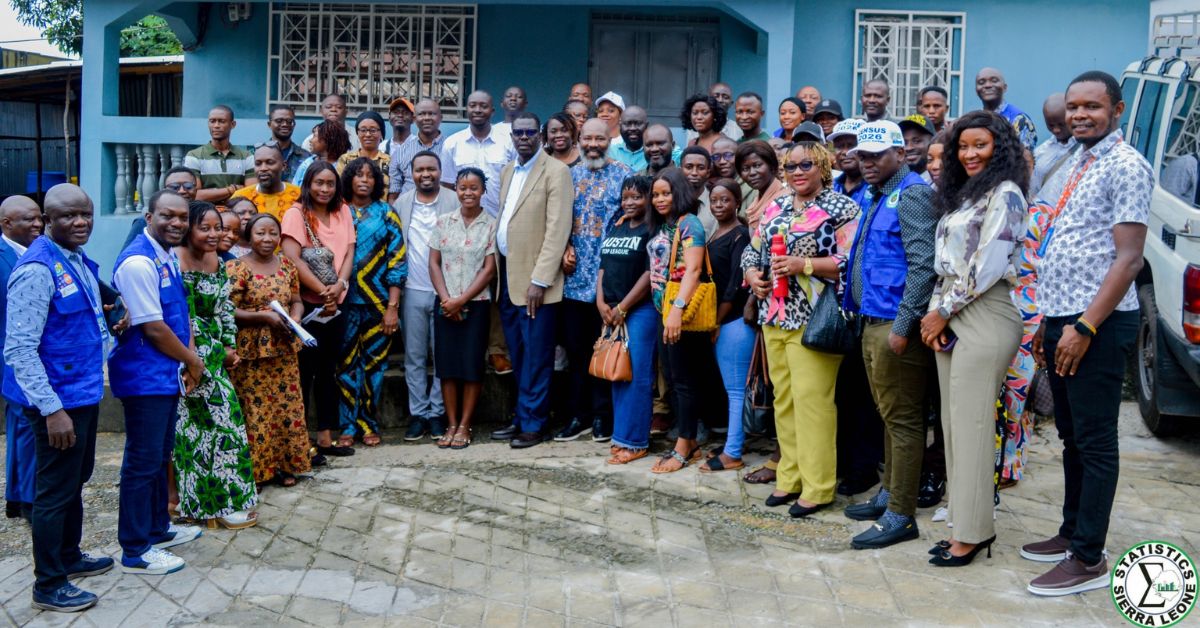
 Statistics Sierra Leone (Stats-SL) has commenced nationwide training for supervisors and enumerators who will participate in the country’s upcoming Mock Census, marking another major milestone in preparations for the 2026 National Population and Housing Census.
The exercise, which is being conducted simultaneously in Freetown, Bo and Makeni, is aimed at testing census systems, strengthening field operations and addressing recommendations that emerged from the pilot census conducted in December 2025.
Speaking at the launch of the training, National Census Coordinator, Abdulai Salia Brima, said the mock census is a critical preparatory exercise designed to ensure that all operational, technical and logistical systems are fully tested before the nationwide population count.

He explained that the decision to conduct the mock census followed a comprehensive review of the pilot census, which was observed by international experts, independent monitors and representatives of various political parties.


“We reviewed the pilot census and one of the key recommendations was to conduct a mock census to further test the system before the actual census,” Brima said.
According to him, the current training will run for 10 days, after which the participants will be deployed to selected districts across the country to undertake a 15-day field exercise as part of the mock census.
Brima disclosed that all field personnel will use digital tablets during both the training and data collection process, underscoring Stats-SL’s continued commitment to technology-driven census operations.
He said although 174 supervisors and enumerators are required for the exercise, the institution decided to train 200 participants to provide a reserve pool in the event that some trainees fail the post-training assessment or are unable to participate due to illness or other unforeseen circumstances.
The trainees have been divided across three regional training centres, with participants from the Southern and Eastern regions undergoing training in Bo, those from the Northern and North-Western regions in Makeni, while trainees from the Western Urban and Western Rural districts are being trained in Freetown.
Brima noted that the training forms part of a series of activities already undertaken by Stats-SL in preparation for the national census, including nationwide mapping and the successful completion of the pilot census.
He expressed confidence that the institution remains firmly on course to conduct a credible and inclusive population census in 2026.
Reflecting on lessons from the 2021 census, Brima acknowledged that inclusivity had posed operational challenges but said deliberate efforts have since been made, in collaboration with development partners, to ensure broader stakeholder participation and improve the overall quality of the exercise.
He appealed to the public to cooperate with census officials when the nationwide exercise begins, emphasising that accurate population data is essential for national planning, policy formulation and equitable resource allocation.
Also speaking, Census Implementation Coordinator James A. Medo said the ongoing exercise is part of a carefully structured capacity-building programme that began with the training of trainers and master trainers before cascading to supervisors and enumerators.
He explained that the mock census is a standard international practice intended to validate whether recommendations made after the pilot census have been adequately addressed before the final enumeration.
Medo said international experts who monitored the pilot census recommended an additional mock exercise to test improvements made to technical, administrative and logistical procedures.
He added that the supervisors and enumerators have received extensive training from both Sierra Leonean and international experts, including specialists from Ghana and other countries, to ensure they possess the professional skills and technical competence required to conduct a successful census.
Stats-SL has consistently maintained that the 2026 National Population and Housing Census will be guided by international best practices and modern digital technology to produce reliable demographic data for evidence-based planning and national development.