

2028 Election Flagbearer Race: Scenario Analysis of APC And SLPP

Sierra Leone’s 2028 presidential candidate selection process is influenced by a longstanding pattern of two-party dominance and contested political transitions. Since independence, political power has predominantly shifted between the Sierra Leone People’s Party (SLPP) and the All-People’s Congress (APC), with the SLPP maintaining robust bases in the southern and eastern regions and the APC in the northern and western regions. The 2023 electoral cycle reinforced this bipartite structure: incumbent President Julius Maada Bio of the SLPP secured re-election with approximately 56% of the popular vote, and his party achieved a parliamentary majority, while the APC challenged the results, citing electoral irregularities. According to the National Electoral Commission’s reports and data from organizations such as the Carter Center and Afrobarometer, Sierra Leonean elections since the end of the civil war have regularly featured competitive candidate fielding, but often amid disputed legitimacy and regional polarization. This pattern aligns with a post-Civil War trend identified in the African Elections Database and in scholarly analyses, in which issues of credibility, legitimacy, and national acceptance remain central to the viability of potential flagbearers heading into 2028.
Presently, both major parties are engaged in rigorous internal succession processes, which are likely to influence electoral prospects more significantly than ideological considerations. According to the Carter Center, while SLPP prepares for leadership succession as President Bio nears his term limit, the party’s internal processes remain under scrutiny, particularly regarding transparency in election tabulation. Vice President Mohamed Juldeh Jalloh is often seen as a candidate for continuity, alongside other technocratic and reform-minded contenders, and the party has indicated commitment to a delegate-driven selection process. However, the Carter Center’s recent report highlights that mismanagement or lack of transparency in such procedures could heighten internal tensions and exacerbate factional divisions. Conversely, the APC is navigating between established figures and emergent reformist candidates, each representing a different strategic orientation. The implementation of stricter candidate vetting mechanisms indicates an effort to produce a credible and united nomination, amidst ongoing internal fragmentation.
Several scenarios are conceivable for the 2028 electoral cycle. A “continuity versus change” scenario involves the SLPP nominating an internal candidate to sustain stability, while the APC endorses a reformist challenger, consistent with previous patterns. Alternatively, internal party divisions might lead to candidate fragmentation, especially if factional conflicts and limited grassroots influence weaken nominations. A third possibility entails a shift towards technocratic leadership, driven by economic pressures that favor candidates with policy expertise and by voter concerns about governance quality.

In all cases, the critical factor will be each party’s capacity to select a leader capable of transcending regional loyalties and fostering party cohesion, thereby enabling it to endure the challenges of Sierra Leonean politics.


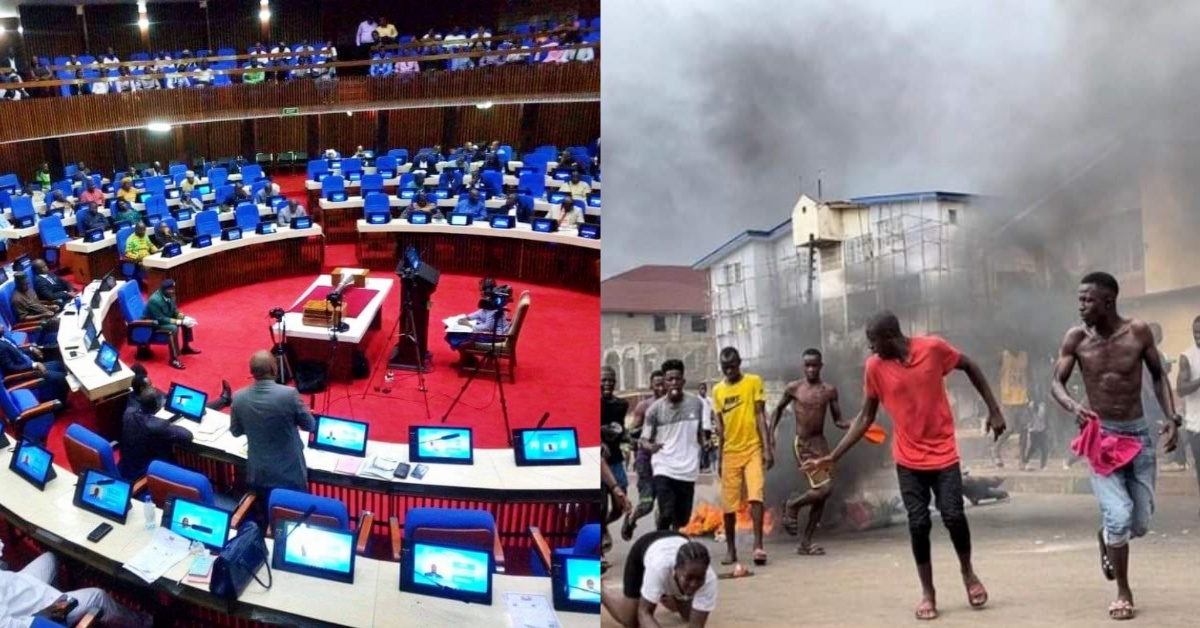
This analysis delineates several plausible, non-predictive scenarios for the upcoming flagbearer selection process. One such scenario involves a contest between a continuity-oriented candidate from the incumbent party and a reformist challenger who represents public dissatisfaction, thereby maintaining the traditional “stability versus change” dichotomy. Another involves potential primaries characterized by internal divisions, which could weaken candidates and reflect tensions between grassroots participation and elite decision-making. A third scenario anticipates a technocratic realignment, motivated by economic challenges and elevating candidates with administrative expertise. Across these scenarios, key determinants include intra-party unity, electoral legitimacy, and the ability to transcend regional allegiances. Risks include factional fissures, diminished electoral mandates, and contested election results with factors that have historically influenced Sierra Leone’s electoral processes. While each scenario is plausible, current trends suggest that a continuity-versus-reform dynamic remains the most likely framework, given both parties’ investments in stability and the prominence of establishment figures. The technocratic realignment scenario is gaining traction, particularly amid mounting economic pressures, but may remain secondary unless a major shift in public sentiment or elite consensus occurs. In contrast, scenarios involving deep internal divisions and candidate fragmentation remain possible but are less likely unless current efforts to manage party unity falter significantly. This scenario-based exposition employs objective framing, drawing on credible research and publicly available data, to outline potential pathways without endorsing outcomes or preferences.
Framing Forecast
The main goal of this article is to deconstruct and map plausible pathways, not to predict winners or endorse individuals or groups. The unit of analysis for this article includes parties’ historical systems, factions, and hierarchical structure of legacy leadership, and incentive structures. For transparency and analytical rigor, the scenario-building approach blends comparative case analysis of previous Sierra Leonean party selections, expert input from political analysts and local commentators, and trend extrapolation based on recent electoral data and public opinion. The article also uses a time spectrum: the here and now, by examining a) party dynamics and convictions, b) strategic decisions leading to the 2028 general elections, and publicly available data from news media, both local and international. Think of this article as a set of “if–then” pathways, for example, if certain internal dynamics dominate, then types of candidates become more likely.
APC flagbearer scenarios
Political and social development analysts such as the Institute for Governance Reform (IGR), Africa Confidential, and local commentators like Umaru Fofana have already described the APC as entering a “fierce internal and possibly external fight” for its 2028 flagbearer, shaped by internal wrangling, legal disputes, and grassroots pressure for renewal- A New Beginning. Recent reports, including the IGR’s 2023 Elections Review and Africa Confidential’s July 2023 analysis of Sierra Leone, highlight these dynamics and underscore the intensity of internal competition.
Below are my predictive scenarios.
Scenario A: “The Reconciler‑Technocrat” wins
Core logic:
If a political party emphasizes unity after factional conflicts, its candidate selection process typically shifts from prioritizing popularity to prioritizing institutional acceptability. In Sierra Leone, where fragmentation hampers electoral success, key stakeholders such as party elders and financiers tend to support candidates perceived as stabilizing forces. This tendency is particularly evident within the All-People’s Congress (APC), which is currently experiencing internal disputes and factional divisions, thereby hampering the emergence of a unifying figure pivotal to the 2028 electoral cycle. Candidates who stress allegiance to party discipline, adherence to procedural rules, and skill in factional negotiation are generally preferred over grassroots or populist profiles. Moreover, external influences such as donor agencies, the legal framework, and constitutional statutes often favor candidates with robust institutional credentials. Both major political parties institutionalize their candidate selection procedures through delegate-based systems and vetting processes, which serve to create barriers that advantage established political figures trusted to manage leadership transitions, uphold international commitments, and prevent contested election outcomes and elements of particular importance given Sierra Leone’s history of electoral disputes.
In scenarios emphasizing national cohesion, parties tend to select candidates possessing not only legal and administrative credibility but also the capacity to appeal across factional lines, regardless of personal charisma or populist appeal. While such a strategy narrows the field of contenders, it aims to ensure both internal party stability and external legitimacy. However, this consensus-driven approach may risk alienating grassroots supporters if perceived as unduly elitist, thereby raising concerns related to internal party democracy. Ultimately, a candidate rooted in institutional legitimacy can enhance party cohesion and credibility; nonetheless, this must be carefully balanced against broader legitimacy to mitigate polarization in the political environment.
Merits:
APC may have a strong desire to avoid another divisive convention. APC may face pressure from business leaders (the party’s foundation) and diaspora actors for stability and policy clarity, as well as from the party’s internal reforms that empower a vetting committee to screen out polarizing aspirants.
Likely profile:
- Legal or governance background
- Seen as “serious,” predictable, and acceptable to multiple factions.
- Good with donors and international partners
Risks:
- Grassroots may feel marginalized and demobilized if the choice seems “elite‑imposed.”
- Youth and social media bases may drift toward more populist figures.
Scenario B: “The Populist Mobilizer” breaks through
Core logic:
If grassroots anger, youth frustration, and social media energy become dominant in a party, they can shift the race away from elite control. In Sierra Leone, where many are under 30, and youth voices are vocal but underrepresented, this can disrupt traditional selection patterns. Economic hardship, unemployment, and perceptions of exclusion can lead digitally mobilized youth to demand change and accountability. Candidates seen as outsiders or reformers may quickly gain visibility, even without elite backing. This is more likely if party leadership fails to manage internal competition. When delegates or vetting committees control flagbearer selection, outcomes usually reflect elite consensus. But if these systems weaken due to division or legitimacy issues, grassroots momentum can bypass formal mechanisms. According to a report from the House of Commons Library, election campaigns in Sierra Leone were shaped by widespread public concerns over high living costs, increasing inflation, and energy issues, but the report does not detail the role of internal party participation or how media and diaspora networks influence rapid political recognition and flagbearer selection. Such candidates can energize supporters, attract funding, and shape discourse, revitalizing party engagement and voter enthusiasm. However, risks include fragmentation, internal discord, and governance concerns if rapid mobilization outpaces vetting. Ultimately, the success of this pathway depends on transitioning energy into organizational stability within the party.
Merits:
With this candidate, the APC will have a weakened enforcement of the status quo dynamics.
With strong online and street‑level campaigns, the message is “we need a fighter to face SLPP in 2028.”
Likely profile:
- Charismatic, “streetwise,” and highly visible
- Frames itself as anti‑establishment within the APC
- Strong youth and urban appeal
Risks:
- Establishment pushback; risk of post‑convention bitterness.
- Concerns about policy depth and the ability to manage state institutions.
- Potential difficulty in reassuring investors and international partners.
Scenario C: “The Compromise Candidate” emerges late.
Core logic:
When factional deadlock occurs and no single group gains a decisive majority, the party’s decision-making often shifts from competition to conflict management. In Sierra Leone, with internal divisions and leadership struggles in both major parties, prolonged stalemates can risk fragmentation or electoral decline. Multiple strong contenders dividing support along regional, generational, or factional lines reduce the chances of a clear winner. Consequently, stability becomes a priority, leading senior leaders to intervene and shape the outcome.
In such cases, party elders, intermediaries, and institutional actors, such as advisory councils, often act as brokers. Their goal is to preserve unity, prevent defections, and project a credible image. Historically, poorly managed leadership contests have led to splits, highlighting the need for negotiated settlements. These actors may support a compromise candidate, typically a lower-profile figure acceptable across factions, rather than a leading contender. This candidate usually emphasizes stability, familiarity, and cross-factional ties over strong loyalty or mass support. Though they may lack initial momentum, they are seen as neutral and pragmatic, capable of uniting the party. This can reduce internal tensions and prevent splintering, allowing the focus to remain on the national campaign. However, such candidates might enter the election with less grassroots enthusiasm and a less defined political identity, especially if the selection is viewed as elite-driven. Balancing internal stability and voter credibility remains crucial in such environments.
Merits:
APC will have multiple strong aspirants splitting the vote. Compromised candidate with a fear of party fracture or legal challenges. However, behind‑the‑scenes negotiations among regional and financial power brokers may shift momentum toward a compromised candidate.
Likely profile:
- Not the loudest or most visible aspirant early on
- Acceptable to most factions, objectionable to a few
- Emphasizes unity, reconciliation, and “saving the party.”
Risks:
- Weak enthusiasm from base; “lukewarm” mobilization.
- Perceptions of backroom deal‑making diminish trust in the candidate and the party.
SLPP Flagbearer Scenarios
Commentary on SLPP succession suggests a complex internal contest, seen more as a battle over the party’s future than a straightforward leadership race. According to a report from The Carter Center, after the final election results were released, there were notable discrepancies between the outcomes for different offices, which have intensified competition among senior party figures as they seek greater influence. This environment is described by analysts as more of a power struggle than a straightforward succession, with candidates coming from government positions, established party ranks, and technocratic backgrounds each promoting different leadership visions based on experience, hierarchy, and credibility. This variety shows that SLPP succession depends on how internal factions form and align around various priorities. Key developments or signals that would indicate which SLPP scenario is becoming more likely include: public endorsements from major party factions, the emergence of campaign narratives focusing on continuity, technocratic reform, or loyalty, shifts in delegate support visible in local media reporting, and notable alliances or defections among influential party figures. Tracking these indicators will allow analysts to monitor which pathway is gaining traction as the flagbearer selection process intensifies.
Within this context, the central question—whether the next flagbearer will emerge through legacy, loyalty, or broader succession logic- has become a defining strategic tension. A “legacy‑driven” pathway would favor candidates closely associated with the current administration’s policy agenda and political identity, emphasizing continuity and the consolidation of President Bio’s achievements. A “loyalty‑based” pathway, by contrast, would prioritize individuals perceived to have consistently aligned with party leadership and internal structures over time, reflecting traditional patterns of patronage and internal reward systems. However, a third pathway—rooted in broader succession logic—would place greater weight on electability, coalition‑building capacity, and the ability to unify factions across the party. Historical experience in Sierra Leone suggests that succession decisions based narrowly on loyalty or elite preference can generate internal fractures, particularly if significant factions feel excluded from the outcome.
The interaction between these competing logics introduces both opportunities and risks for the SLPP as it approaches 2028. On one hand, a competitive field can strengthen internal democracy and produce a candidate with a broad mandate if managed effectively. On the other hand, prolonged rivalry among senior figures may deepen factional alignments, complicating efforts to present a united front in the general election. The challenge for the party, therefore, lies in navigating this “power struggle” without triggering fragmentation—balancing the symbolic value of legacy, the internal cohesion benefits of loyalty, and the strategic necessity of selecting a candidate who can appeal beyond the party’s traditional base. In this sense, the succession contest is not only about leadership selection but also about how the SLPP recalibrates its political strategy in a highly competitive and closely contested national environment.
Scenario A: “The Orderly Successor” Ideal
Core logic:
If the SLPP emphasizes its institutional culture and continuity, its flagbearer is likely to come from within the formal hierarchy, favoring stability over experimentation. Sierra Leone’s ruling parties often rely on established leadership pathways linked to the presidency, cabinet, or senior party officials to ensure succession. The SLPP’s structured, delegate-based selection processes prefer candidates with long-standing membership, visibility, and loyalty. According to a report from Afrobarometer, there has been an emphasis on promoting peace and stability in Sierra Leone’s political landscape, as evidenced by an agreement between the main parties to adopt recommendations to improve election quality and resolve political conflicts. This focus on continuity and cooperation helps project stability to both domestic and international audiences. Candidates embedded in the system are seen as better suited to ensure administrative coherence, predictability, and international engagement.
This pathway involves strategic trade-offs. Choosing a candidate from the formal succession might strengthen elite cohesion and smooth the transition, but could also limit signals of renewal, especially among younger or reform-minded voters. With a broad and competitive SLPP field, favoritism toward continuity might spark tension among factions that perceive bias in favor of establishment figures. Ultimately, the candidate must balance credibility with electoral appeal, ensuring alignment with current governance without sacrificing adaptability in a competitive race.
Merits:
SLPP is strongly influenced by incumbency and party hierarchy, and seeks to project stability to donors and investors. SLPP tend to use constitutional rules and internal vetting to narrow the field.
Likely profile:
- Senior officeholder (e.g., vice‑presidential, or top cabinet rank)
- Deep party roots and loyalty
- Seen as safe, predictable, and continuity‑oriented.
Risks:
- Reform‑minded and youth constituencies may feel underrepresented.
- Opposition can frame this as “more of the same” amid governance fatigue.
Scenario B: “The Technocratic Reformer” elevated
Core logic:
If internal debates within the SLPP focus on performance, innovation, and international credibility, the party may shift toward candidates with policy expertise and administrative skills rather than political lineage. Recent discourse emphasizes governance outcomes such as economic management, public service, and reforms, alongside identity considerations. Aspirants with proven achievements or clear policy visions could appeal to delegates and stakeholders, especially post-2023, where governance quality remains central. Moreover, younger technocrats and policy-focused figures—often with professional or reformist backgrounds—offer an alternative to traditional elites, attracting urban and younger voters concerned with economic reform and transparency. Such candidates may bridge continuity and renewal, combining experience with new approaches. A policy-driven reformer could become a consensus candidate if factions prioritize electability through competence and credibility, especially if party elites and donors favor a technocratic profile to bolster legitimacy and international confidence. While this strategy could help the party meet voter expectations and focus on governance, it faces risks such as grassroots resistance and factional loyalty, requiring reformers to build political coalitions that balance policy credibility with internal unity and electoral outreach.
Merits:
SLPP advances a strong donor and international support for reformist figures. According to a 2023 Afrobarometer report, the SLPP is facing pressure from youth and urban voters who expect the party to implement tangible changes, especially as public trust in the presidency has dropped sharply over time. This demand for improvement could challenge current governance practices and lead to an emphasis on competence within the party.
Likely profile:
- Technocratic background (education, health, development, or global institutions)
- Strong communication skills and digital presence
- Bridges party elders and the younger base
Risks:
- Old‑guard resistance; fears of losing control of party machinery.
- Rural structures may feel less connected to technocratic messaging.
Scenario C: “The Party Veteran” reasserts control.
Core logic:
If tensions and internal conflicts within the SLPP grow, the party may prioritize maintaining stability and influence over pursuing change. Historically, Sierra Leone’s leadership changes have been delicate; poorly managed succession has often led to fragmentation and weakened cohesion. When factions compete fiercely—based on generation, alliances, or personal ties—stability becomes crucial. Uncertainty about leadership’s future can increase anxiety among top stakeholders, especially those who see rapid change as a threat.
In such cases, elders and long-standing power brokers often step in as stabilizers. These figures—former leaders, senior officials, and influential intermediaries—prefer continuity, discipline, and electoral unity. If younger or technocratic candidates gain ground, elders may rally support around a trusted veteran with deep roots in the party. These experienced leaders typically have strong factional ties, understand party norms, and are loyal, making them key figures in building consensus during turbulent times.
Choosing a veteran candidate can help unify the party and prevent defections before elections. However, it may also reinforce elite control and hinder generational renewal, leaving younger or reform-minded members feeling marginalized. This might reduce grassroots enthusiasm and limit innovation. Ultimately, success depends on whether the veteran can balance stability with broader electoral appeal, ensuring legitimacy and support at all levels.
Merits:
The SLPP has traditionally had strong control over delegates through older patronage, with the common theme of “protecting the party’s soul and legacy.” This message centers around loyalty, discipline, and ideological continuity.
Likely profile:
- Senior party figure with decades of involvement
- Deep regional and historical legitimacy
- Emphasizes unity, tradition, and loyalty.
Risks:
- Limited appeal to youth and urban voters.
- Opposition can frame SLPP as out of touch or resistant to renewal.