
Environment Minister Highlights Climate Finance and Green Investment Opportunities in Parliament
 Salamatu Y. Kamara
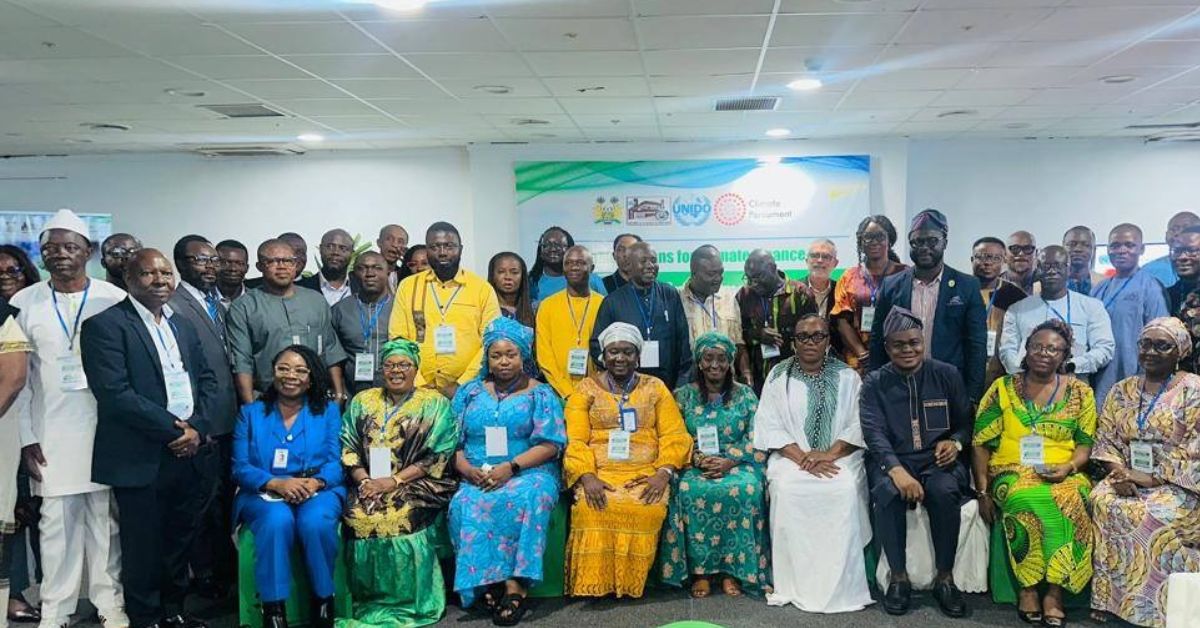
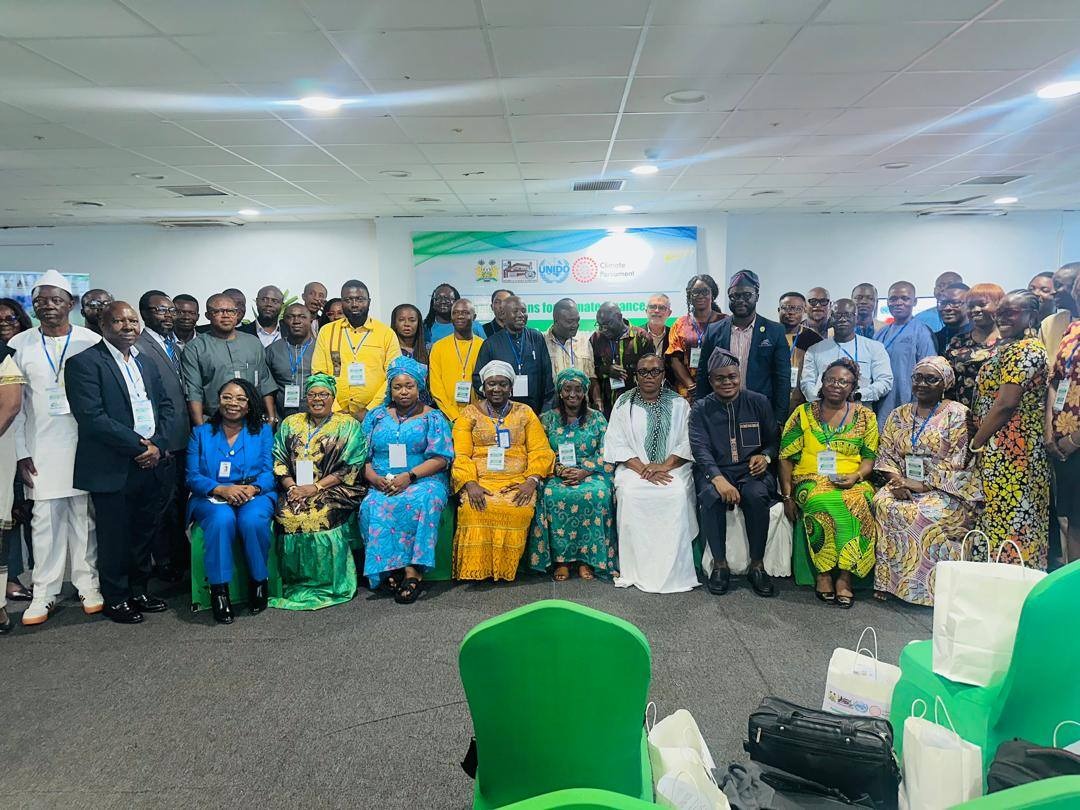
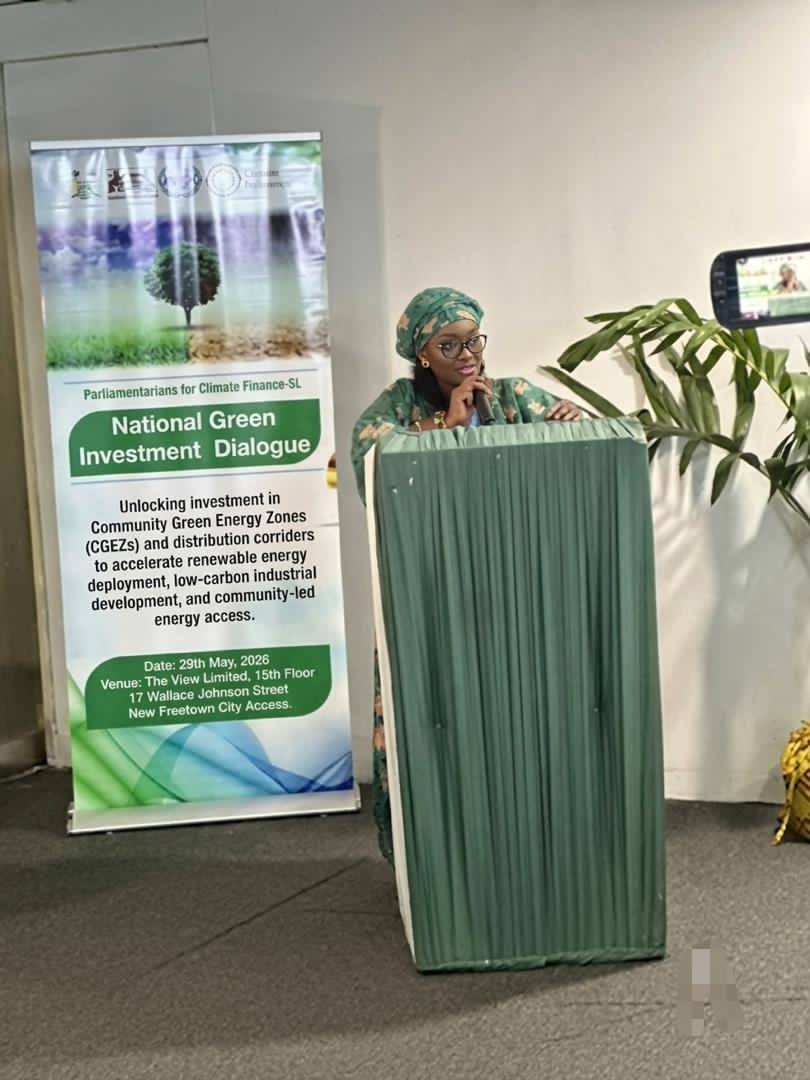
 The Deputy Minister of the Environment and Climate Change, Mima Yema Mimi Sobba-Stephens, has addressed Members of Parliament on the Oversight Committee on Environment and Climate Change on Climate Finance during a National Green Investment dialogue in Parliament.
Delivering her keynote address, Hon. Sobba-Stephens acknowledged that the dialogue was not merely about finance but taking cognizance of the future of Sierra Leone in terms of transforming climate vulnerability into climate opportunity, building a resilient economy that protects its people, safeguards it’s natural resources, creates jobs for the youth, empowered women and communities, and positions Sierra Leone as a regional leader in green growth and sustainable development.
The Deputy Minister praised President Julius Maada Bio for prioritising climate action and environmental sustainability as national development priorities.
She recognised that climate change is no longer a distant environmental concern but a direct economic, social, and security challenge affecting livelihoods, infrastructure, food systems, health, energy access, and human mobility. She added that the country would continue to experience the harsh realities of climate change through flooding, coastal erosion, deforestation, land degradation, irregular rainfall patterns, rising temperatures, and threats to biodiversity, which served as existential risks to communities along Sierra Leone’s coastline and island settlements.

“The Government’s strategic vision is clear: we seek to build a climate-resilient, environmentally sustainable, and low-carbon economy that delivers inclusive growth and long-term prosperity for all Sierra Leoneans.
This vision is anchored in our national climate commitments, including our Nationally Determined Contributions, our National Adaptation Plan processes, our Medium-Term National Development Framework, and our broader environmental governance reforms”, she affirmed.

Hon. Mimi Sobba-Stephens considered five key priority pillars for environmental protection and climate resilience, notably to strengthen ecosystem protection and restoration, accelerate renewable energy access, build climate-resilient infrastructure, advance sustainable waste management and circular economy solutions, and strengthen climate governance, early warning systems, and community resilience.
The Deputy Minister disclosed that the government is working to strengthen institutional coordination across ministries, departments, and agencies to ensure more effective climate finance planning and implementation. “We are enhancing our engagement with multilateral climate funds, development finance institutions, bilateral partners, and the private sector. At the same time, we are improving transparency, accountability, and project readiness to ensure Sierra Leone becomes increasingly attractive to climate investors”, she emphasised.
She acknowledged that the opportunities for green investment in Sierra Leone are significant and growing, thereby considering renewable energy, which offers vast opportunities for solar mini-grids, off-grid rural electrification, clean cooking technologies, battery storage, and green industrial energy solutions. She furthered that in sustainable agriculture, there is potential for climate-smart agriculture, agro-processing, irrigation systems, sustainable fisheries, and nature-based solutions that enhance food security while protecting ecosystems.
She noted that resilient transport systems, sustainable urban development, green buildings, coastal resilience infrastructure, and climate-resilient water systems are crucial in infrastructure. She continued that in forestry and carbon markets, Sierra Leone has opportunities to expand reforestation initiatives, blue carbon investments, mangrove protection, and ecosystem restoration programmes that could generate environmental and economic value simultaneously.
She also took into consideration waste management, noting that there is growing potential for private sector engagement in recycling industries, composting, plastic recovery, and waste-to-energy investments.
“This is why public-private partnerships are essential.
The government alone cannot finance the green transition. The private sector must be recognised not simply as a stakeholder, but as a strategic partner in national transformation. We therefore encourage stronger collaboration between government, investors, financial institutions, innovators, local entrepreneurs, and development partners. Our role as government is to create the enabling environment through sound policies, regulatory certainty, institutional coordination, investment incentives, and transparent governance systems that reduce investment risks and encourage long-term confidence”, she maintained.
Hon. Mimi Sobba-Stephens concluded that the green transition is not a burden but an opportunity to modernise the country’s economy, create jobs, strengthen resilience, improve public health, attract investment, and build a more secure future for generations to come.