

Chief Minister Rejects ‘Narco-State’ Label, Cautions International Community Over Drug Trafficking Claims
 Tolulope Aina
 Chief Minister Dr. David Moinina Sengeh has strongly rejected allegations that Sierra Leone has become a haven for drug trafficking, insisting that the country is actively combating transnational organised crime and should not be unfairly labelled.
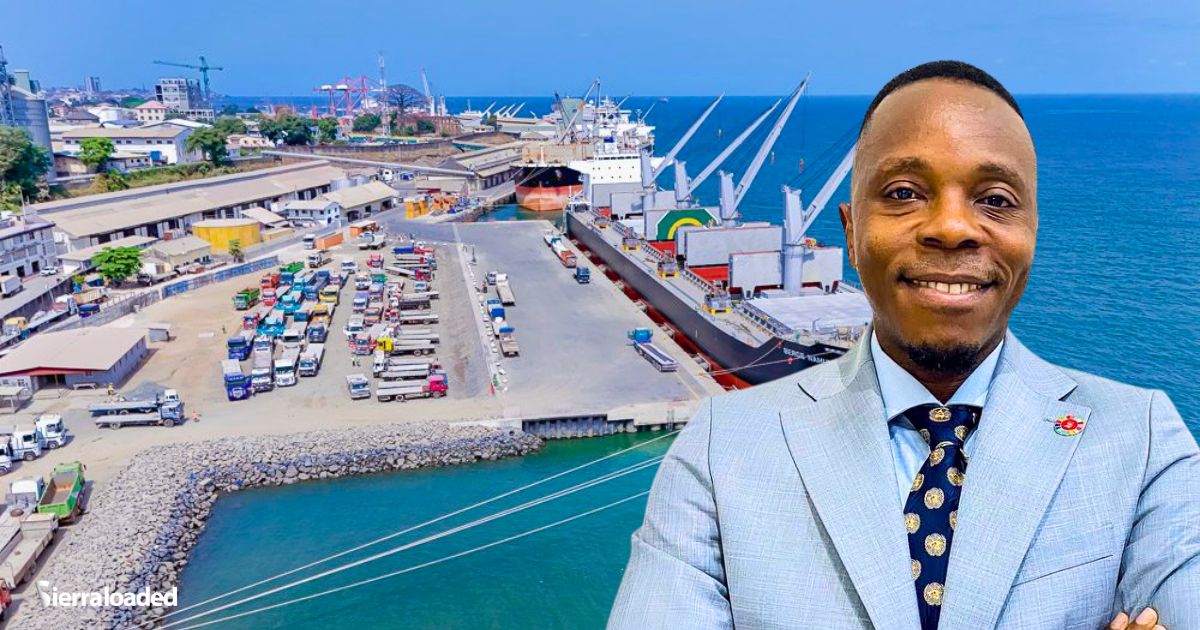
In a video shared on social media, Dr. Sengeh spoke from a vantage point overlooking the Freetown Harbour, where he detailed the government’s efforts to intercept contraband and illicit drugs entering the country.
“We have increased the volume of containers at the port by over 150% trade, actual trade,” he stated. “And in that period, we track how many containers come with contraband and we intercept. How many containers come with drugs and we intercept.”

The Chief Minister’s remarks come amid growing international scrutiny over Sierra Leone’s role in drug trafficking networks. In recent months, the country has faced allegations following several major drug seizures linked to its territory.

In May 2026, Spanish police seized 30 tonnes of cocaine valued at $700 million from a vessel that had departed from Freetown The ship was en route to the Mediterranean Sea when it was intercepted. The seizure prompted Sierra Leone’s main opposition party to raise alarm over alleged links between the country and international drug trafficking networks.
In a separate incident in November 2025, Nigerian authorities intercepted 1,000 kilogrammes of cocaine worth approximately $20 million at the Port and Terminal Multiservices Limited in Lagos. The drugs were discovered in a container that had arrived from Freetown, Sierra Leone.
In January 2025, Sierra Leone recalled its ambassador to Guinea after seven suitcases containing suspected cocaine were found in an embassy vehicle, prompting Guinean authorities to detain the occupants.
Concerns have also been raised over the presence in Sierra Leone of Jos Leijdekkers, one of Europe’s most wanted drug traffickers, who was sentenced in absentia to 24 years in prison by a Dutch court in 2024. Images showing Leijdekkers in the company of high-ranking officials have raised questions, though authorities have denied he is in the country.
Addressing these challenges, Dr. Sengeh acknowledged the difficulties faced by a country with limited resources.
“We’re a country where every little penny we’re trying to spend to improve the lives of our people,” he said. “These waters here in our navy, we don’t have lots of navy assets to just go out there.”
He rejected what he described as unfair characterisation by some journalists and international commentators.
“If some journalists go and they come with allegations, it’s alleged, it’s assumed, it’s accused and they paint our country as some country where people are running and it’s an organised crime haven – that’s not fair, that’s incorrect, that’s wrong,” he stated.
Sengeh called out what he perceives as a double standard in the global narrative, noting that when countries like Australia make massive drug busts, they are not immediately labeled “narco-states.”
“We do not come here and paint those countries as drug states,” Sengeh argued, referring to drugs Sierra Leone has intercepted originating from nations like Holland, India, and the UK.
Dr. Sengeh reaffirmed that Sierra Leone’s national and foreign policies will not be dictated by “assumptions, allegations, accusations and threats”, adding that Sierra Leone is working to secure its borders and combat transnational crime. He reaffirmed the government’s commitment to respecting national laws, bilateral relations, and international law.
“Sierra Leone will respect its national law, Sierra Leone will respect its bilateral relations and Sierra Leone will respect international law,” he said. “We want partners, partners who respect us, partners who value us, partners who share information with us, partners who appreciate what we do and treat us as equals.”
The Chief Minister has previously dismissed claims that Sierra Leone is a “narco state,” describing such labels as “a horrible new colonialism” that overlooks the international origins of illicit drugs entering the country. He has also called for national unity in combating the Kush epidemic, a synthetic drug that has devastated communities across Sierra Leone, noting that “there is no family in Sierra Leone that has not been affected”.
“We try to fight transnational organised crime,” Sengeh said in his video address. “We sit here, we track it. We want to keep our borders secure and we want to make sure that the priorities of our country, the priorities of our people are respected and are met.”